
Picture a lion roaring and a giraffe towering above the grass. The answer to who wins isn’t just about size or teeth. A fully grown giraffe usually beats a single lion in a straight fight. Its height, powerful kicks, and long reach make it tough for a lone lion to land a fatal blow.

Let’s dig into how body size, speed, and senses actually shape these clashes. Group tactics really change the odds, too.
You’ll get some clear comparisons of anatomy and what really happens when these animals meet. It’s not always what you’d expect.
And those dramatic photos and videos? There’s real risk for young giraffes and lone adults, but the story isn’t always simple out there on the savannah.
Giraffe vs Lion: Physical Comparison and Key Differences

A giraffe and a lion just don’t match up in body shape, weapons, or how they act. Height, hitting power, defense moves, speed, and senses all play a part in how a one-on-one fight goes down.
Size and Strength Differences
Giraffes absolutely tower over lions. An adult male giraffe stands 18–20 feet tall and weighs as much as 2,600–4,200 pounds. A big male lion? Usually just 330–550 pounds and about 3–4 feet at the shoulder.
That height keeps a giraffe’s vital organs way out of a lion’s reach.
Giraffes use their legs and necks like battering rams. One kick—forward or sideways—can shatter bones. Lions have strong muscles built for hunting, with those classic jaws and forelimbs for grabbing and holding.
But lions don’t really have a way to deliver a single, crushing blow from above. Their strength is all about grappling and suffocating prey.
Defenses and Natural Weapons
Giraffes fight back with long legs, a heavy body, and those funny little ossicones (the horn-like knobs on their heads). Ossicones actually help when a giraffe swings its neck or head around.
Their kicks can land low, mid-body, or even up at the head or chest. In close combat, that’s deadly.
Lions use claws, teeth, and—if they can—teamwork. They grip and slash with sharp claws, and their strong bite aims for the throat.
If a lion hunts alone, it really has to work to get to a giraffe’s weak spots. Most giraffe deaths by lions happen when the lions hunt in groups or go after calves.
Speed, Senses, and Movement
Giraffes can run at about 30–35 mph for short bursts. Their long strides cover ground fast.
That gait helps them keep their distance from lions, and they can pivot or stomp if needed. When threatened, a giraffe can turn and land a backward kick with serious force.
Lions sprint faster in short bursts—sometimes up to 50 mph, depending on the lion. They’re masters of the ambush.
Their night vision and sharp hearing help them sneak up on prey. If a lion gets close in low light or from behind cover, it’s got a real advantage.
Battle Dynamics and Real-Life Outcomes
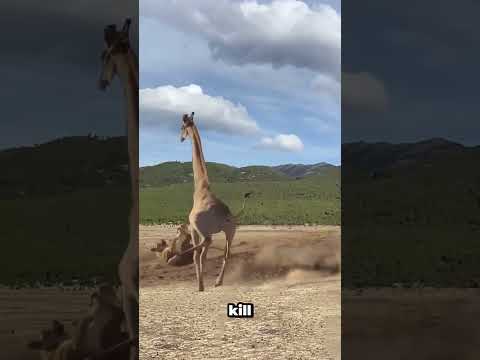
A giraffe’s size, brutal kick, and constant alertness shape most real fights. Lions count on stealth, teamwork, and wearing their target down.
Typical Confrontations in the Wild
Most fights happen near water or food. Lions like to ambush giraffes when they bend down at a waterhole or move through tall grass.
A lone lion almost never attacks a healthy adult giraffe—it waits for a mistake or goes after a calf.
When a giraffe senses danger, it usually faces the threat instead of running. You’ll see it lower its head, circle, or kick.
One good hoof strike can break a lion’s skull or legs. Young or injured giraffes face more risk—their kicks just aren’t as strong, and they can’t run as fast.
Lion Pride Hunting Strategies
A pride uses teamwork to hunt giraffes. Female lions do most of the hunting and spread out to drive giraffes toward ambush spots.
They use cover, silence, and even the angle of the sun to hide. You’ll often see them working near thorny acacia trees, where giraffes like to eat.
The pride tries to separate calves, tire out adults, and attack from different sides. Lions aim for the flank or throat, but it’s tough to reach an adult giraffe’s throat.
Lions do better at night, when it’s harder for giraffes to see and move around all those long legs.
Giraffe Group Defenses
You’ll notice giraffes count on group vigilance and smart spacing to avoid surprise attacks. Adults usually form a loose circle around the calves, and a few stand out on the edges, keeping an eye out for movement by acacia trees or near waterholes.
Their height really helps—they can spot threats from pretty far away. If something threatens them, giraffes react fast with coordinated kicks and trampling.
A giraffe might aim a kick at a lion’s flank or chest if it gets too close. Sometimes, older males swing their necks and ossicones, landing surprisingly heavy blows.
When a pride tries to surround the herd, giraffes often head for open ground. Out there, their speed and long strides really give them the advantage.


