
You might be surprised if a fox approaches you. These animals are generally shy and tend to avoid humans. A fox may come up to you if it feels curious, hungry, or if it has become too used to people. Understanding their behavior can help you respond appropriately and stay safe.

Foxes are known for their cleverness and adaptability. They often search for food, especially in urban areas where trash or pet food can be easy pickings.
If you’re outside and a fox gets too close, it may just be checking you out to see if you pose a threat or if you’re a potential food source.
While most encounters with foxes are harmless, knowing why they approach can help you feel more at ease. You can enjoy the experience while remaining cautious.
Awareness of their habits and behaviors can deepen your appreciation for these fascinating wildlife neighbors.
Understanding Fox Behavior

Foxes are fascinating creatures with unique behaviors and characteristics. Knowing more about them can help you understand why a fox might approach you. In this section, you will discover important traits of foxes, compare wild foxes to pets, and explore where they typically live.
Fox Characteristics
Foxes, especially the red fox, are known for their cleverness and adaptability. They have keen senses, sharp eyesight, and excellent hearing, helping them thrive in various environments.
Their small size allows foxes to move quickly and sneak around easily. They are social animals that often communicate with a range of sounds, such as barks and howls.
Wild foxes are generally more frightened of humans, but urban foxes may be bolder due to constant exposure to people.
When you see a fox, it might be curious or looking for food. If a fox approaches you, it could be an opportunity for a unique encounter, but remember to respect their space.
Wild Animals Versus Pets
While some people keep tamed foxes as pets, they behave differently than wild foxes. Tamed foxes may display less fear of humans, which can include wandering into areas where people are present. However, you should always approach wild foxes with caution. They retain their instincts and can react unpredictably.
Wild foxes usually avoid human interaction. If they get too close, it may mean they are hungry or searching for food.
It’s essential to avoid feeding wild foxes, as it can make them reliant on humans and disrupt their natural habits.
Habitats of Foxes
Foxes are highly adaptable animals. You can find them in various habitats, from forests and mountains to urban settings.
Urban foxes have become common in cities, where they scavenge for food. Their natural habitats provide shelter and safety.
Areas with dense vegetation give them places to hide from predators and human activity. Foxes often use burrows or dens for raising their young, especially in safer, quieter places.
Understanding where foxes live and how they behave can help you appreciate these animals more and recognize their needs when you encounter them.
Health and Safety Concerns

When encountering a fox, it’s important to be aware of potential health and safety issues. Understanding risks like rabies, diseases such as mange, and how to prevent attacks can help you stay safe.
Rabies and Foxes
Rabies is a serious disease that affects the brain and is often deadly. Foxes can carry rabies, which is why it’s crucial to observe how they behave.
A rabid fox may act strangely—being overly aggressive or approaching people in unusual ways. If you suspect a fox is rabid, contact your local animal control agency right away.
In the United States, rabies has rarely been transmitted from foxes to humans. If bitten, get medical help immediately and follow up on treatment, as post-exposure treatment is highly effective.
Diseases Like Mange
Mange is a skin disease caused by mites that can affect foxes. While it mainly impacts the animal, it can also pose health risks to pets.
Foxes with mange may appear scruffy and lose fur. This disease is not contagious to humans, but it’s a good idea to keep your pets away from wild animals that might be infected.
If a fox is frequently seen in your area and shows signs of mange, it’s wise to contact wildlife control for advice on how to handle the situation.
Preventing Fox Attacks
While foxes generally avoid humans, certain situations can lead to attacks. You should never approach a fox, especially if it looks injured or cornered.
Keep trash secured and avoid leaving pet food outside to prevent attracting them. If a fox comes near, make noise or wave your arms to scare it away.
Report any aggressive behavior to local authorities. Educating yourself about fox behavior can help reduce risks and ensure everyone, including your pets, stays safe.
Interacting With Foxes
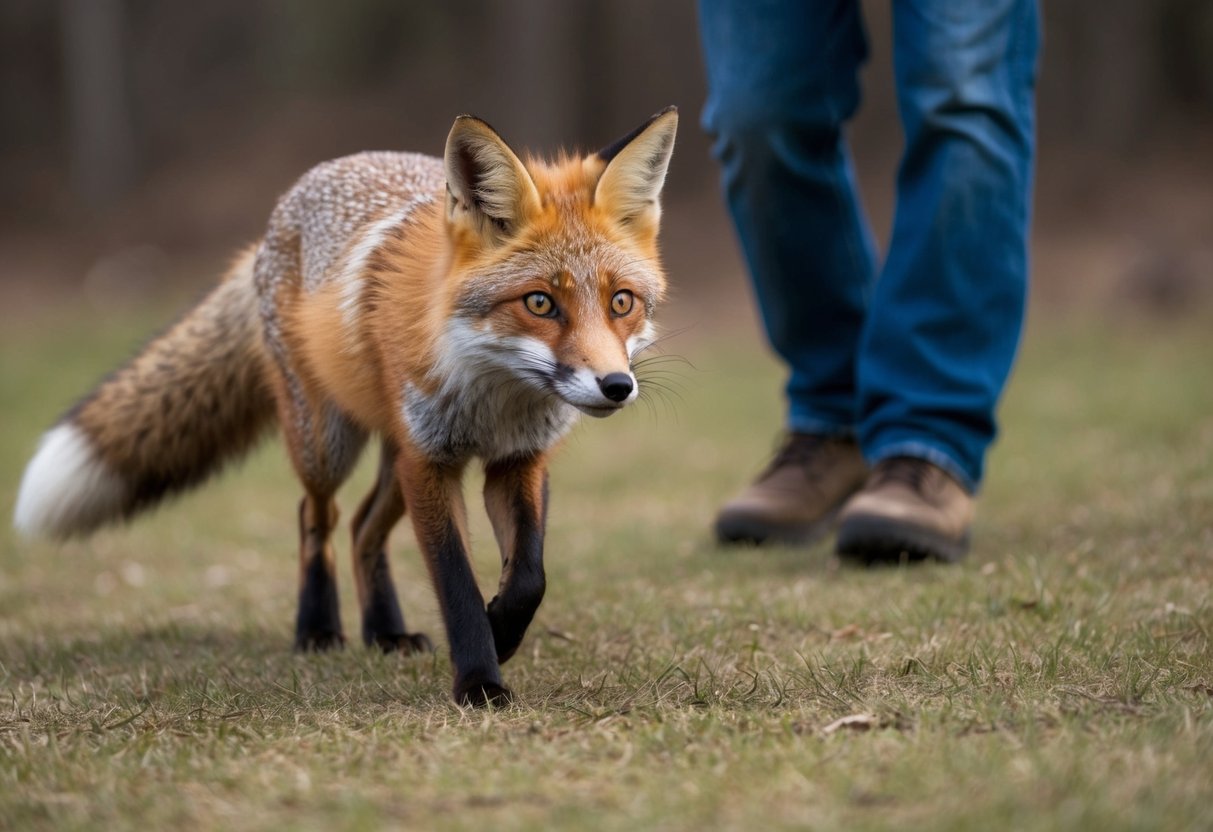
It’s important to know how to respond when a fox gets close. Understanding what to do can help keep both you and the fox safe. Here are some tips on handling interactions with these curious animals.
When a Fox Approaches You
If a fox approaches you, stay calm and don’t panic. Avoid sudden movements, as they may startle the fox. Instead, make yourself look bigger by raising your arms. This can help signal that you are not a threat.
You can also try to discourage the fox by making loud noises. Clap your hands, shout, or use a whistle. This may encourage the fox to back away.
Remember not to chase the fox. Running might trigger their instinct to chase.
If the fox gets too close, slowly back away while keeping the fox in sight. Your safety is a priority, so if it shows signs of aggression, find shelter or leave the area.
If a Fox Follows You
If a fox begins to follow you, it might be curious or looking for food. First, do not run, as this can provoke a chase.
Instead, maintain a steady pace and make noise to deter the fox. Try to create a barrier between you and the fox.
If you can, keep something like a tree or a fence between you. If it continues to follow you closely, head to a safe location, such as a building or a car.
Don’t panic if this happens. Foxes are often just curious and have no intent to harm. Remain cautious and aware of your surroundings.
Discouraging Fox Encounters
To avoid unwanted encounters with foxes, take some preventative steps. First, secure your trash to remove potential food sources. Use sturdy bins with lids that cannot be opened easily.
Also, avoid leaving pet food outside. This can attract foxes and other wildlife. If you have pets, keep them on a leash during walks, especially in areas where foxes are known to roam.
You can also make loud noises if you see a fox nearby. Shouting or clapping can help remind the fox that you are not a food source. If a fox approaches, use the techniques mentioned to encourage it to leave.
Foxes and Urban Life

Urban areas offer unique environments for foxes, allowing them to thrive alongside humans. These clever animals adapt well to city living and are often spotted exploring neighborhoods. Understanding their habits helps you coexist with them more peacefully.
Foxes in Urban Areas
Foxes, particularly the red fox, have successfully adapted to urban life. They rely on their keen sense of smell and intelligence to find food and shelter.
You may see them in parks, gardens, or even alleyways. They hunt small mammals like rats and mice but also scavenge for food scraps. This behavior helps control rodent populations, which is beneficial for you and your community.
As urban foxes adjust, they often become less shy. Many people report seeing them during the day, especially in quieter neighborhoods. Their survival skills are impressive as they navigate urban hazards like traffic and human presence.
Attractants and Deterrents
Several factors can attract foxes to your yard. One major attractant is food. Leftover pet food, birdseed, or even compost piles can draw them in.
To reduce the chances of a visit, you should secure your trash bins and keep dogs’ food indoors. If you enjoy composting, be mindful of what you include. Avoid adding items like meat or dairy that can attract wildlife.
You can also use natural deterrents. Planting fragrant herbs like sage or rosemary may keep them at bay. Additionally, consider installing motion-activated lights or noise devices to discourage foxes from entering your space.
Being proactive can help you enjoy your outdoor spaces without unwanted visitors.


