
If you’ve noticed your American Bulldog panting a lot, you might be wondering why. These dogs are known for their unique breathing patterns, and a bit of panting is quite normal, especially after play or during warm weather. American Bulldogs pant to help regulate their body temperature, as they don’t sweat like humans do.
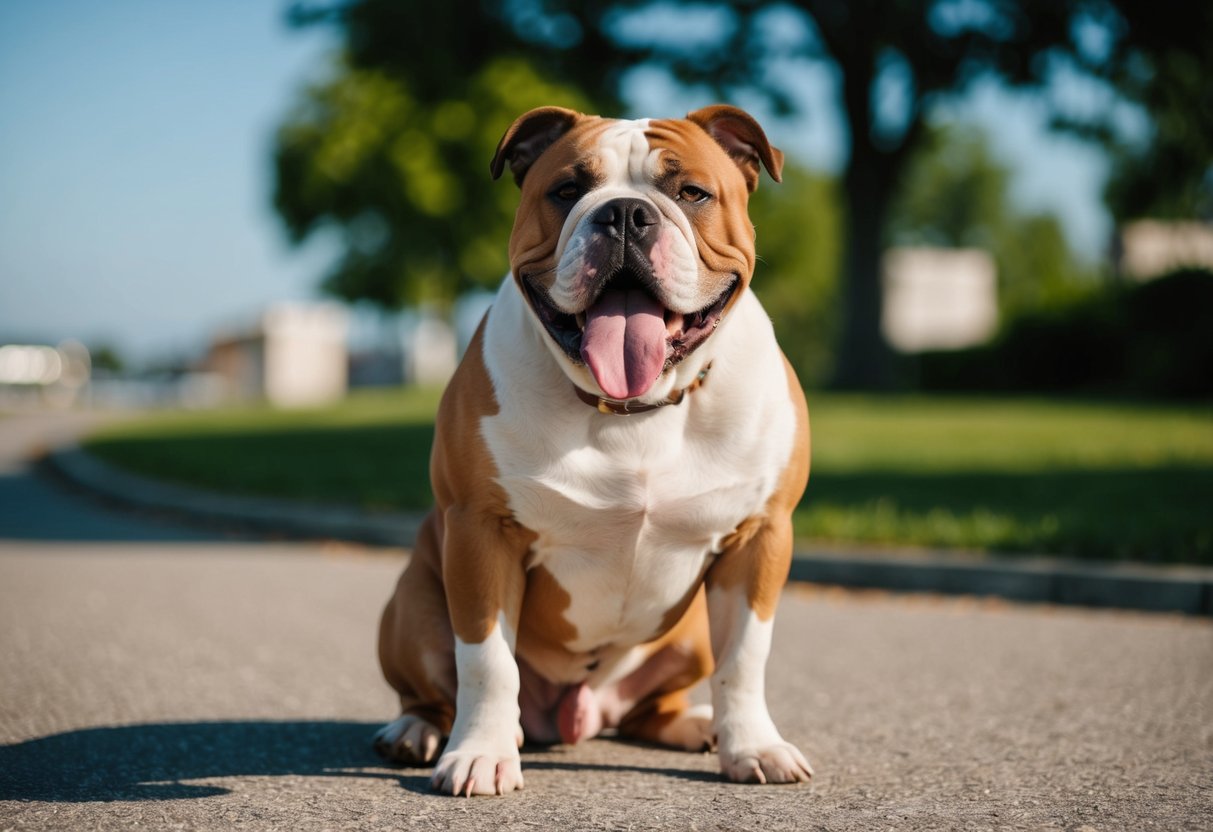
However, excessive panting can sometimes signal other issues. It’s important to pay attention to your dog’s behavior and environment. Factors such as heat, anxiety, or even health concerns can cause an increase in panting. Understanding the reasons behind their rapid breaths will help you keep your furry friend healthy and happy.
Understanding Dog Panting

Panting is a natural behavior for dogs, including American Bulldogs. It helps them communicate and maintain their comfort. Understanding the reasons behind panting can help you ensure your dog stays healthy and happy.
Normal Panting Behavior
Panting is often a normal part of a dog’s behavior. Dogs may pant when they are excited, nervous, or playing. This response can provide clues about their mood.
Here are some reasons for normal dog panting:
- Excitement: Your dog may pant when meeting new people or during playtime.
- Anxiety: Some dogs show panting when they feel stressed or scared.
- Physical Activity: After exercise, panting helps your dog cool down.
It’s essential to observe the context of your dog’s panting. If it seems excessive, or if you notice other unusual behaviors, consulting a veterinarian may be a good idea.
Regulating Body Temperature
Dogs cannot sweat like humans do. Instead, they cool themselves through panting. This cooling process is vital, especially on hot days.
When your dog pants, their breathing rate increases. This helps evaporate moisture from their tongue and respiratory tract, lowering body temperature.
Here’s how the process works:
- Inhaling: Your dog takes in air through their nose.
- Exhaling: They release warm air through their mouths.
- Cooling Effect: Moisture evaporates, which cools the blood flow and helps regulate body temperature.
Keep an eye on how your dog pants. If your Bulldog pants heavily even when resting or shows signs of distress, it’s important to check with a veterinarian.
Common Causes of Excessive Panting

Excessive panting in American Bulldogs can be concerning. Understanding the main reasons for this behavior is key to keeping your dog healthy and comfortable.
Heatstroke and Overheating
Your American Bulldog may pant excessively if they are overheated. Bulldogs, with their short snouts, struggle to cool down effectively. This can lead to heatstroke, especially on hot days.
Signs of overheating include:
- Heavy panting
- Rapid heartbeat
- Drooling
- Weakness
To prevent this, ensure your dog has access to cool water and shade. Limit exercise during high temperatures. Always monitor your dog closely, as overheating can escalate quickly and can be life-threatening.
Stress and Anxiety
Stress and anxiety can also cause your dog to pant heavily. Events such as thunderstorms, fireworks, or changes in routine may trigger this reaction.
Common signs of dog anxiety include:
- Restlessness
- Whining or barking
- Destructive behavior
To help your dog cope, consider creating a safe space for them to retreat during stressful times. You can use calming collars or consult your veterinarian for advice on anxiety management techniques.
Medical Conditions
Excessive panting can indicate underlying medical conditions. Issues such as heart problems, respiratory problems, or allergies may lead to heavy panting.
For example:
- Heart failure can cause poor circulation, resulting in panting.
- Respiratory issues can impede airflow and make it hard for your dog to breathe comfortably.
Keep an eye out for additional signs such as coughing, lethargy, or decreased appetite. If you notice these symptoms, it’s essential to consult your veterinarian for a thorough check-up. Early diagnosis can make a significant difference in your dog’s health.
When to Seek Veterinary Attention
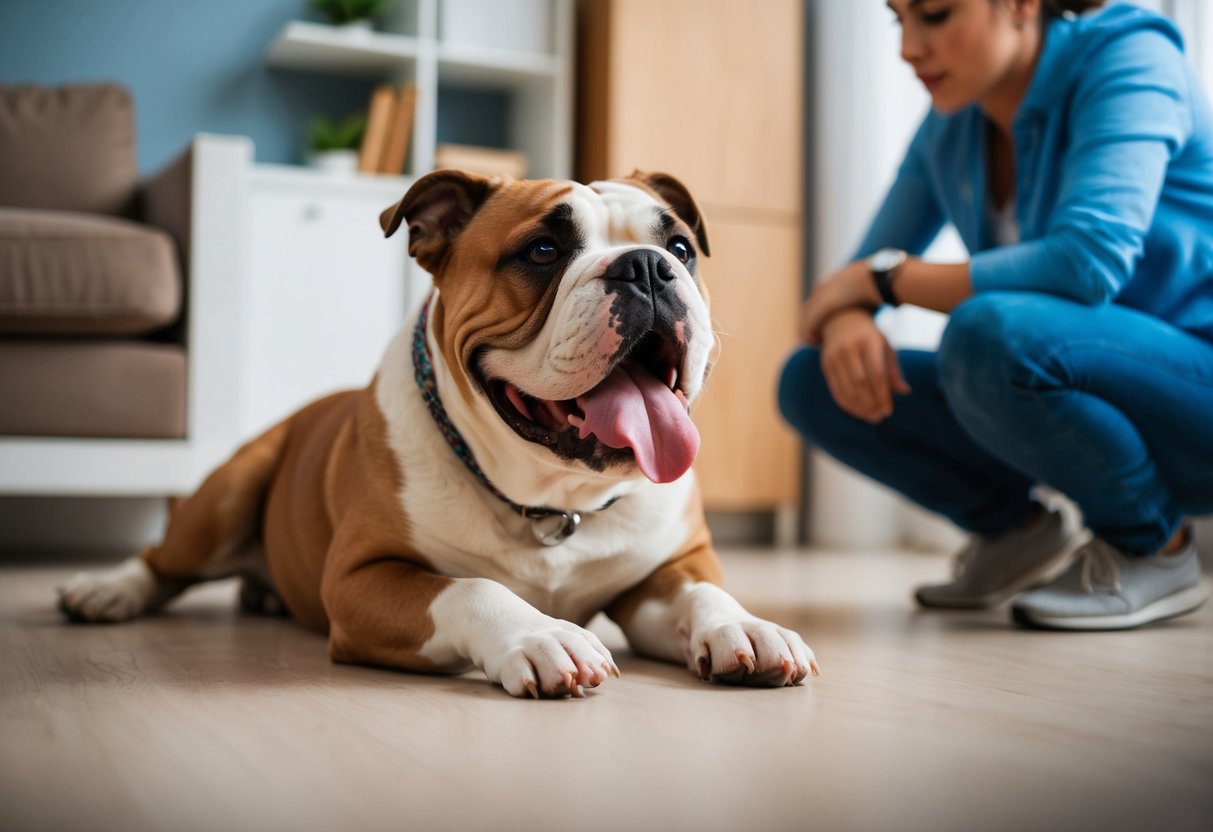
If your American Bulldog is panting excessively, it’s important to analyze the situation closely. Knowing when to seek veterinary help can make a difference in your dog’s health and comfort. Below are key aspects to consider—focus on their panting patterns and be alert for any emergency signs.
Observing Panting Patterns
Start by observing your dog’s panting patterns. Is the panting constant or does it come and go? Take note of when it happens—after exercise, during stress, or in hot weather.
Some panting is normal, especially after activity. However, if you notice heavy panting at rest, it could indicate a problem. Other things to monitor include:
- Duration and Frequency: If panting lasts longer than normal or occurs more often than usual.
- Accompanying Symptoms: Look for signs like drooling, pacing, or lethargy.
If these issues persist, it’s wise to consult a veterinarian. Their expertise can help determine if your dog’s panting is a symptom of an underlying condition, such as heat intolerance or anxiety.
Identifying Emergency Situations
Be alert for signs that require immediate attention. Some situations are serious and need a vet right away. Here are key indicators:
- Labored Breathing: If your dog struggles to breathe or shows distress.
- Weakness or Collapse: If your Bulldog can’t stand or seems unusually weak.
- Coughing or Gagging: Frequent coughing or a gagging sound can indicate a respiratory issue.
In these cases, act quickly. Call your vet or go to an emergency clinic. Early action can help avoid serious health issues and ensure your dog receives the care they need.


