
When you think of blue whales, you may picture enormous creatures gliding gracefully through the ocean. These giants evolved to be so big mainly as an adaptation to their feeding habits and the availability of food sources, particularly krill. Their size allows them to efficiently filter vast amounts of water to capture these tiny crustaceans, which form the basis of their diet.
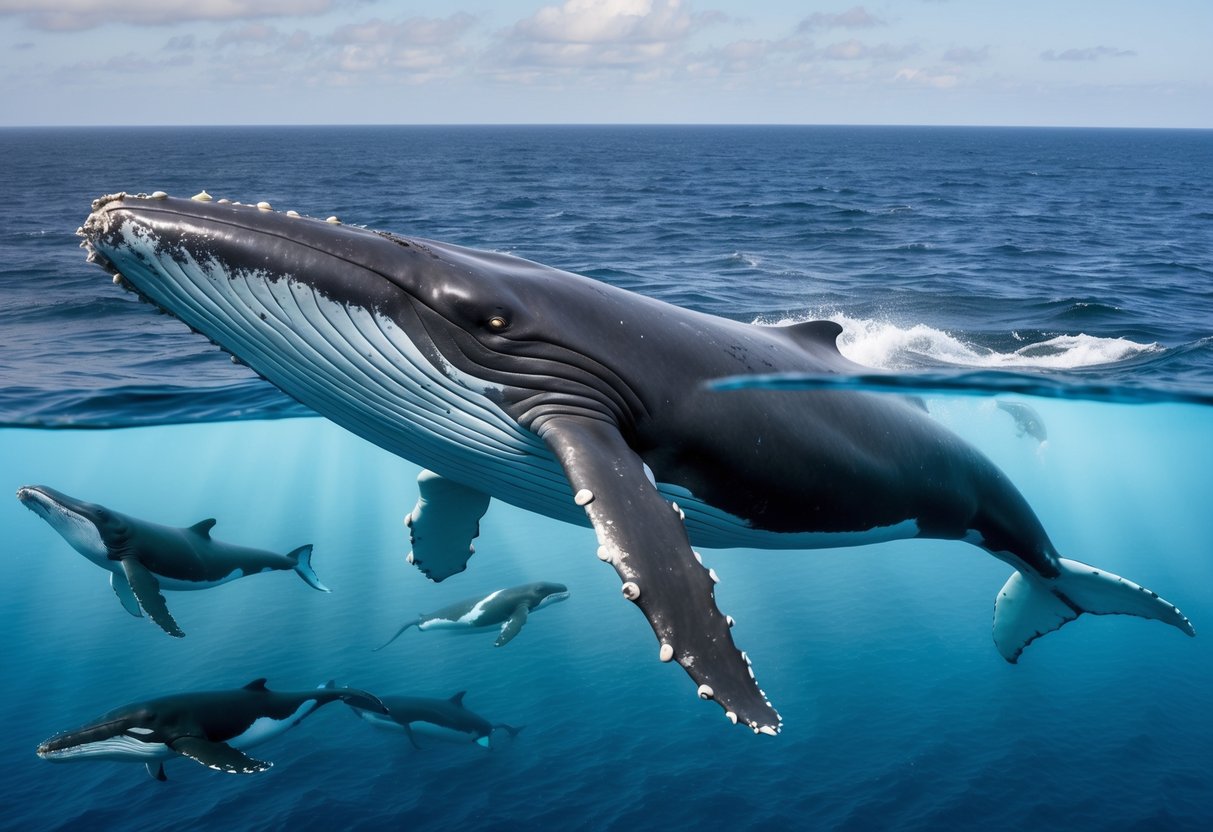
Evolutionarily, size also offers advantages in terms of buoyancy and energy efficiency. Larger bodies help blue whales maintain stability and conserve energy while swimming long distances in search of food. This incredible adaptation has allowed them to thrive in various ocean environments over millions of years.
As you dive deeper into this topic, you’ll uncover fascinating details about how competition for food and environmental changes played a role in shaping these magnificent animals. Understanding the reasons behind their size might change how you view these gentle giants of the sea.
Evolutionary History of Blue Whales

The story of blue whales and their evolution is fascinating. It shows how they transformed from land-dwelling mammals to giants of the ocean. Key factors, like changes in prey availability and the impact of extinction events, played critical roles.
From Prey to Titan: The Growth of Gigantism
Blue whales, like other rorquals, evolved to be enormous to efficiently consume large amounts of food, particularly krill. Their size allows them to take in wide gulps of seawater filled with these tiny creatures. It is believed that the ancestors of blue whales became larger around 3 million years ago, primarily due to the abundance of krill in the oceans.
Graham Slater, a paleobiologist, emphasizes that increased body size helped these whales adapt to changes in their environment. Growing larger also provided advantages in terms of thermoregulation and predation. The more giant the whale, the more energy it could store and the fewer predators it faced.
Fossil Record Insights
Studying the fossil record gives you insights into how whales evolved over millions of years. Researchers like Nicholas Pyenson have examined fossils from various extinct whale species to track changes in anatomy and size.
The fossil collection at the Smithsonian Institution includes specimens that highlight the transition from smaller ancestral whales to massive ones like the blue whale. Early whale ancestors had limbs suited for land but gradually adapted to life in the water.
Fossil evidence shows a clear pattern of increasing size over time. This change correlates with the availability of food and shifting oceanic conditions. The Pleistocene epoch marked significant growth in whale size due to changing ecosystems and prey dynamics.
Influence of Extinctions on Whale Evolution
Extinction events significantly impacted whale evolution. As many marine species disappeared, it opened new niches for whales to fill. This led to the emergence of larger species, including the blue whale.
The end of the Pleistocene saw a decline in many large marine predators. This shift allowed rorquals, including blue whales, to thrive. They adapted to exploit abundant food sources without much competition.
Understanding these extinction patterns enhances your grasp of the whale’s evolutionary history. It shows how environmental changes influenced size and adaptation, leading to the incredible giants we see today.
Understanding Whale Gigantism

Whale gigantism is a fascinating topic that combines ecological factors with evolutionary adaptations. Understanding why blue whales and other cetaceans grew to such massive sizes reveals much about their environment and survival strategies.
Ecological Factors Leading to Large Size
Several ecological factors contribute to the large size of blue whales and other baleen whales. First, the oceans provide a vast habitat with plenty of food resources, such as krill. When food is abundant, larger animals can thrive, as they can consume more and store energy efficiently.
Another factor is the cold water environments where these whales often live. Larger body sizes help maintain тепло, reducing heat loss in colder waters. Species like the fin whale also benefit from this adaptation.
Additionally, size can offer advantages against predators. If you are bigger, you are less likely to be targeted. This concept has played a crucial role in the evolution of large cetaceans, making it easier for them to survive.
Gigantism as an Evolutionary Response
Gigantism in whales may also be an evolutionary response to environmental changes. When competition among marine species increases, larger sizes can provide a competitive edge in securing resources.
The Megalodon, a massive prehistoric shark, once ruled the oceans. Its size may have pushed whales to adapt, evolving larger bodies to outgrow threats and avoid predation.
The emergence of baleen whales marked a shift in feeding strategies. As they developed larger mouths, they could filter more food from the water efficiently, reinforcing a cycle of growth. This transition illustrates how adaptive traits like size can evolve in response to both predators and resource availability.
Diet and Feeding Mechanisms

Blue whales have developed remarkable feeding strategies that help them thrive in the ocean. Their diet mainly consists of tiny shrimp-like creatures known as krill. The way these whales eat is very special and allows them to maximize their food intake efficiently.
Krill Abundance and Baleen Adaptations
Krill are the primary food source for blue whales. These small crustaceans are super abundant in the ocean, especially in cold waters. Blue whales rely on the availability of krill to survive and grow. They have developed baleen plates in their mouths, which are like large filters.
These baleen plates let blue whales take in huge amounts of seawater while trapping the krill inside. During feeding seasons, when krill swarms are plentiful, blue whales can consume up to 4 tons of krill every day. This abundant food supply is crucial for their enormous size and helps them store energy for migration and reproduction.
Efficient Feeding Through Lunge Feeding
Blue whales are known as filter feeders. Their feeding method called lunge feeding is quite impressive. When a whale spots a swarm of krill, it rushes forward with its mouth wide open.
This allows the whale to swallow a lot of water filled with krill. Afterward, it uses its baleen to filter out the water and keep the krill inside. This method is not just effective but also energy-efficient. By taking in large amounts of water at once, blue whales maximize their feeding success while minimizing the energy spent in every lunge.
Lunge feeding allows them to capitalize on food availability in their environment, ensuring they get the nutrition they need to thrive.
Environmental Interactions

The size of blue whales relates closely to their environment and the resources available to them. Factors like ocean productivity and climate change play key roles in shaping their evolution and behavior.
Ocean Productivity and Feeding Grounds
Blue whales rely heavily on productive feeding grounds to support their massive size. These areas, often found where cold waters rise to the surface, are rich in nutrients due to a process called upwelling. This brings small creatures like krill to the surface, which are the primary food source for blue whales.
During the Ice Ages, these productive areas expanded, allowing blue whales to thrive. Today, these whales have adapted to find the best feeding grounds along migratory routes. However, modern challenges like overfishing can deplete these food resources, making it harder for them to find enough to eat.
Climate Change and Whale Migration
Climate change directly affects blue whale migration patterns. Warmer ocean temperatures can shift feeding grounds and alter the distribution of krill.
As ice melts, it impacts the entire ecosystem, which can lead to fewer food resources for these giants.
To survive, blue whales must adapt their migration paths to follow the krill. This often means traveling greater distances or changing their traditional routes.
Competition for food resources may also increase as other marine animals seek the same areas. This dynamic can lead to challenges for blue whales, making their survival more complex in a changing climate.


