
Rats climb because their bodies are built for gripping, balancing, and quick movement on uneven surfaces. Their claws, strong limbs, and flexible tails let them use tiny imperfections in walls, pipes, and siding to move upward with surprising ease.
You can stop a lot of rat activity by spotting the surfaces and routes they use. Remove those pathways before they reach your home.

Rats do not need a perfect ladder. A little texture is often enough for them to scale a surface, which is why you may see them moving along brick, wood, fence lines, or utility runs.
They climb to reach food, water, shelter, and safer places to nest.
What Lets Rats Climb So Well

Rats climb by combining gripping tools with body control. Their claws catch on tiny irregularities, their feet help them stay planted, and their tails help them stay balanced while they move across narrow or awkward spots.
Claws, Foot Pads, And Tail Balance
Sharp claws let rats hook into cracks, seams, and rough edges on vertical surfaces. Their foot pads add friction, while the tail acts like a counterbalance when they scramble across ledges, pipes, or angled edges.
Body Strength, Flexibility, And Quick Movement
A rat’s body is light, flexible, and strong enough to keep moving even when the footholds are small. That mix helps rats climb, pivot, and recover quickly if one grip slips.
Why Rats Climbing Is Easier On Textured Surfaces
Rats climb more easily when a surface has roughness, chips, or seams. Brick, weathered wood, and concrete give their claws something to catch, while slick materials leave little for them to hold.
Where They Can And Cannot Get Traction

Rats climb walls best when the surface offers texture or nearby support. They also use connected routes, such as lines, branches, or stacked objects, to reach spots that seem too high for them at first glance.
Why Rats Climb Walls Made Of Brick, Wood, Stucco, And Concrete
Rats climb walls made of brick, wood, stucco, and concrete because those materials often have cracks, grooves, or worn patches. Even chipped paint and mortar lines can give them enough grip to keep moving upward.
Pipes, Wires, Fences, Trees, And Other Common Routes
Pipes, wires, fences, trees, and cables act like natural bridges. Rats use them to move from the ground to higher points, then shift onto roofs, vents, or upper openings.
Smooth Materials That Make Climbing Harder
Glass, polished metal, and clean tile are much harder for rats to scale because their claws cannot bite into the surface. Smooth, unbroken siding gives them fewer footholds and makes climbing far less efficient.
Why They Climb Around Homes
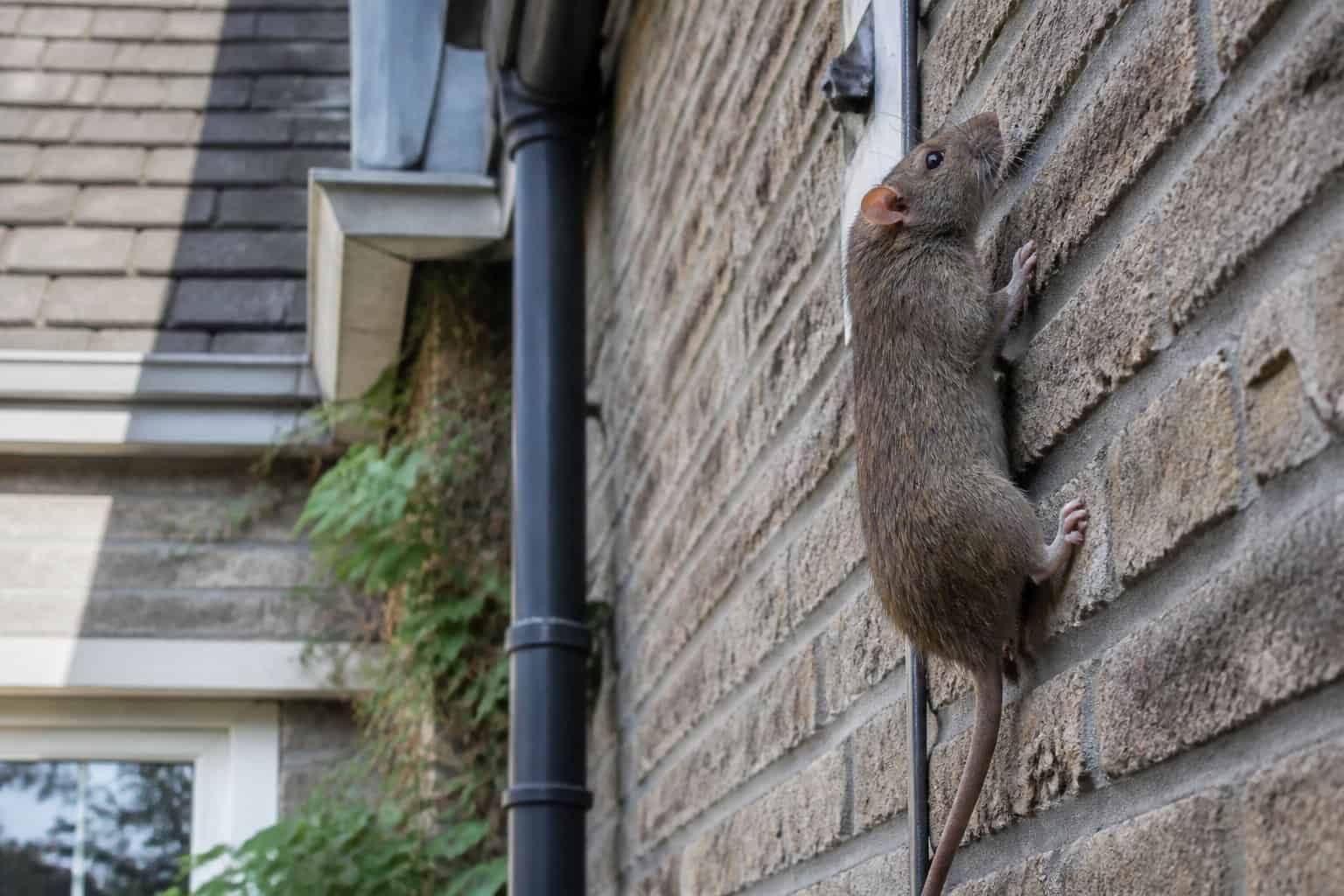
Around homes, rats climb for practical reasons. They want access to food, water, warmth, and protected nesting sites, and your exterior can accidentally give them all of those things.
Reaching Food, Water, And Shelter
Rats often try to reach trash, pet food, leaks, vents, or quiet hiding spaces. In colder weather, they may also move upward to find warmer shelter and more reliable food sources.
Escaping Predators And Finding Safer Nesting Spots
Height gives rats a better chance to avoid danger. Climbing helps them reach tucked-away spots where they can nest with less disturbance, especially in attics, rooflines, and wall voids.
How Roof Rats And Norway Rats Differ
Roof rats are better adapted for higher routes and often use branches, wires, and pipes to reach elevated nesting areas. Norway rats are usually more ground-focused, but they still climb when an easy route leads to food or an entry point.
What Climbing Ability Means For Pest Control

If rats can reach upper edges, you need to inspect more than the ground level. Look for the paths they use, remove those aids, and protect openings higher on the structure.
Signs Rats Are Using Exterior Access Paths
Watch for droppings, grease marks, gnawing, and worn streaks near corners, pipes, and fence lines. Scratching sounds in walls or activity near vents can also point to rats using exterior routes to get closer to the house.
How To Remove Climbing Aids And Seal Upper Entry Points
Trim tree branches away from the roof. Clear stacked items near walls, and remove vines or loose cables that connect to the structure.
Seal gaps around vents, soffits, and roofline openings with durable materials. Use fine mesh where airflow is needed.
When Professional Pest Control Makes Sense
If you keep seeing signs on the roofline, around vents, or inside wall spaces, you may benefit from professional pest control.
Professional help can save time and reduce guesswork.
When rat activity spreads throughout your home, experts can identify multiple routes the rats use at once.


