
You’ll only spot wild giant pandas in China. Their entire existence really depends on a very specific place and food.
Giant pandas need the cool, bamboo-packed mountains of central China to survive. That’s why they live and breed there—nowhere else.
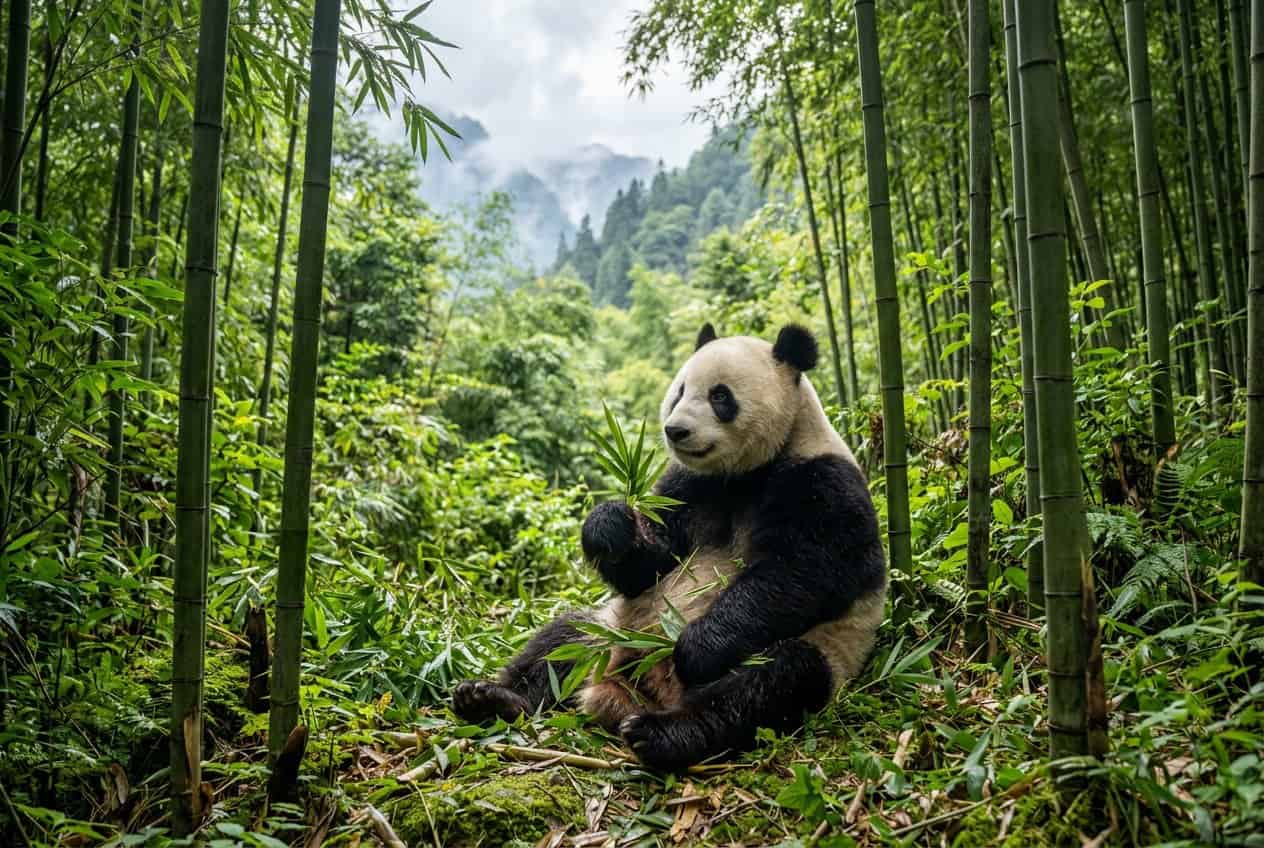
China’s mountain ranges, climate history, and endless bamboo forests shaped pandas over millions of years. Those same things still keep them tied to that region.
You’ll get the real facts about pandas in China, what they need from their habitat, and the conservation work going on to protect these animals.
Why Pandas Are Unique to China
Pandas evolved in China. They rely on bamboo, and mountains and rivers keep their range tiny.
That’s why wild giant pandas only live in a handful of Chinese mountain areas today.
Evolutionary Origins and History
You can trace the giant panda (Ailuropoda melanoleuca) back millions of years. Fossils show panda ancestors once wandered far beyond today’s China.
Over time, climate shifts and ice ages forced many to move south and into isolated spots. China’s wild terrain—deep valleys and high ridges—let some panda lineages hang on while others disappeared.
Pandas belong to the bear family (Ursidae), but they split off on their own branch. Their skulls and teeth changed to handle tough plants.
Fossils and genetic studies point to central China—especially Sichuan, Shaanxi, and Gansu—as their longtime home. That deep history just ties them even closer to China’s landscape.
Specialized Bamboo Diet and Habitat Needs
Pandas depend almost entirely on bamboo for food. They eat many bamboo species and have to live where bamboo forests stick around all year.
Bamboo blooms and dies in cycles, so pandas need big, overlapping patches to dodge food shortages.
Pandas have a bear-like body but a wrist bone that acts like a thumb, perfect for grabbing bamboo. They eat anywhere from 12 to 38 kg of bamboo every day to get by.
Their gut’s actually built more like a carnivore’s, so they have to eat a ton to get enough energy. That picky diet means pandas only survive in bamboo-rich mountain forests like Daxiangling and Xiaoxiangling.
Geographical Barriers and Range Limitation
China’s mountains and rivers really box pandas in. Their range sits mostly in the mountains of central China.
Steep ridges, deep valleys, and human development put up walls that pandas can’t cross.
These barriers keep panda groups small and cut off from each other. Small populations face genetic risks and need habitat corridors to move between mountains.
China set up protected reserves and corridors to reconnect areas. But the old geography explains why wild giant pandas still stick to certain Chinese mountains instead of spreading across Asia.
Why Pandas Remain Exclusively in China Today
China takes the lead when it comes to protecting pandas. The country uses laws, huge protected areas, and partnerships with zoos worldwide.
Government policy, breeding centers, and shrinking bamboo forests all keep wild pandas inside China’s mountain ranges.
Conservation Policies and Panda Diplomacy
China keeps control of all wild and most captive pandas through strict laws and national programs. The government set up the Giant Panda National Park and over 60 panda reserves to protect bamboo forests in Sichuan, Shaanxi, and Gansu.
These areas cut down on poaching and connect some habitats so pandas can move between valleys.
When foreign zoos show pandas, they’re usually on long-term loans. This “panda diplomacy” keeps ownership and breeding rights with China.
Your local zoo might host pandas under a contract that requires research cooperation and sends any cubs back to China. That way, China can track genetics and population numbers in one place.
Captive Breeding and Panda Reserves
Captive breeding programs focus on raising healthy pandas and boosting wild numbers. Places like the Chengdu Research Base of Giant Panda Breeding handle breeding, newborn care, and teaching pandas to eat wild bamboo and avoid people.
You’ll find research on genetics, disease control, and panda behavior there.
Panda reserves work with breeding centers to release pandas into protected habitats. These reserves keep an eye on reintroduced pandas and manage bamboo stands.
Together, reserve protection and captive breeding help pandas survive and keep the population steady.
Impact of Habitat Loss and Deforestation
Pandas really need bamboo, which grows best in those cool, high mountain forests. When people clear land or trees fall, bamboo patches get smaller and break apart.
That pushes pandas into tiny, isolated pockets. They end up struggling to find mates or even new food sources.
People have shrunk the pandas’ historical range with farming, roads, and logging. Even though reserves exist, fragmented habitat still blocks pandas from spreading out naturally beyond China’s mountain ranges.
If we want pandas to thrive, protecting and restoring bamboo corridors feels absolutely essential. That’s the only way they can move and reconnect those isolated groups.


