
You might have noticed that people often mix up bison and buffalo, but there’s a fascinating reason behind this confusion. Many folks in the United States used the term “buffalo” to describe the American bison because of their similar appearances. The truth is that bison and buffalo belong to different species. Bison are found in North America and parts of Europe, while buffalo primarily live in Asia and Africa.
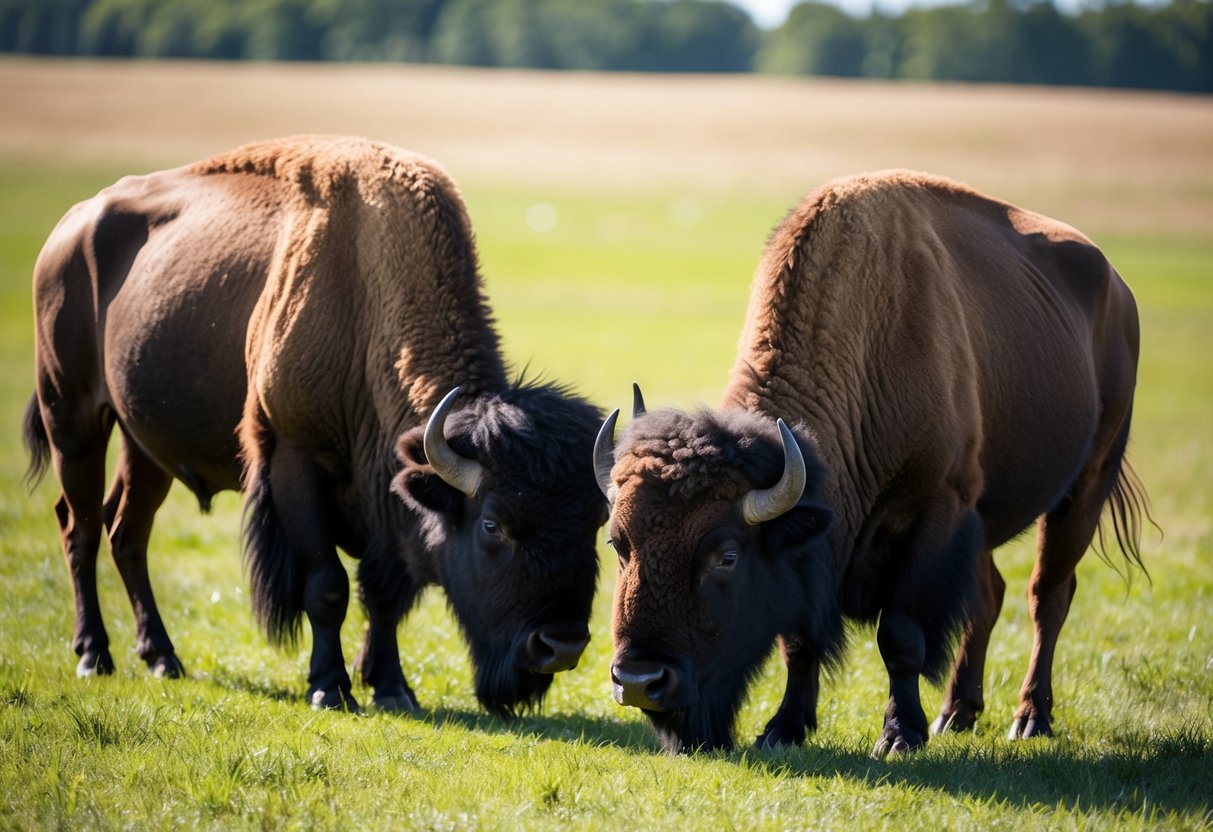
Water buffalo and Cape buffalo are examples of true buffalo species, while the American bison is sometimes mistakenly called a buffalo. Understanding these animals can help clarify the differences. European bison also adds to the mix, showcasing just how diverse the bison family is compared to the buffalo group.
As you explore this topic further, you’ll gain insights into these remarkable animals and discover why so many people continue to use the incorrect terms. From their habitats to their physical traits, knowing the distinctions will deepen your appreciation for both bison and buffalo.
Misconceptions and Clarifications
Understanding why bison are often mistaken for buffalo involves looking at their physical traits and the historical context behind their names. Both animals share similarities, yet their differences are notable and rooted in culture and science.
Physical Characteristics and Terminology
Bison and buffalo differ in many aspects. Bison, specifically Bison bison, have a large hump on their shoulders and thick, shaggy fur. Their horns are short and curved, often more robust. In contrast, buffalo possess long, sweeping horns that can vary in shape depending on the species.
The term “buffalo” commonly refers to multiple species, like the water buffalo and cape buffalo. This often leads to confusion. When you see “American buffalo,” it’s actually a misnomer. It’s essential to use the correct terminology to avoid misconceptions about these unique animals.
Historical Context and Nomenclature
Historically, explorers mistook bison for buffalo, which led to the persistent mix-up. The term “buffalo” has roots in early European explorers who encountered the American bison in North America. They named it “buffalo” based on their experiences with other species from Asia and Africa.
Culturally, both animals hold significant importance. Bison symbolize the Great Plains and are central to Native American heritage. In contrast, water buffalo and cape buffalo play crucial roles in Asian and African cultures, respectively. Recognizing these distinctions helps emphasize the unique histories linked to each species.
Conservation and Species Status
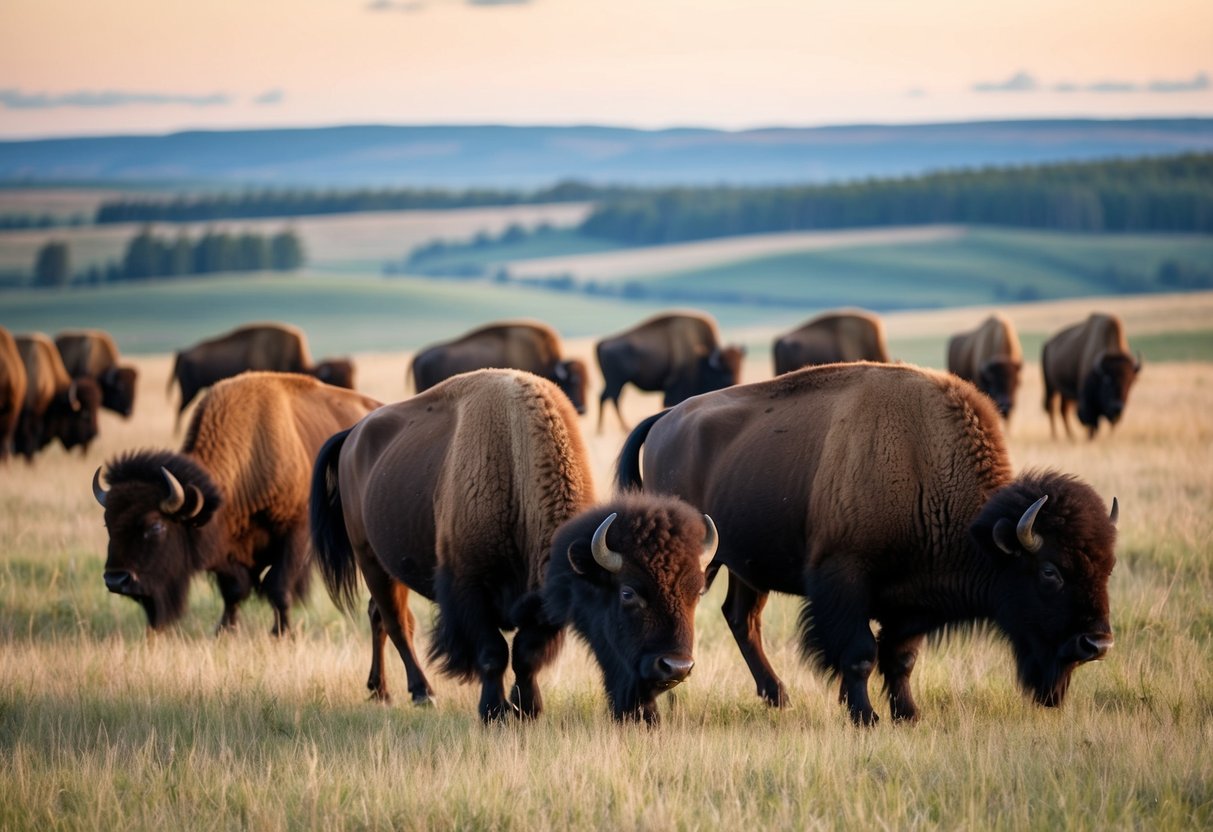
Conservation efforts have played a crucial role in helping bison populations recover from near extinction. Understanding the different subspecies and their habitats can enhance your appreciation of these majestic animals and their ongoing conservation efforts.
Efforts in Habitat Preservation
Habitat preservation is vital for bison survival. Many bison live in protected locations such as Yellowstone National Park and areas across the Great Plains.
Organizations actively work to maintain and restore these habitats. Key strategies for habitat preservation include:
- Creating protected areas: This helps to keep bison populations safe from hunting and habitat loss.
- Restoring native grasses: Bison thrive on local grasses, so restoring these plants helps maintain a healthy ecosystem.
- Promoting sustainable land use: Encouraging practices that reduce environmental impact supports both bison and other wildlife.
Thanks to these efforts, the bison population has stabilized, with around 30,000 bison now living in conservation herds.
Notable Bison Subspecies
Several notable bison subspecies have unique traits. The most recognized are the Plains Bison (Bison bison bison) and the Wood Bison (Bison bison athabascae).
Plains Bison often graze in large herds. They are commonly found in the United States and Canada.
Wood Bison are larger and live primarily in Canada.
In contrast, the Wisent (Bison bonasus) is native to Eastern Europe and faces different conservation challenges.
Conservationists focus on protecting these subspecies through breeding programs and habitat management. Preserving genetic diversity is important to ensure the bison population remains robust and resilient.


