
Ever watched a chipmunk zip across your yard and wondered where it disappears at night? Well, chipmunks actually rest in underground burrows they dig and care for themselves.
These burrows have winding tunnels and a main nest chamber. Chipmunks fill these spaces with leaves and grass, making them soft and warm.
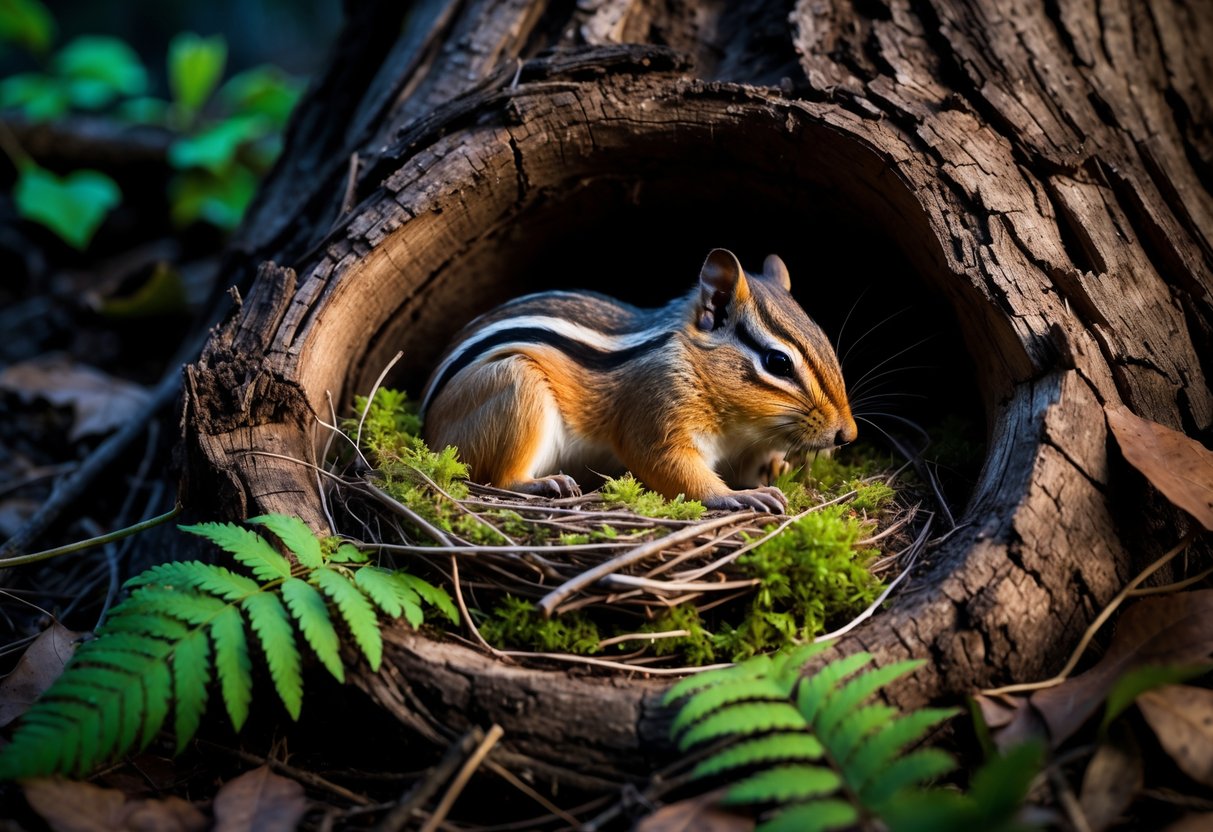
Your backyard chipmunk’s burrow isn’t just a bed. It’s also a hideout from predators and a pantry for their winter food stash.
Honestly, it’s kind of impressive how complex these little homes get. There are separate rooms for sleeping, storing snacks, and even for quick getaways.
If you learn about where chipmunks sleep, you’ll probably notice new things about their behavior. Maybe you’ll even start to appreciate their busy routines a bit more.
Chipmunks’ Nighttime Sleeping Habits

At night, chipmunks curl up in safe, hidden spots. They design these sleeping areas to keep out predators and deal with changing weather.
While chipmunks share some habits, each species has its own quirks for staying cozy and safe.
Where Chipmunks Sleep at Night
When the sun goes down, chipmunks head into their burrows to sleep. These underground homes let them hide from animals that might be looking for a snack.
You probably won’t spot them after dark. Chipmunks like to be active when it’s light out, and nighttime is for resting.
Inside, they pad their nests with shredded leaves or other soft stuff. That makes the nest warm and snug.
Most of the time, these nests sit in underground chambers, far away from cold air or rain.
Burrow Structure and Safety
Chipmunks put a lot of effort into building their burrows. They dig out rooms for sleeping and special spots just for food.
The entrances to these burrows are tiny—maybe only one or two inches wide. Sometimes, chipmunks cover extra holes with leaves to keep out unwanted guests.
Their tunnels go deep, sometimes three feet down, and can stretch up to 30 feet long. When danger comes close, these tunnels give chipmunks an escape route.
During the day, they might leave one door open. At night, though, they seal up other entrances to stay safe.
Differences Among Chipmunk Species
In the U.S., you’ll mostly find eastern chipmunks and least chipmunks. Both sleep in underground burrows, but eastern chipmunks usually build bigger nests.
Eastern chipmunks also dig more complicated tunnels than least chipmunks do.
Eastern chipmunks live east of the Mississippi, while least chipmunks stick to the north-central and western areas. Their nighttime routines are pretty similar, but the size and shape of their burrows change depending on where they live.
Chipmunk Burrows and Seasonal Behavior

Chipmunks spend most of their lives in underground burrows. These spaces serve so many purposes, and their routines shift as the seasons change.
When cold weather comes, chipmunks change their habits. The ways they store food and sleep through winter help them survive.
How Chipmunks Prepare for Winter Sleep
As fall turns chilly, chipmunks get busy collecting food. You might spot them stuffing their cheeks with acorns or seeds and running back to their burrows.
They stash this food to make it through the winter, since they hardly leave their homes in the cold months.
Before winter really hits, chipmunks will block off their burrow entrances with leaves and dirt. This keeps predators out.
Unlike bears or even ground squirrels, chipmunks don’t get super fat for winter. Instead, they count on their food supply to see them through.
Torpor Versus True Hibernation
Chipmunks don’t actually hibernate in the way bears do. They go into a state called torpor, where their heart rate and body temperature drop way down.
For example, a chipmunk’s heart might slow from 350 beats per minute to just 4.
During torpor, chipmunks sleep for days at a time. Every few days, though, they wake up to eat from their food stash and relieve themselves.
This cycle lets them save energy without going into a deep, unbroken sleep like true hibernators do.
Food Caching and Burrow Chambers
Chipmunks set up special chambers inside their burrows. One chamber turns into a cozy nest, stuffed with soft leaves for sleeping.
They use another chamber just for food storage. In there, you’ll spot nuts, seeds, and snacks like acorns or sunflower seeds—whatever they’ve managed to haul back. Their cheek pouches? Those things are impressive. Chipmunks can cram a surprising amount of food inside and make quick work of transporting it.
This stash keeps them going between bouts of torpor, especially when there’s nothing to eat outside. Blocking the burrow’s entrance helps keep out nosy animals and protects both their bed and their pantry.
Sometimes, you’ll catch chipmunks hanging around bird feeders in autumn. They’re not just being cute—they’re stocking up before winter hits.


