
Ever watched a chipmunk dart across your yard or through the woods and wondered where it actually lives? Chipmunks usually nest underground in burrows. These burrows can get surprisingly complex, with winding tunnels, food storage spots, and a cozy little nesting chamber lined with leaves.
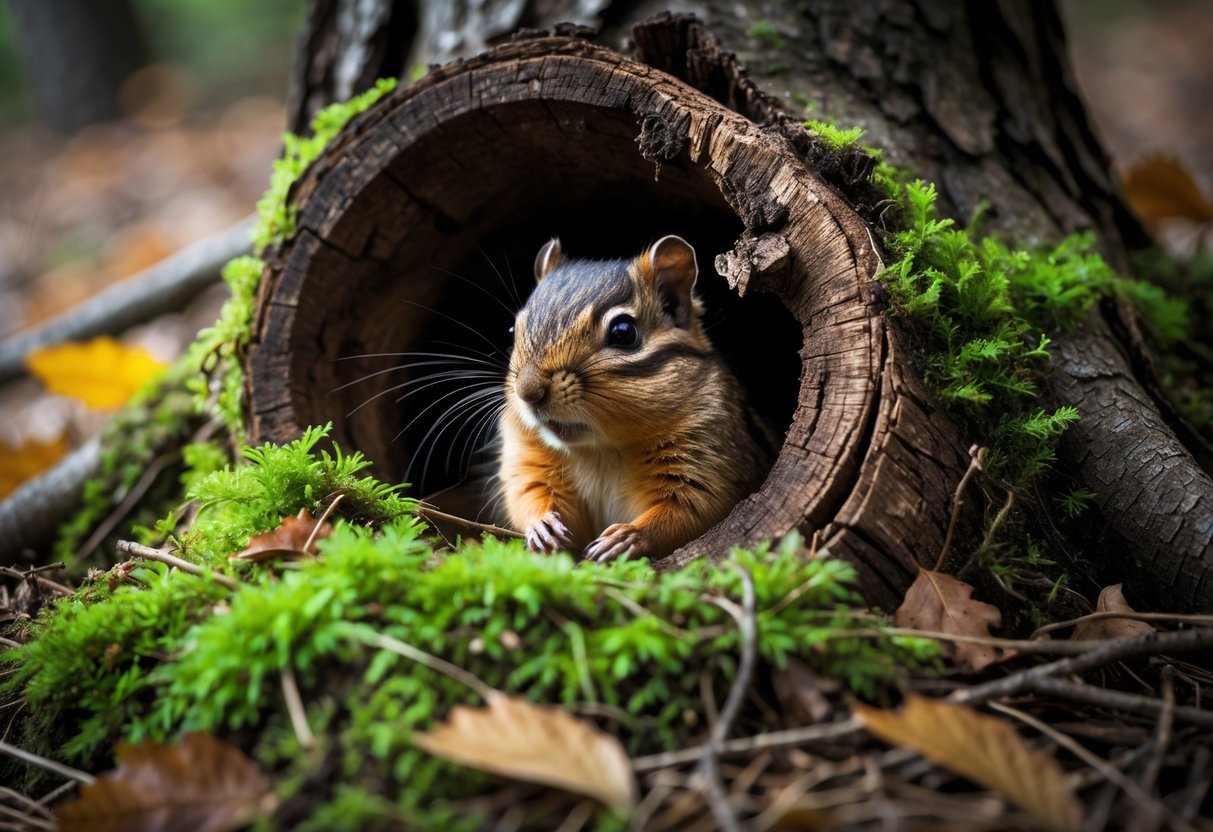
Sometimes chipmunks take over tree cavities or old logs, especially when it’s warm out. But as soon as the weather cools, they head back underground for safety and warmth.
Getting a sense of where chipmunks nest makes it easier to appreciate how busy and clever these little critters are.
Curious about how they design their burrows and why they pick certain spots? There’s a lot going on under the surface.
Typical Chipmunk Nest Locations

Chipmunks pick different nesting spots based on their species and surroundings. You’ll see them make homes both underground and above ground.
They adapt easily to forests, but you’ll also spot them near people.
Underground Burrow Habitats
Most chipmunks, especially the eastern chipmunk, dig burrows underground. They make entrances about 1-2 inches wide, sometimes more than one.
Their tunnels can reach 3 feet deep and can stretch up to 30 feet long. Inside, they set up different chambers for sleeping, storing food, and draining water.
They line the nesting chamber with dry leaves to keep it warm. Food pockets hold nuts and seeds for the winter.
Chipmunks like to build burrows near tree roots or under rocks. They dig flood drainage tunnels to keep water away from their homes.
Multiple entrances let them escape fast if something threatens them.
Above-Ground Nests in Logs and Bushes
Some chipmunks, like the least chipmunk, sometimes nest above ground. When it’s warm, they use tree cavities, old logs, or thick bushes for a quick shelter.
They build these nests with dried grass or bark, but they’re not as fancy as their underground burrows. Usually, they only stay there for a short time before moving back underground when winter comes.
Elevated nests keep them close to food like seeds in bushes. Still, when it’s time to raise babies or hunker down long-term, underground burrows win out.
Variations Among Species
Different chipmunk species have their own nesting habits. The eastern chipmunk loves deep, twisty burrows in forests or brushy spots.
Their homes have lots of tunnels and rooms. Least chipmunks prefer open spaces like the Rockies and don’t dig as deep—just about 7 inches below the surface.
The Siberian chipmunk, which lives in Asia, also digs burrows, but it’s more flexible about where it lives. This species climbs trees more often than its North American cousins.
Suburban and Urban Nesting Sites
You might notice chipmunks nesting right near your house. They often dig under sheds, patios, or decks where it feels safe.
Suburban and city areas offer easy food—think bird feeders and gardens—so chipmunks find these places pretty appealing. They dig tunnels in soil near stone walls or thick bushes.
Sometimes they block off entrances they aren’t using, just to keep their burrows safe. Even in cities, chipmunks manage to use both natural and human-made structures for their nests.
Want a closer look at their underground homes? Check out A Peek Inside a Chipmunk Burrow.
Chipmunk Nest Structure and Features

Chipmunks put a lot of effort into their nests, making them safe, warm, and perfect for storing food. They dig multiple entrances and special tunnels for quick getaways.
Inside, there are cozy chambers for food and a snug spot for baby chipmunks. Their nesting materials keep things dry and comfy.
Chipmunks change how they use their nests depending on the season, always trying to stay safe and warm.
Burrow Entrances and Escape Tunnels
Chipmunk burrows usually have a few entrances. These openings, just 1-2 inches wide, might look like nothing, but they lead to an underground maze.
Chipmunks sometimes block off certain entrances to keep out predators or bad weather. You’ll spot plunge holes—vertical tunnels for quick escapes or fast access.
They dig their tunnels on a slope so water doesn’t flood the main rooms. Both eastern and least chipmunks use more than one entrance, but eastern chipmunks dig deeper and longer burrows, sometimes up to 3 feet deep and 30 feet long.
That extra depth makes it tough for predators to catch them.
Main Chambers and Food Storage
The main chamber sits at the heart of the burrow. This is where the chipmunk sleeps and spends most of its time, especially when it gets cold and it enters torpor.
Side chambers branch off the main tunnel and act as food storage. Chipmunks gather seeds, nuts, and other snacks throughout the warm months and stash them here for winter.
Least chipmunks make smaller food chambers just below the surface, lining them with grass or bark. Eastern chipmunks, though, build larger, deeper food caches in their big burrows.
Nesting Materials and Lining
Chipmunks line their main sleeping chamber with dry leaves, grass, bark, or even fur. These materials keep the nest warm and soft—ideal for baby chipmunks as they grow.
A cozy nest protects them from the cold in winter. Dry leaves also soak up moisture, keeping things dry inside.
Least chipmunks tend to use grass and bark, while eastern chipmunks stick with dry leaves. These materials are easy to find nearby and help keep their burrow comfortable.
Seasonal Burrow Adaptations
When the seasons shift, chipmunks switch up how they use their burrows. In the summer, least chipmunks might actually sleep overnight in tree cavities or even hollow logs instead of sticking to their underground spots.
Eastern and least chipmunks usually spend most of the winter tucked away in their burrows. They count on the food they stashed away earlier in the year.
They go into a light hibernation called torpor. Every so often, they wake up just to have a snack.
Chipmunks dig drainage tunnels to keep water out when there’s heavy rain or snow melting. Sometimes, they’ll close or open certain entrances based on the weather or if they feel threatened.
Honestly, it’s kind of impressive how these seasonal habits keep chipmunks warm, dry, and out of harm’s way.


