
Bed bugs usually come out at night while you are asleep because they can feed with the least disturbance. They tend to emerge from hiding places after dark and retreat into cracks, seams, and crevices before dawn.
The first clues are often bite marks, dark spots on bedding, shed skins, or tiny eggs near sleeping areas. Knowing where bed bugs hide and when they feed helps you catch a problem earlier.

When Bed Bugs Usually Emerge

Bed bugs become most active when you are still and nearby, which is why sleeping areas attract them. You can focus on mattress seams, headboards, and other hiding spots where nymphs and adults wait before coming out.
Bed bugs feed on blood and usually do it while you sleep because the dark, quiet setting makes detection easier. The CDC notes that bed bugs bite at night and can live for months without a blood meal.
If bed bugs get into your home from luggage, clothing, or public places, they may start looking for a host soon after settling in. They often stay close to the bed rather than wandering far.
Before feeding, bed bugs hide in mattress seams, box springs, bed frames, and nearby cracks. They can fit into tiny spaces, so you may not see them unless you inspect carefully around folds, edges, and seams.
Early Clues You Might Notice First

You often notice warning signs of bed bugs after sleeping, not during the bite itself. You may see bed bug bites, tiny dark marks, or other signs long before you spot the insects.
Bed bug bites can appear one to several days after the bite, and for some people they may take even longer. That delay can make bedbug bites easy to confuse with mosquito or flea bites.
Look for signs of infestation such as rusty spots on sheets, shed skins, bedbug eggs, and live insects near the mattress edge. Dark fecal spots, tiny white eggs, and shed skins on bedding or furniture are strong clues that bed bugs are active nearby.
A delayed skin reaction can make you think the problem started somewhere else. Because bed bug bites do not always show up right away, you should inspect sleeping areas for physical evidence instead of relying on bite marks alone.
How a Small Problem Becomes Easier to Spot

A small cluster of bugs often stays hidden at first because bed bugs hide so well. As the infestation grows, you start seeing repeated signs in more than one place, which makes the pattern easier to recognize.
Bed bugs often arrive as hidden hitchhikers in luggage, folded clothes, or used furniture. Once they settle in, they can lay eggs in protected areas, and new nymphs can add to the problem.
Clutter, fabric folds, and tight crevices give bed bugs more places to stay out of sight. The more hiding spots they have, the less likely you are to notice early signs of infestation.
If you keep finding bites, shed skins, and new dark spots after cleaning and checking bedding, the issue is likely growing. Repeated evidence near the bed, couch, or upholstered furniture usually means the population is active and spreading.
What to Do If You Suspect Activity
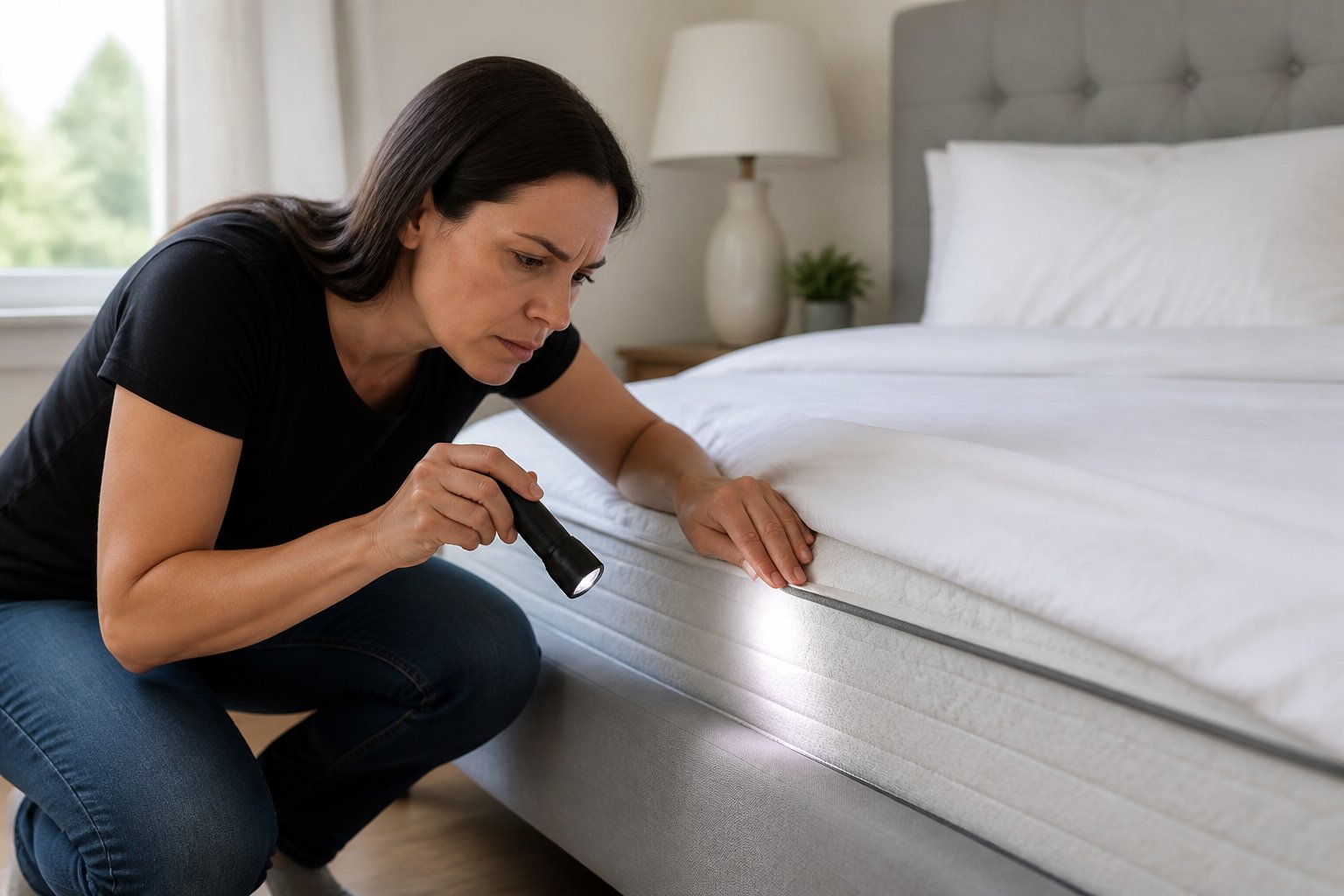
If you suspect bed bugs, inspect carefully and avoid moving items from room to room. That helps limit spread while you decide whether professional pest control is needed.
Use a flashlight and check seams, corners, headboards, and nearby furniture without tossing bedding around the house. Place suspicious items in sealed bags if you need to move them, and avoid dragging mattresses or blankets through other rooms.
Call professional pest control if you find live bugs, multiple signs of infestation, or evidence in several rooms. The CDC recommends contacting a professional pest control company experienced with bed bugs, and integrated pest management is often the most effective long-term approach.
Common Bed Bug Myths That Delay Action
A clean home does not keep bed bugs away. They do not indicate that you are careless.
Some people believe that one bite means one bug. In reality, a few bites can come from a single feeding night or from delayed skin reactions that appear later.


