
When you think about large, strong animals used for farming and work, you might picture oxen and buffalo. While they may seem similar at a glance, there are clear differences that set them apart. An ox is typically a castrated male of the cattle species used for labor, while a buffalo is a distinct species known for its size and thick coat.
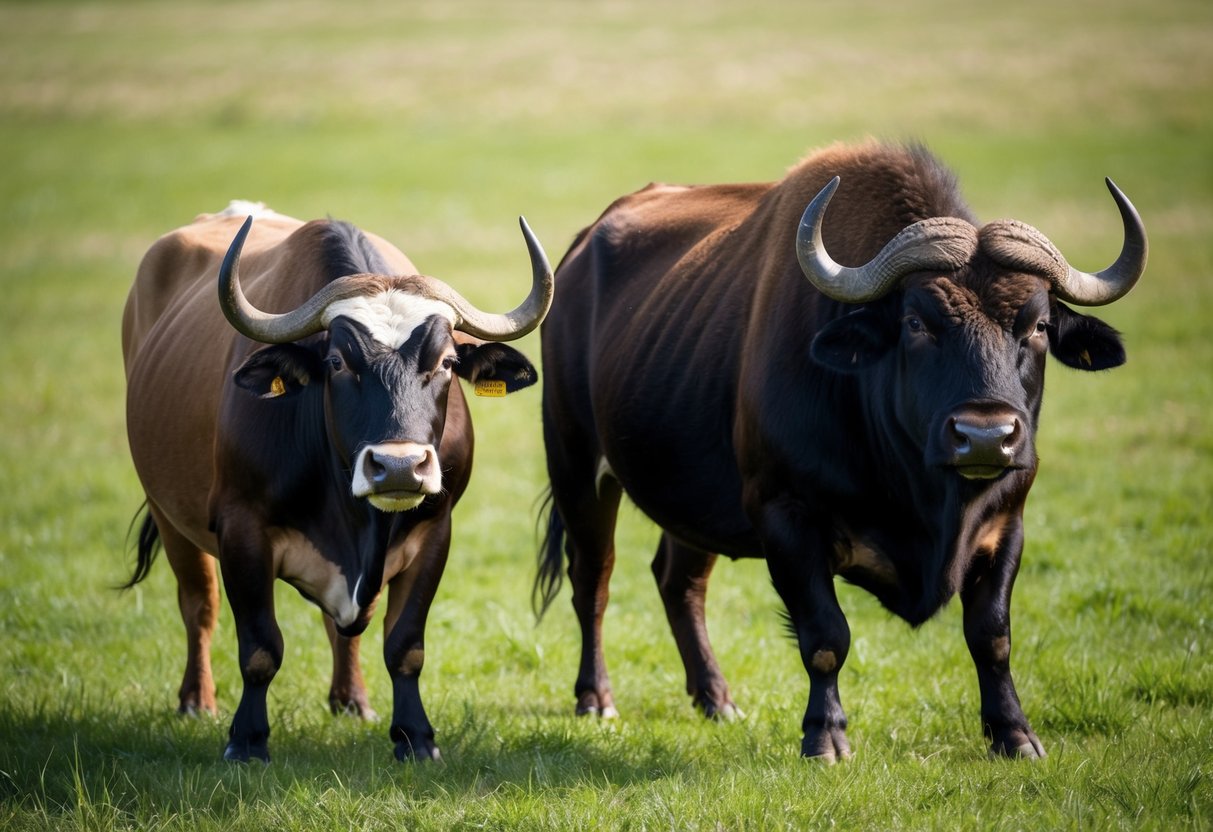
Understanding these differences can help you appreciate the unique roles both animals play in agriculture and culture.
Oxen are often friendly and easier to train than buffalo, which can be more independent and less sociable. Knowing these traits can be valuable whether you’re studying animal husbandry or simply curious about these fascinating bovines.
As you read further, you’ll discover more about their physical characteristics, behavior, and the special places they hold in various communities around the world.
Defining the Animals

When you think about oxen and buffalo, it helps to understand what makes each animal unique. Both belong to the Bovidae family, but they have distinct characteristics and uses in agriculture and beyond.
Ox Basics
An ox refers to a castrated male member of the cattle family, specifically from the species B. taurus. These animals are typically used as draft animals, or beacons of strength for tasks like plowing and pulling heavy loads. Oxen are domesticated bovines that have been training to assist humans for centuries.
They are known for their sturdy build and calm temperament. Their horns grow outward and curve upward, which sets them apart from buffalo. Oxen play a vital role in many farming communities, where they help with daily tasks and provide muscle power.
Buffalo Characteristics
Buffalo, on the other hand, belong to several species, including the water buffalo (Bubalus bubalis) and the African buffalo (Syncerus caffer). These animals are generally larger and have distinctive, wide horns that can span over a meter in some cases.
Buffaloes are found mainly in Asia and Africa. Unlike oxen, they are often raised for their meat, milk, and hides. They can also be wild species that thrive in natural habitats. Their robust bodies and adaptability to different environments make them valuable livestock.
Comparing Oxen and Buffaloes

When looking at oxen and buffaloes, you’ll find many fascinating differences. Each animal has unique traits, habits, and roles they play in agriculture and society. Understanding these differences can help you appreciate their contributions to human life and culture.
Physical Differences
Oxen are typically smaller than buffaloes. An ox, which is usually a castrated male bovine, may weigh around 1,000 to 2,000 pounds, while buffaloes can weigh between 1,000 to 3,500 pounds.
Horns also vary significantly. Oxen often have curved horns that point upwards. In contrast, buffaloes have large, distinctive horns that can span over a meter, often curving back towards their bodies.
Coat differences are notable too. Buffaloes have thicker hair, which helps them adapt to warmer climates in regions like India and South America. Oxen have less hair and tend to live in various conditions, showing versatility.
Habitat and Geography
Both animals are adaptable but thrive in different habitats. Buffaloes are often found in wet, marshy areas. They enjoy water and shade, making regions in North Africa, India, and parts of southern Europe suitable habitats for them.
In contrast, oxen are more commonly associated with domesticated cattle in various terrain types, including grasslands. You might find them working in fields across continents, from North America to South America.
The different habitats influence their care and farming practices. Buffaloes require more access to water, while oxen can thrive in drier areas.
Roles in Agriculture and Society
Oxen have been key in agriculture, especially for draft work. They pull carts, plow fields, and assist in other laborious tasks. Their strength and endurance make them reliable partners for farmers.
Buffaloes have significant roles too. They are often used for irrigation and in rice paddies, where they help prepare the land. They also provide milk, making them important dairy animals in many cultures.
Both play a role in creating fertilizer for crops. Their manure is valuable in enriching the soil. This is particularly crucial in regions depending on agriculture for sustenance.
Behavior and Temperament
When it comes to behavior, oxen are generally more friendly and easier to train. You’ll notice they respond well to humans and can be great companions in the field. Their domestication has made them familiar with human interactions.
Buffaloes, on the other hand, may not be as sociable. They can exhibit more aggressive behaviors, especially if they feel threatened. Training them takes more time and patience.
Each animal has its unique charm, influenced by their environments and roles. Knowing their behaviors can help you approach them wisely, ensuring safety and a better working relationship.
Uses Beyond Labor
Both oxen and buffaloes serve beyond just labor. Buffalo milk is known for its rich taste and nutritional value. It is widely used in making yogurt and cheese in various cultures. Their meat is also a source of nourishment in some regions.
Oxen, while primarily used for labor, can also be raised for meat. They contribute to the food supply and are valued in many agricultural practices.
These animals also support local economies by providing livelihoods for farmers. Their contributions extend beyond the farm, impacting cultures and communities worldwide.


