
Picture a place where polar bears wander the tundra more often than people stroll the streets. That place is real: Longyearbyen, in the Svalbard archipelago, has become known for having more polar bears in the wild nearby than it has human residents.
If you’re searching for a spot where polar bears outnumber people, Svalbard—especially Longyearbyen—fits the bill.
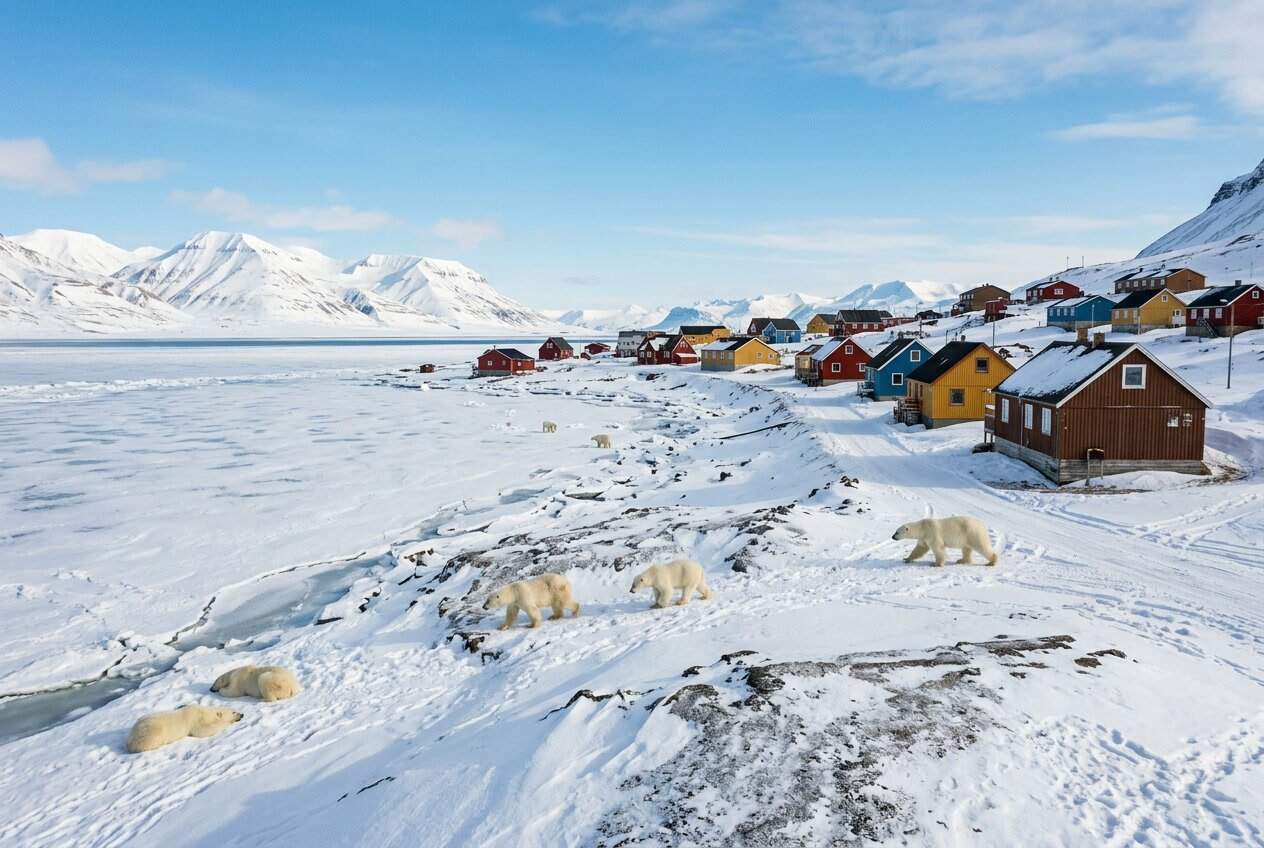
If you ever plan to visit, or just love wild Arctic tales, life there feels like nowhere else on the planet.
You’ll learn how folks coexist with wildlife, what safety rules shape their routines, and how endless cold and long nights affect everything from work to travel.
Svalbard: The Town Outnumbered by Polar Bears
Svalbard sits way up in the Arctic, where people share space with a growing population of polar bears.
Let’s talk about Longyearbyen, why bears outnumber people, and how daily life adjusts to that wild reality.
Longyearbyen: The Northernmost Town on Earth
Longyearbyen sits on Spitsbergen, Svalbard’s largest island, about 800 miles (1,300 km) from the North Pole.
It’s the world’s northernmost town with more than 1,000 residents and acts as Svalbard’s main hub for administration and travel.
You’ll find a university center, shops, a hospital, and research stations here—most folks work in science or tourism, not mining anymore.
Buildings and infrastructure perch on permafrost, so construction follows special rules to avoid thaw damage.
You can catch flights or take boats from Longyearbyen to reach the archipelago’s more remote corners.
Want to see more about life in the town? Check out this Longyearbyen profile.
Why Polar Bears Outnumber People
Svalbard’s polar bear population hovers around 3,000, while the whole archipelago has just about 2,600 people—maybe 2,300 to 2,400 in Longyearbyen itself.
Bears stick to sea ice and coastal spots where seals hang out, so their numbers stay higher than the scattered human settlements.
Since the 1970s, hunting bans and conservation laws have helped polar bears bounce back in the region.
Climate change and shrinking sea ice now threaten their food supply, but for the moment, the bears still outnumber people.
Their range overlaps with human activity mostly at the edges, so authorities enforce strict rules for travel, food storage, and waste to avoid run-ins with bears.
Curious about what it’s like to live where bears outnumber people? Here’s a travel profile.
What Daily Life Is Like With So Many Polar Bears
You always have to think about polar bears when you leave town.
Locals and visitors carry deterrents like flares, and on guided trips, rifles are standard safety gear.
Schools and the university teach polar bear safety, and signs around Longyearbyen remind everyone that these rules apply everywhere in Svalbard.
You’ll spot bear-proof trash bins and strict rules about leaving town after dark, especially in certain seasons.
Outdoor trips mean going with trained guides, using trip wires, or keeping lookout shifts at camp.
People avoid walking alone beyond town limits and register trips with local authorities.
Winter brings darkness, summer brings the midnight sun, but polar bear precautions never really change.
Want a firsthand peek at life with bears and guns? Here’s a news article about Svalbard.
Arctic Experiences: Life, Wildlife, and Survival in Svalbard
Svalbard throws together strict safety rules, wild animal encounters, and scenery that’s just—well, stunning.
You should brace for cold weather, blinding summers, endless dark winters, and rules meant to keep both people and wildlife safe.
Unique Local Laws and Safety Precautions
Svalbard enforces rules shaped by Arctic remoteness.
If you leave Longyearbyen, you need to carry a gun or travel with an armed guide, since polar bears roam everywhere; this law protects people, not bears.
Permits and permissions are required for some areas, and camping near settlements usually needs approval.
Respect protected zones and listen to guides.
Travelers often register trips with local authorities and must follow wildlife distance rules.
Pack layered clothes, solid navigation tools, and a satellite or VHF radio if you’re heading out for a while.
Honestly, learning cold-weather first aid and how to prevent frostbite is a must.
Wildlife Encounters Beyond Polar Bears
Svalbard isn’t just about polar bears.
You can spot reindeer grazing near Longyearbyen, and Arctic foxes darting along the tundra.
Seabirds like puffins and Arctic terns flock to the cliffs in summer, and walruses lounge on nearby shores.
Seals and the occasional whale show up in the waters; boat trips offer close—yet regulated—encounters.
Always keep your distance and let guides handle any close wildlife moments.
Bring binoculars and a zoom lens for photos, and expect tours to include naturalist commentary and safety tips.
Natural Phenomena: Polar Night and the Northern Lights
Svalbard’s seasons shape everything.
From late October to mid-February, polar night settles in—continuous darkness, so planning for light becomes a daily thing.
This stretch is perfect for northern lights, if the sky plays along.
From late February into summer, 24-hour daylight returns.
You’ll catch the aurora best on clear, dark nights, usually outside town or on a boat trip.
Check local aurora forecasts and keep your nights flexible for the best chances.
Don’t forget warm layers, a headlamp, and a tripod if you’re after those perfect northern lights shots.
Svalbard Global Seed Vault and Local Culture
The Svalbard Global Seed Vault stands just outside Longyearbyen, quietly storing seed samples from every corner of the globe. You can’t actually go inside, but local guides love to share stories about the vault’s mission during tours and exhibitions.
This place really puts Svalbard on the map for conservation and technology. It’s a little surreal seeing something so important tucked away in the Arctic.
Longyearbyen feels like a mix of research hub, art scene, and a small, tight-knit town. The University Centre in Svalbard hosts studies on climate and health, and sometimes you’ll catch student talks or small exhibits.
Local galleries and festivals pop up now and then, and there’s usually a video screening or two that digs into Arctic culture. Small businesses here help visitors with guided trips, safety gear rentals, and the latest news.
If you visit, try to respect local customs. Supporting community-run tours goes a long way to keep tourism here sustainable.


