
Ever wonder what you should really call a bird? Honestly, the basic answer is just “birds.” That’s the general term for all those feathery, winged creatures you see everywhere.
This word, “bird,” actually comes from Old English and just means winged animal with feathers. Still, every type of bird has its own unique name—like American Robin or Bald Eagle—so you can get specific about which bird you’re talking about.
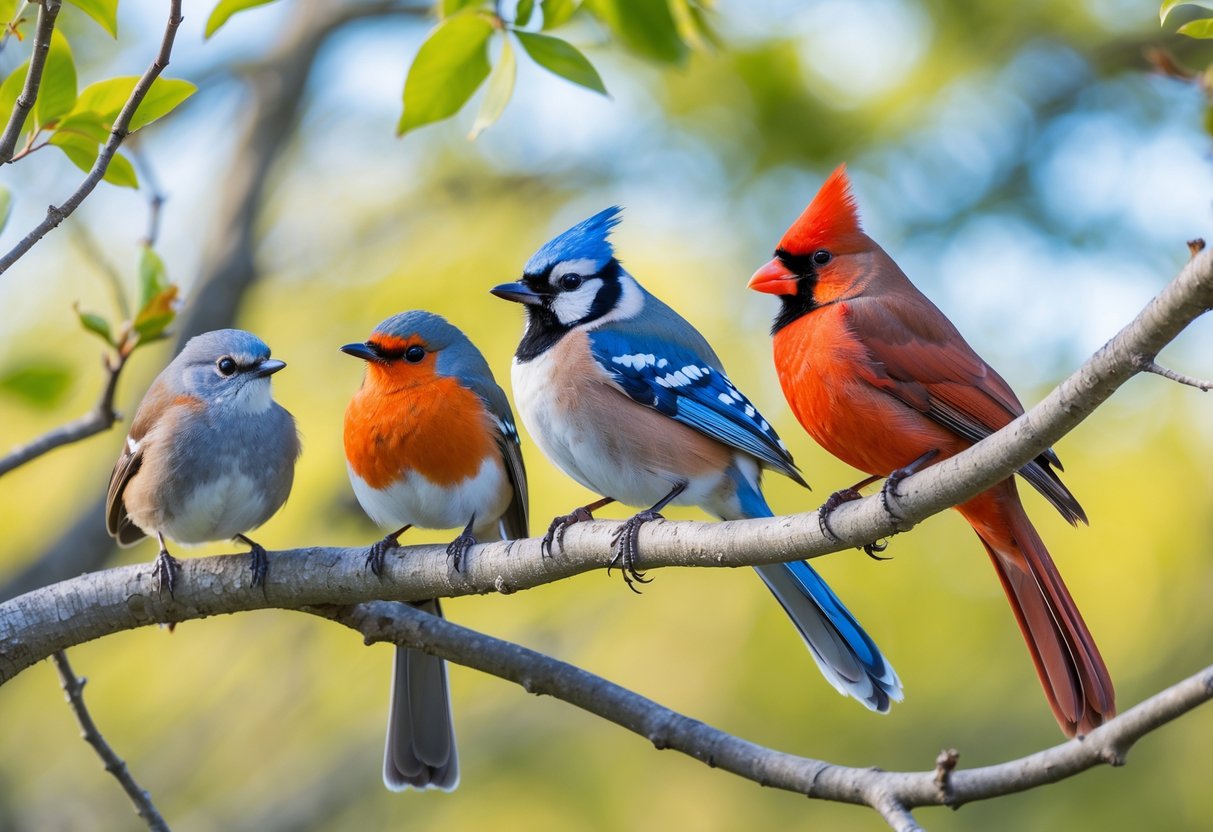
Every bird species also gets a scientific name with two parts: genus and species. Scientists use these Latin names to avoid confusion, no matter where they are in the world.
For example, the Wood Duck’s scientific name is Aix sponsa. Aix is the genus, and sponsa is the species.
You’ll often see bird names capitalized in books and field guides. That’s just so it’s clear you’re talking about a particular bird, not just any random one.
Learning these names can really help you connect with the wild birds around you. If you’re curious, check out Ornithology Birds’ Official Names for more details.
Understanding Bird Names: Common and Scientific Terms

Bird names mix familiar words with science-y terms, which can actually tell you a lot about each bird’s place in nature.
Once you start noticing how birds get their names, you’ll pick up clues about their feathers, wings, and beaks.
The Proper Name: ‘Bird’ and Its Origins
The word “bird” just means feathered creature, straight from Old English. It’s a simple word, but honestly, not all birds are great at flying—think penguins.
When you say “bird,” you’re talking about animals with beaks, wings, and feathers. That’s what most people use in daily life.
But this word doesn’t really explain how birds fit in with other animals or where they belong scientifically. Still, it’s the go-to term for what you spot in your yard or on eBird.
Scientific Classification: Aves, Avialae, and Neornithes
Scientists put birds in a group called Aves. This includes all living birds and some extinct ones too.
Aves sits inside an even bigger group called Avialae, which includes birds and a few feathered dinosaurs like Archaeopteryx.
The birds you see around today? Most belong to Neornithes. That group covers everything from hummingbirds to eagles.
Scientists use these groups to sort birds by things like flight, feather types, and bones. This helps us see how birds evolved and how they connect to dinosaurs.
Binomial Nomenclature: How Bird Species Are Named
Every bird species gets a two-part Latin name. This is called binomial nomenclature.
First comes the genus (the group), then the species (the specific bird). For example, the Mallard is Anas platyrhynchos.
This system keeps things precise, so scientists always know which bird you mean, no matter the language.
Sometimes the names describe what the bird looks like—like “yellow-rumped.” Other times, they honor someone or a place. It’s a tidy system that keeps birdwatching and research organized.
Types of Bird Names: Groups, Orders, and Notable Species
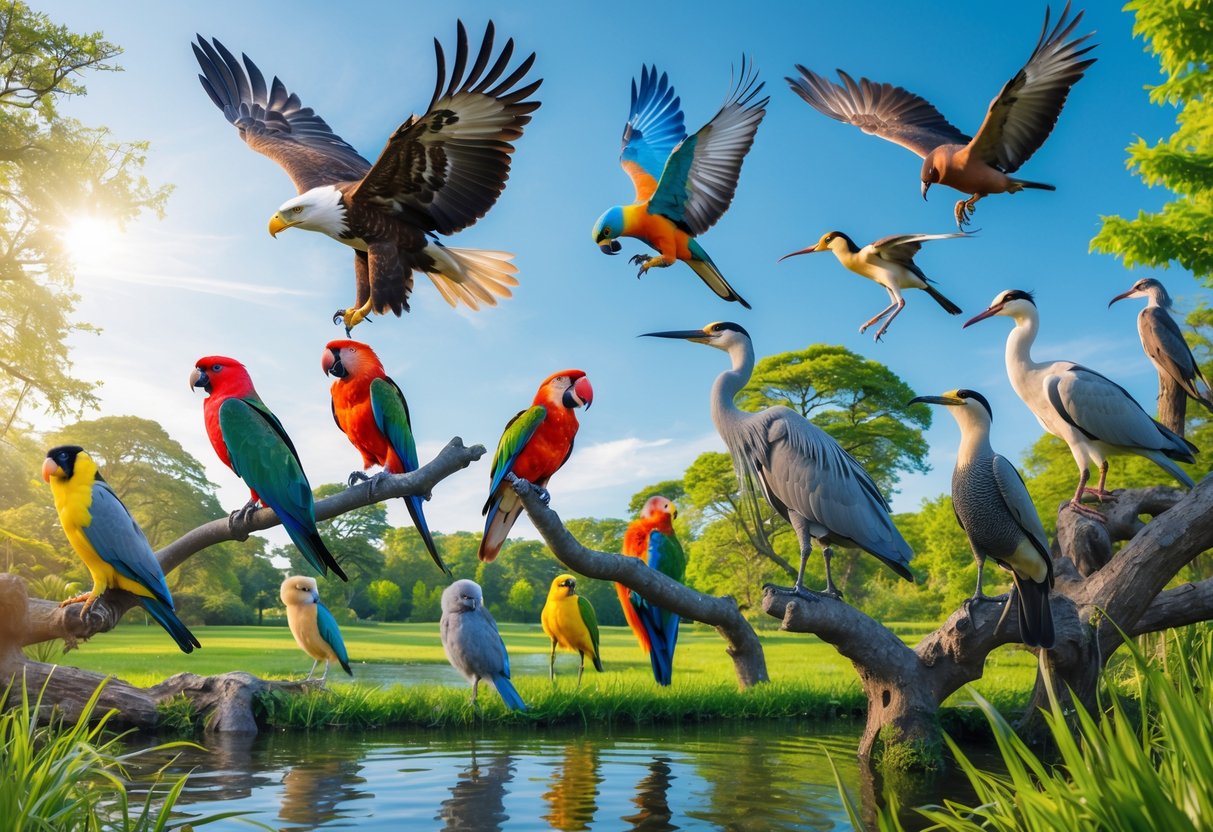
Bird names can be scientific, group-based, or just the name of a specific species. These names help you figure out how birds are organized and how to tell them apart.
Some names show you where a bird fits in the bigger picture, while others just highlight a famous species you might recognize.
Bird Orders: Passeriformes, Psittaciformes, and More
Bird orders are big groups based on shared features. The largest order is Passeriformes—the perching birds or songbirds.
This includes the American robin and a lot of the small birds you see everywhere.
Psittaciformes is for parrots, like macaws and cockatoos. These birds stand out with their curved beaks and wild colors.
Other orders? Galliformes for gamebirds like turkeys and pheasants. Anseriformes for water birds like ducks and geese. Struthioniformes covers big, flightless birds like ostriches.
Raptors—hawks and eagles—fit into Falconiformes. They’ve got sharp talons and hooked beaks for hunting.
Group Names: Songbirds, Waterfowl, Gamebirds, and Seabirds
Group names aren’t super formal, but they tell you a lot about how a bird lives.
- Songbirds sing and mostly belong to Passeriformes. Think warblers, finches, and robins.
- Waterfowl hang out near water. Ducks, swans, and geese belong here, all part of Anseriformes.
- Gamebirds are the ones people hunt, like turkeys and quail. Most fall under Galliformes.
- Seabirds stick close to the ocean. Gulls, albatrosses, puffins, and even penguins—though penguins can’t fly, they’re awesome swimmers.
Each group gives you a quick mental image of what kind of bird you’re learning about.
Examples of Proper Nouns for Birds
People often use specific, proper nouns when they talk about birds.
- You’ll spot the American robin pretty easily—it’s a familiar passerine.
- The Bald eagle stands out as the symbol of the USA and belongs to Falconiformes.
- The Emu and the Ostrich both come from Struthioniformes, and yeah, they can’t fly.
- Albatrosses have this reputation for crazy-long flights over the ocean.
- Gulls hang around beaches or piers, and honestly, you can’t miss them if you’re near the coast.
These names make it easier to recognize birds around the world. Sometimes, they even hint at where the bird lives or what makes it unique.


