
You probably picture squirrels darting around parks with their fluffy tails, but what does “squirrel” actually mean? A squirrel is any small to medium rodent in the family Sciuridae. That group includes tree squirrels, ground squirrels, chipmunks, marmots, prairie dogs, and flying squirrels. So, that’s the basic idea—and there’s a lot more variety than you might expect.

Keep reading, and you’ll see how that simple definition splits into all sorts of species, behaviors, and habitats. Some squirrels climb trees, others dig burrows—it’s kind of wild how different they can be.
The next bits dig into the word’s roots, main types, and what makes each kind stand out.
Understanding the Means of Squirrel

You’ll get a feel for what “squirrel” means, how these animals fit into the rodent family, and why they stash food like little hoarders. Their bushy tails and other physical quirks help them survive—there’s more to them than just cute faces.
Expect some quick facts about their name, habits, diet, and those unmistakable tails.
Definition and Etymology
The word “squirrel” comes from the Greek skiouros, which mashes together skia (shadow) and oura (tail). That’s why people sometimes call them “shadow-tail” animals—it’s a pretty vivid image.
Scientists place them in the family Sciuridae, which covers tree squirrels, ground squirrels, and flying squirrels. When you see the genus Sciurus, you’re usually looking at typical tree squirrels.
Older forms like scurius pop up sometimes, and people get creative with words like squirrelish or squirrel-like. The etymology really highlights the tail, which is probably the first thing anyone notices.
The Squirrel as a Rodent
Squirrels belong to the rodent family, which means their front teeth never stop growing. Those chompers and their jaw shape work perfectly for cracking nuts, seeds, fruits, and even the odd insect.
You’ll spot a huge range in body size—from the tiny African pygmy squirrel to much bigger species in Sciurus. Squirrels usually stay active during the day.
Ground squirrels dig burrows and hang out in colonies. Tree squirrels set up nests called dreys. Flying squirrels glide with a skin membrane and mostly come out at night.
The Sciuridae family really shows off how rodents can adapt to all sorts of habitats but still keep their essential traits.
Squirrel Behaviors and Hoarding
Squirrels love to hide food, especially nuts and seeds, in a process called caching. You might catch them burying snacks under leaves, in the dirt, or wedged into tree bark.
They use two main tricks: scatter-hoarding (lots of tiny stashes) and larder-hoarding (one big stash somewhere safe). Scatter-hoarding even helps forests—some forgotten nuts sprout into new trees.
You’ll sometimes notice them sharing with family or ganging up on predators. Squirrels rely on memory and scent to dig up their hidden food.
If they feel threatened, they’ll dart in zigzags and flick their tails as a warning. Their problem-solving skills let them outsmart obstacles, like those supposedly “squirrel-proof” bird feeders. They’re surprisingly clever, especially in cities.
Squirrel Features and Characteristics
The bushy tail stands out on most squirrel species. They use it for balance when jumping, warmth while curled up, and for signaling other squirrels.
Squirrel pelts come in lots of colors and thicknesses depending on the species and climate. In the past, people talked about “squirrel pelt” in hunting and trapping.
Watch for big eyes, sharp claws, and strong back legs. These features make them amazing climbers and leapers.
Body length can range from about 10 cm up to 60 cm, not counting the tail. In the wild, they usually live anywhere from 2 to 10 years, depending on the species.
They always seem busy and curious—people often describe them as “squirreling about.” It’s no wonder they’re such common sights in parks and forests.
Diversity and Types of Squirrels
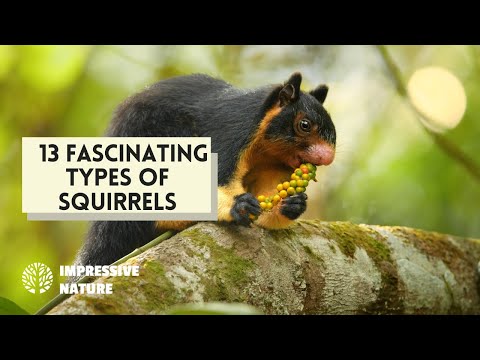
Squirrels break into all sorts of groups, each with its own size, shape, and habits. Some live in trees with big, fluffy tails.
Others dig tunnels and live in colonies. A few even glide from tree to tree at night.
Tree Squirrels
Tree squirrels mostly stick to the branches. You’ll recognize species like the Eastern gray squirrel (Sciurus carolinensis), the fox squirrel, and the American red squirrel.
Their long, bushy tails help them balance and “talk” to each other. They munch on nuts, seeds, fungi, buds, and sometimes bird eggs.
They build dreys—nests made from leaves and twigs—in the forks of branches or use hollow trees for shelter. Females usually raise two litters per year in temperate places, with about three to seven babies per litter.
Some tropical tree squirrels, like the Oriental giant squirrels (genus Ratufa), grow huge and spend their lives high in the canopy. The African pygmy squirrel and the neotropical pygmy squirrel stay tiny, sticking close to branches and eating insects or sap.
Ground Squirrels
Ground squirrels live on or under the ground. This group includes prairie dogs, marmots, chipmunks, and the groundhog.
You’ll find them in fields, grasslands, and along forest edges. They dig burrows for safety, raising young, and storing food.
Prairie dogs form big colonies with complicated tunnels. Marmots are larger and might hibernate for months.
Chipmunks stay small and stripey, storing snacks in their cheek pouches. Ground squirrels eat seeds, roots, insects, and sometimes small vertebrates.
Population sizes jump around depending on the species and location. Some groups shrink because of habitat loss, but others do just fine living near people.
Flying Squirrels
Flying squirrels don’t actually fly—they glide. They use this cool skin membrane, called a patagium, to move from tree to tree.
You’ll probably spot them at night since they’re nocturnal. North America has three main species: the southern flying squirrel, the northern (or eastern), and the Humboldt flying squirrel.
They glide to dodge predators and to search for food. Their menu? Nuts, fruit, fungi, and sometimes insects.
Flying squirrels make their homes in tree cavities or old woodpecker holes. Sometimes, they’ll use nest boxes too.
Their big eyes and soft fur help them thrive after dark. You might not see them much during the day, but you can sometimes hear rustling or notice round nests tucked in old trees.


