
Ever wondered just how smart a chimpanzee really is? You’re definitely not the only one. Scientists usually estimate that the average IQ of a chimp falls somewhere between 40 and 60.
That puts their intelligence close to what you’d see in a 3 or 4-year-old kid. It’s a handy way to imagine what chimps might understand or how they figure things out in their world.

Chimps use tools, talk to each other (in their own way), and even show empathy sometimes. That’s more than just wild animal stuff, right? Still, you can’t really compare their IQ scores directly to humans. Their brains just work differently, and their tests focus more on things like memory and problem-solving.
If you keep this in mind, you’ll probably appreciate their cleverness for what it is, not just in human terms.
You might spot a chimp fishing termites with a stick or cracking nuts open with rocks. That’s them understanding cause and effect. Their smarts help them survive and adapt, and honestly, learning about this can give you a new respect for animal intelligence.
Curious about what shapes their intelligence or how it stacks up against ours? Let’s dig in.
Chimpanzee IQ: Estimates and Interpretation

Chimpanzee IQ scores give us a rough idea of what their minds can do, but honestly, those numbers don’t tell the whole story. We measure their intelligence differently than we do for humans.
You’ll see what these IQ ranges really mean, how chimps match up to human testing, and why these scores can only go so far.
Ranges of Chimpanzee IQ Scores and Their Meaning
Most people put chimpanzee IQ between 35 and 60 on a human scale. That basically means they think a bit like a 3 to 4-year-old child. It’s about solving basic problems, using tools, and learning from each other.
Some research gives lower numbers, like 20 to 25, but those are less common. It’s tough to measure animal intelligence, honestly.
Here’s a quick look at what those numbers usually mean:
- IQ 20-25: Basic thinking, a bit like a toddler.
- IQ 35-60: More advanced problem-solving and tool use.
- Above 60: Pretty rare—maybe shows some next-level learning, but it’s not clear.
If you look at it this way, you can see how chimps use their practical intelligence in the wild, like grabbing bugs with sticks or working together.
Comparing Chimpanzee IQ to Human Intelligence Testing
Comparing chimp IQ to human IQ is tricky. Human tests focus on language, math, and puzzles—things chimps don’t really do. Tests built for people don’t really catch skills like tool use or social learning.
Chimps shine in areas like:
- Planning what they’re going to do next
- Using tools in clever ways
- Communicating with gestures and faces
- Picking up new tricks from others in their group
That’s pretty different from a standard human IQ test.
So, chimp IQ scores mostly give you a sense of their problem-solving, not the full range of what they can do.
Limitations of Measuring Chimpanzee Intelligence
Trying to measure chimp intelligence has some big challenges. Their brains just don’t work like ours. Human-designed tests can miss a lot, like emotional smarts or the cultural stuff they pick up.
Some of the main issues:
- Test design: Human tests want language, but chimps don’t use it the same way.
- Brain differences: Chimps learn and think in ways that don’t fit our scoring systems.
- Environment: Wild chimps show off skills you’ll never see in a lab.
So, if you see an IQ number for a chimp, remember it’s just a rough guess. It’s only one piece of the puzzle.
If you’re interested, reading more about how chimps solve problems or interact with each other can give you a way better sense of their intelligence than any number could. For instance, this article on chimpanzee IQ digs into how those scores are made and what they really mean.
Unique Aspects of Chimpanzee Intelligence
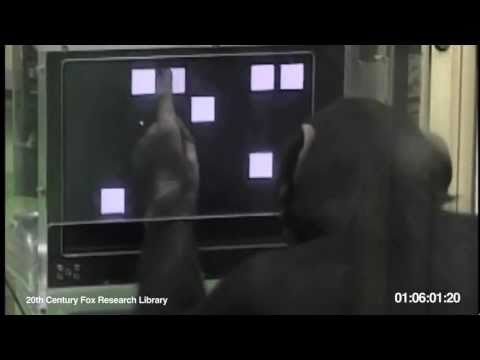
Chimps show off some pretty impressive skills when it comes to solving problems, talking to each other, and just being smart in their own way. These things make their intelligence unique and tell us a lot about how they see the world.
Problem-Solving and Tool Use Abilities
Chimps are surprisingly good at figuring out puzzles and using tools to get what they need. They’ll grab sticks to fish for insects, smash nuts with stones, or use leaves as a sponge for water.
That’s a clear sign they get cause and effect.
You might watch a chimp pick out just the right tool for a job, which shows some real planning. They don’t just do this by instinct—they learn from each other, passing down tricks.
This knack for using tools puts them near the top among smart animals. Their problem-solving helps them survive in the wild and face new challenges.
Social Intelligence and Communication Skills
Chimps have pretty strong social skills. They use gestures, facial expressions, and sounds to share feelings or warn each other about danger.
You could see a chimp give a special call to gather the group, or maybe a gentle touch to calm a friend. That shows they get relationships and know how to work together.
Their ability to read social cues is huge in their complex groups, where they make friends and settle arguments. Social smarts help them cooperate and boost their odds of survival.
Cognitive Variability Among Individual Chimpanzees
Not every chimpanzee thinks the same way. Researchers have noticed that their problem-solving and social skills can really vary from one individual to the next.
Some chimps pick up new tasks pretty fast, while others seem to shine when it comes to communication. Genetics definitely play a part in this, but a chimp’s experiences and surroundings matter too.
Each chimp ends up with their own mental strengths. If you’re curious, it’s kind of fascinating to see how this helps researchers figure out how intelligence develops in animals so closely related to us.
For more detailed insights, you can check out chimpanzee cognitive studies and their heritability here.


