
When exploring the differences between a snowshoe hare and an arctic hare, you’ll find that these two fascinating animals have distinct traits and habitats. The snowshoe hare, known scientifically as Lepus Americanus, is smaller and more suited for forest environments, while the arctic hare, or Lepus Arcticus, thrives in the rugged terrain of the northern tundra.

Both belong to the lagomorph family, which also includes rabbits, but their adaptations make them unique. For instance, the snowshoe hare has larger hind feet that help it move through snow, while the arctic hare has a stockier body, which allows it to endure colder climates.
As you read further, you’ll discover more about their behaviors, diets, and how they play vital roles in their ecosystems. Each species has its own story, and learning about them can deepen your appreciation for wildlife.
Physical Characteristics and Classification

Snowshoe hares and Arctic hares differ in several physical traits and classification. Understanding these distinctions helps you appreciate their adaptations to their environments.
Coat Comparison and Camouflage
Both the snowshoe hare (Lepus americanus) and Arctic hare (Lepus arcticus) have unique and effective coats. The snowshoe hare has a thick winter coat that is bright white, which helps it blend into its snowy surroundings. In contrast, the Arctic hare can also be white but often has grayish fur during summer, providing it with natural camouflage among rocks and tundra.
These camouflage adaptations are vital for protection from predators. The snowshoe hare’s fur also has a slightly different texture, offering warmth during harsh winter months. Both hares’ coats change color with the seasons, ensuring they remain discreet in their respective habitats.
Distinctive Features
When it comes to distinguishing between these two hares, several features stand out. The snowshoe hare is typically smaller, weighing about 3 to 4 pounds and measuring around 16 inches long. In contrast, the Arctic hare can weigh between 5 to 15 pounds and grow up to 27 inches long.
Both animals have huge ears that help them detect sounds while foraging. The snowshoe hare’s most notable characteristic is its large hind feet. These feet prevent it from sinking into the snow, making it easier to travel and escape predators. It’s fascinating to see how evolution shaped each hare’s features for survival in their specific environments.
Habitats and Distribution

In this section, you’ll learn about where snowshoe hares and arctic hares live. Each species has adapted to unique environments that suit their needs.
Snowshoe Hares’ Regions
Snowshoe hares are found in various regions across North America. They primarily inhabit wooded areas and boreal forests. You can spot them in the northern United States and throughout Canada.
These habitats provide key resources like food and shelter. Snowshoe hares thrive in areas with plenty of shrubs and twigs to eat. You might notice them in areas rich with coniferous trees.
In interior Alaska, they are common and play an important role in the ecosystem. The snowshoe hare’s fur changes color with the seasons, helping it blend into its environment, particularly during snowy winters.
Arctic Hares’ Adaptation to the Tundra
Arctic hares are specially adapted to survive in the harsh conditions of the arctic tundra. They can tolerate extreme cold and have thick, warm fur to protect them from snowfalls.
These hares live primarily in northern Canada and Greenland, where the landscape is mostly open and lacks trees. Instead of forests, you will find them in areas with low shrubs and grasses.
Their strong back legs allow them to hop across snow and cover large distances in search of food. The arctic hare’s white coat during winter makes it hard to spot against the snow, providing safety from predators.
Both species show a wonderful example of how animals adapt to their environments.
Behavior and Lifestyle
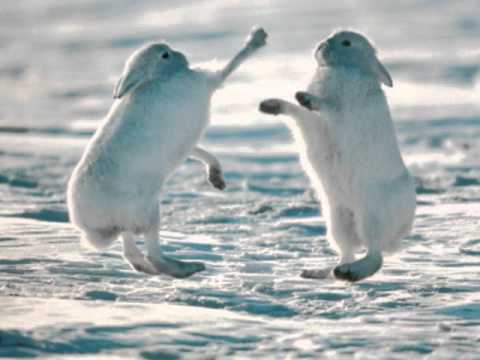
Snowshoe hares and arctic hares have unique behaviors and lifestyles that suit their environments. They share some traits, but their adaptations reflect different habitats and survival strategies.
Dietary Habits
Snowshoe hares are herbivores, primarily feeding on a variety of plants. During summer, they enjoy tender grasses, clover, and dandelions. As winter arrives, they switch to harder foods, like twigs, bark, and evergreen needles.
Arctic hares also feed on plants, but their diet is slightly different. They eat willows, mosses, and leafy greens. Their thick fur offers insulation against cold while they forage in snowy areas, making them well-adapted to their environment.
Both hares have to deal with food scarcity in winter, which influences their foraging behavior. They are known to be crepuscular, meaning they are more active during dawn and dusk, helping them evade predators.
Reproductive Patterns
The breeding season for snowshoe hares typically occurs from late winter to spring, peaking in early April. A female hare can have several litters each year, usually ranging from three to eight leverets per litter.
The gestation period lasts around 36 days, allowing for relatively rapid population growth.
Arctic hares also have a similar reproductive cycle. They breed in late spring and can produce up to five litters a year, depending on food availability.
Both species play a role in the hare population cycle, maintaining balance in their ecosystems. Their lively reproduction is essential for the survival of the species, especially in harsh conditions.
Predators and Conservation

Snowshoe hares and Arctic hares face various predatory threats that impact their populations. Understanding these factors is essential for their conservation. Here, we explore the common predators and their effects on these hares.
Common Predatory Threats
Snowshoe hares often fall prey to lynx, red foxes, and coyotes. Lynx are particularly specialized hunters of these hares. They catch snowshoe hares during their peak population cycles because of their sharp reflexes and excellent hearing.
Arctic hares also face predation from Arctic foxes and other larger predators. These foxes possess great adaptability and can hunt effectively in harsh environments. As climate change affects these habitats, the balance of the food chain is altered, potentially increasing hunting pressure on hare populations.
The International Union for Conservation of Nature (IUCN) monitors these species, assessing their conservation status and encouraging efforts to maintain balanced ecosystems. Keeping track of predator and prey dynamics is important for the health of both snowshoe and Arctic hare populations.


