
Have you ever wondered what could possibly be bigger than a blue whale? The blue whale holds the title of the largest animal in the world. It reaches lengths of up to 100 feet and weighs as much as 200 tons. While this magnificent ocean creature seems unbeatable in size, a few contenders from the past might have surpassed it.
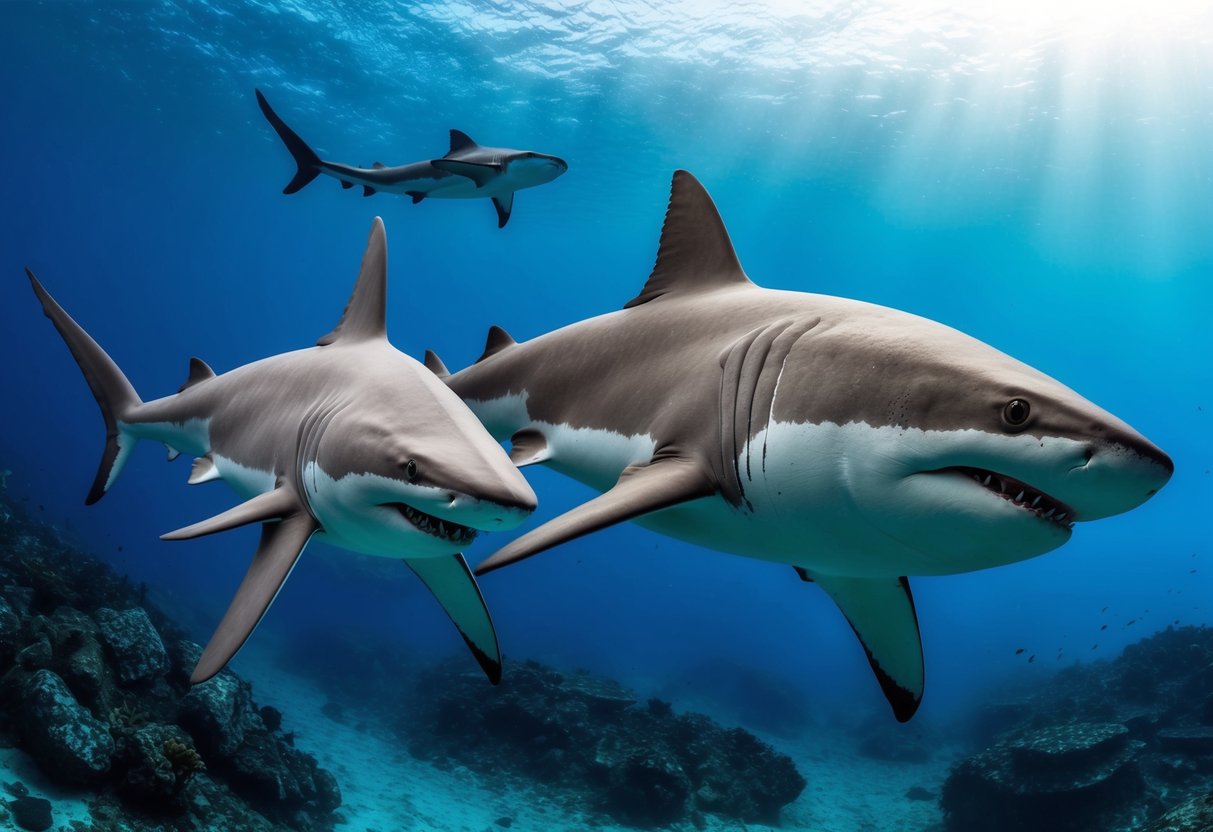
Some dinosaurs, for instance, were enormous and could have exceeded the size of today’s blue whale. The fascinating history of these ancient beings offers insight into just how diverse and vast life has been on Earth. You might also discover the newly found species, Perucetus colossus, which may rival the blue whale for the title of the largest animal ever to exist.
Join us as we explore the incredible world of marine giants and ancient creatures, uncovering the mysteries of those that were bigger than the immense blue whale. You’ll be amazed at what lies beneath the surface of our oceans and throughout history.
Blue Whale Fundamentals

Blue whales are fascinating creatures known for their incredible size and unique features. They belong to the baleen whale family and are classified as marine mammals. Their anatomy and habitats play a crucial role in understanding why they are the largest animals on the planet.
Anatomy and Size of Blue Whales
Blue whales can grow to be the largest animals that have ever lived. They can reach lengths of up to 100 feet and weigh as much as 200 tons. Their immense size includes a heart that can weigh as much as a small car!
A blue whale’s body is streamlined to help it swim efficiently. They have long, flat heads with U-shaped mouths. Their tongues are enormous, weighing around 2.7 metric tons. The baleen plates in their mouths act like a filter, allowing them to catch krill, their main food source.
The blue whale’s skin is a bluish-gray color with lighter spots. These markings help researchers identify individual whales. With such vast body mass, they need to consume large amounts of krill daily, sometimes up to 4 tons.
Species and Habitats
Blue whales belong to the species Balaenoptera musculus and have several types. The Antarctic blue whale is the largest, while the pygmy blue whale is the smallest. Other types include the North Pacific blue whale and the northern Indian Ocean blue whale.
These marine mammals are found in oceans worldwide, typically in deep waters. They migrate seasonally, often moving to warmer waters for breeding. This journey can cover thousands of miles.
Blue whales prefer areas rich in krill, which they find by using echolocation. Their habitats vary but are essential for their survival. Understanding their species and habitats helps in conservation efforts to protect these magnificent creatures.
Diet, Behavior, and Lifecycle
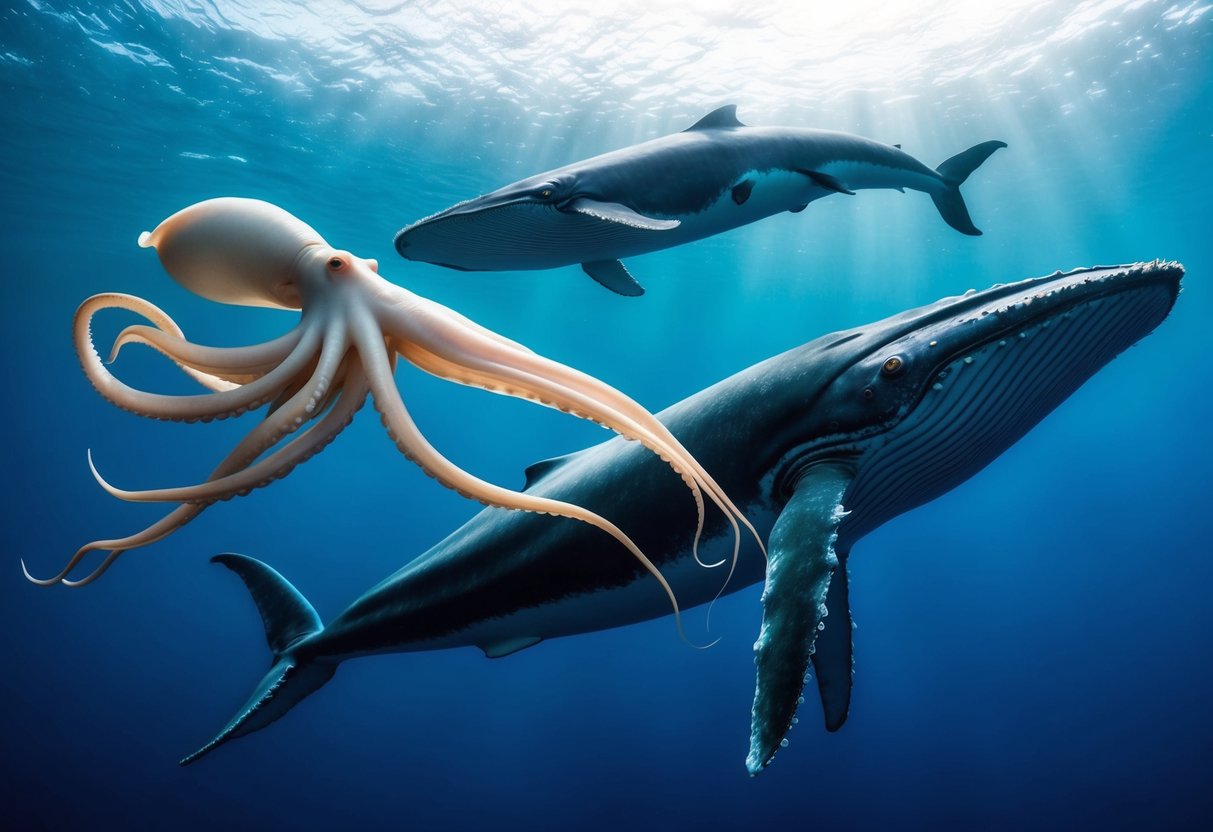
You’ll discover fascinating details about how blue whales feed, communicate, and reproduce. These aspects are essential to understanding their lives as one of the largest creatures on Earth.
Feeding Patterns and Diet
Blue whales primarily feed on tiny shrimp-like animals called krill. During feeding season, they can consume up to 4 tonnes (8,000 pounds) of krill each day. They use a method called filter feeding. Their large mouths scoop in massive amounts of water, which is then pushed out through their baleen plates, trapping the krill inside.
Feeding usually occurs in colder waters during the summer months when krill are abundant. In winter, they migrate to warmer waters to breed. The sheer volume of food they consume is vital for their energy needs and growth, especially for young calves.
Communication and Speed
Blue whales are known for their impressive communication skills. They produce deep, low-frequency sounds that can travel for miles underwater. These sounds help them communicate with one another, especially over long distances.
In terms of speed, blue whales can swim at about 5 miles per hour (8 kilometers per hour) in a relaxed manner. When they need to move quickly, they can reach up to 20 miles per hour (32 kilometers per hour) in short bursts. Their ability to glide efficiently through water is essential for their hunting and migration.
Reproduction and Lifespan
Blue whales have a long reproductive cycle. Females typically give birth every 2 to 3 years after a gestation period of about 11 to 12 months. A newborn calf weighs around 2.5 tonnes (about 5,500 pounds) and can grow rapidly, gaining up to 200 pounds (90 kilograms) a day while nursing.
They can live a long life, often reaching an age of 70 to 90 years, and some may even live over 100 years. Their longevity allows them to contribute to their population over an extended period, helping maintain genetic diversity.
Comparative Biology
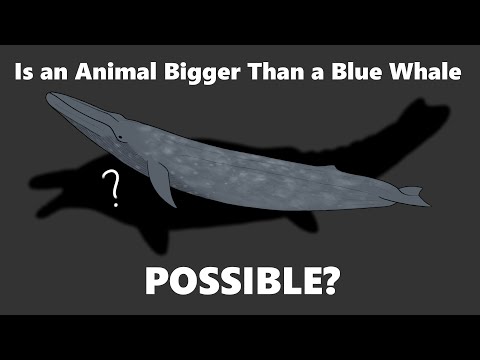
Understanding the size of the blue whale in relation to other creatures helps you appreciate its significance in the animal kingdom. In this section, you will explore how the blue whale compares to other marine animals and how it stacks up against some of the largest land animals.
Comparison With Other Marine Animals
The blue whale is the largest animal on earth, reaching lengths of up to 100 feet and weighing as much as 200 tons. In comparison, the sperm whale can grow to about 60 feet and weigh around 45 tons.
Some other notable marine animals include:
- Whale shark: The largest shark, maxing out at about 60 feet but weighing much less at 15 tons.
- Fin whale: Coming in at around 88 feet and up to 80 tons, it is the second-largest whale.
- Killer whales (Orcas) and humpback whales are significantly smaller, averaging about 20-30 feet.
The size difference illustrates how the blue whale stands out among marine life.
The Blue Whale and Land Giants
While the blue whale is the biggest marine creature, it dwarfs most land animals too. For instance, the T-rex, a famous dinosaur, was around 40 feet long and weighed up to 9 tons.
You might be surprised to learn that a megalodon, a prehistoric shark, could reach 60 feet, but still falls short of the blue whale’s impressive size.
In terms of mass and length, the blue whale outmatches most land animals, even in prehistoric times. That’s an incredible thought when you consider the vastness of both land and sea!
Threats and Conservation
Blue whales face significant challenges that threaten their survival. Understanding these challenges and the ongoing conservation efforts can help protect these magnificent creatures.
Challenges to Survival
The primary threat to blue whales is human activity. Many whales fall victim to ship strikes, which can cause serious injury or death. As they travel vast distances in search of food, collisions with large vessels are a common risk.
Additionally, blue whales are impacted by climate change. Changes in ocean temperatures affect their diet, particularly their main food source, krill. With krill populations fluctuating, finding enough food can become challenging.
There’s also the issue of noise pollution. Sounds from ships and industrial activities disrupt communication and navigation for these whales. Together, these threats greatly diminish the chance of survival for blue whales in the wild.
Efforts for Protection
Conservation programs are crucial for the protection of blue whales. Many organizations focus on reducing ship traffic in key feeding areas. This helps minimize encounters between whales and vessels.
Another important strategy is monitoring whale populations. Scientists gather data to understand how many blue whales remain in the wild. This information guides policies and helps determine the effectiveness of current conservation efforts.
Finally, raising public awareness is vital. Educating people about the plight of blue whales encourages support for conservation measures. You can help by advocating for policies that protect their habitats and support sustainable fishing practices.


