
When you get stung by a bee, your body can react in a few different ways depending on how sensitive you are. Most folks just feel pain, redness, and swelling right where the sting happened—basically your body’s way of dealing with the venom. Sure, it’s uncomfortable, but usually, it’s not a big deal.
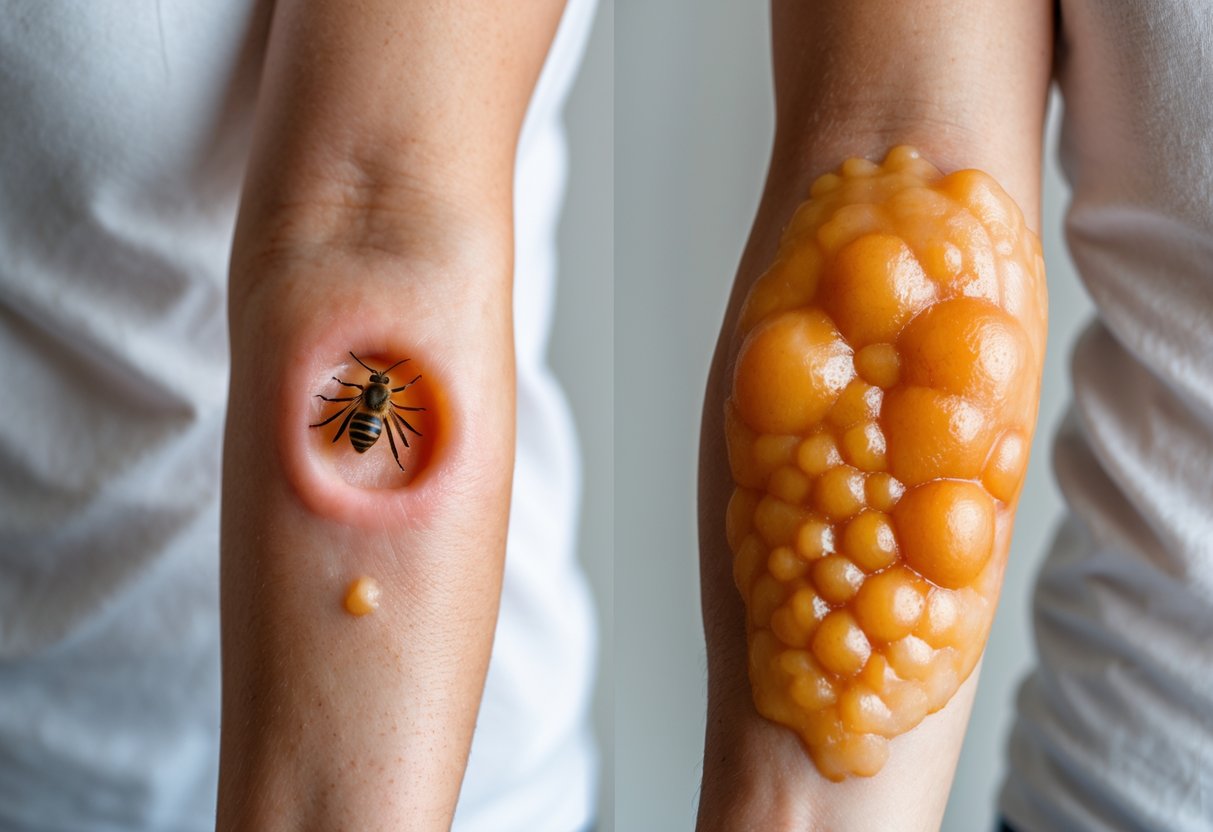
But sometimes, an allergic reaction hits harder and messes with your whole body, not just the sting spot. Maybe you break out in hives, can’t catch your breath, or your throat or tongue starts to swell—those need emergency care, no question.
It’s worth knowing the difference, right? That way you can stay calm or get help if you need it.
Normal Versus Allergic Reactions to a Bee Sting

Bees sting and your body responds, but how it responds depends on you. Sometimes, you just get a local reaction; other times, your whole system gets involved.
Spotting which is which helps you figure out what to do next.
What Happens When a Bee Stings
A bee injects venom under your skin when it stings. Your body jumps into action and your immune system tries to fight off the venom.
You’ll probably feel pain, see redness, and notice swelling or itching where the sting happened.
For most people, these effects stay right around the sting. The venom doesn’t really travel much.
But sometimes, your immune system goes overboard and releases a ton of IgE antibodies. That’s when things get more serious and the reaction spreads beyond just the sting.
Typical Symptoms of a Normal Reaction
Usually, a normal reaction sticks close to the sting. You might have:
- Pain and redness
- Swelling that’s small or sometimes bigger than you’d guess
- Heat or itchiness around the area
Sometimes, swelling gets pretty big—like, you get stung on your finger and your whole hand puffs up. That’s still considered normal.
These symptoms usually calm down in a few hours to a couple of days. Ice packs and painkillers from the pharmacy can help a lot.
Mild Allergic Reaction versus Large Local Reaction
A mild allergic reaction might show up as hives or some itching near the sting. Maybe the swelling spreads a bit, but not too far.
A large local reaction means the swelling gets pretty wide—over 10 cm (about 4 inches) and sticks around for days. The skin can feel tight or sore.
Even though it looks dramatic, this reaction usually stays in one area.
Neither of these reactions takes over your whole body. They’re not as scary as a full-blown allergy, but they can still be annoying or uncomfortable.
Signs of a Severe Allergic Reaction
A severe allergic reaction, called a systemic allergic reaction, affects your whole body. This one’s dangerous and needs fast action.
Watch out for:
- Trouble breathing or wheezing
- Swelling in your face, throat, or tongue
- Chest tightness or trouble swallowing
- Fast heartbeat or dizziness
- Hives or a rash that spreads everywhere
Doctors call this anaphylaxis. Your immune system basically floods your body with chemicals in response to the venom.
If you ever start feeling these symptoms, don’t wait—call 911 or get to the ER right away.
People who know they’re allergic to bee stings usually keep an epinephrine injector (like an EpiPen) on hand, just in case.
Managing and Preventing Allergic Bee Sting Reactions

It’s smart to know what to do right after a sting and how to dodge future ones. Recognizing when things are serious can make all the difference.
Immediate Care After a Sting
If you get stung, try to get the stinger out as soon as you can. Scrape it away with something flat, like a credit card—don’t pinch it.
Wash the spot with soap and water.
Put a cold pack on the sting to help with pain and swelling. If you need it, take some over-the-counter pain medicine.
Pay attention to how you feel. If you start having trouble breathing, swelling spreads far from the sting, or you get dizzy, get medical help right away.
When to Use Epinephrine or EpiPen
If you’ve had a serious reaction before, always keep an epinephrine kit like an EpiPen nearby. Use it right away if you notice breathing problems, swelling in your face or throat, a racing heart, or dizziness.
Epinephrine acts fast to calm the allergic response. Even if you start to feel better, call emergency services right after using it.
It’s important to get checked out by a doctor because symptoms can come back later.
Prevention Tips for Those at Risk
Try to stay away from spots where bees usually hang out, like flower gardens or overflowing trash bins. I’d recommend wearing light-colored clothes and skipping strong perfumes or lotions—those scents really seem to draw insects in.
Keep your food and drinks covered when you’re outside. If you know you’ll be around bees, ask your doctor about allergy testing or getting allergy shots.
Always carry your epinephrine kit with you. It’s also a good idea to show friends or family how to use it, just in case something happens.
Want to dig deeper? Check out this guide on managing a bee sting allergic reaction.


