
When the queen bee dies, your bee colony faces a major challenge. She’s the only bee that lays eggs, so the whole hive depends on her.
Without her, the hive might not make it unless the worker bees act fast and start raising a new queen. This replacement is crucial for keeping the colony alive and kicking.
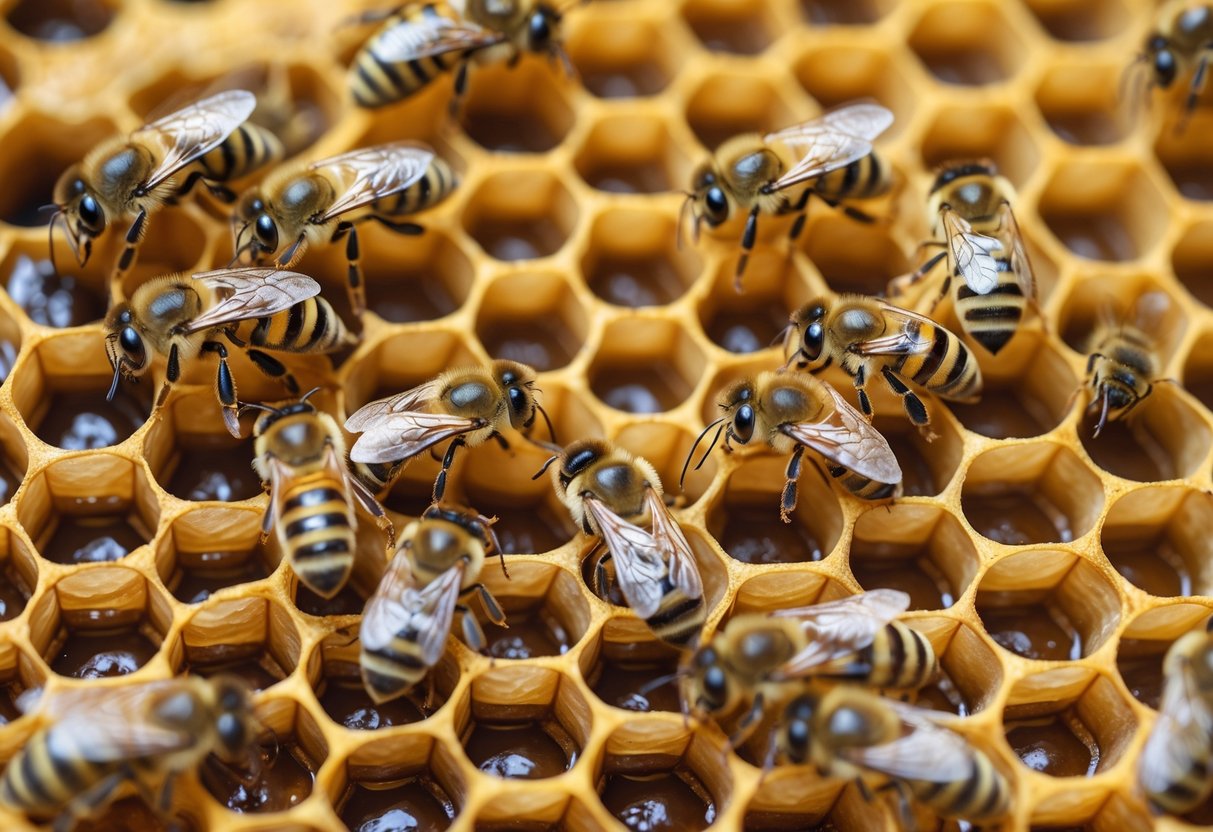
Bees rely on the queen’s pheromones to stay organized and calm. When she’s gone, the colony can get confused and restless.
Worker bees can step up, pick a young larva, and feed it royal jelly to turn it into the next queen. This move helps the hive bounce back.
If you know what happens when a queen bee dies, you can take better care of your hive. Spotting signs that the queen is missing lets you help your colony and make sure a new leader is ready.
What Happens When a Queen Bee Dies

When the queen bee dies, your hive faces some immediate changes. Worker bees notice the loss, egg production stops, and the colony’s structure starts to break down.
These shifts really affect how your bee colony works.
Immediate Changes in Hive Behavior
Your worker bees notice right away when the queen bee dies. They sense the loss because the queen’s pheromones, which normally keep the hive calm and organized, suddenly disappear.
Without those signals, bees can get restless and even a bit aggressive. Some workers start acting confused.
A few might even start laying eggs—though those eggs can’t turn into proper worker bees. The hive gets thrown into confusion.
Now, the workers focus on finding or raising a new queen to bring back order.
Impact on Egg Production and Brood
Only the queen lays eggs in the hive. When she’s gone, egg production stops immediately.
No new eggs means the brood—the developing bees—will run out soon. Fewer young bees can grow up to replace older workers.
Over time, this can shrink and weaken the hive. The worker bees try to solve this by raising new queens using larvae and feeding them royal jelly.
If they move quickly, they might save the colony.
Colony Organization Disruption
The queen’s pheromones don’t just calm worker bees—they help keep daily hive life in balance. When the queen dies, that chemical control vanishes, and hive organization can fall apart fast.
Without her, the roles of worker bees get mixed up. Tasks like foraging, cleaning, and caring for brood may slow down or stop altogether.
This chaos puts your hive’s future at risk until a new queen steps in and the colony accepts her.
You can dig deeper into how colonies react and recover when the queen dies at what happens if a queen bee dies.
How the Colony Responds and Replaces the Queen

When the queen dies, the hive reacts fast to keep the colony alive. Worker bees sense her absence, start the queen replacement process, and work hard to keep the hive going.
If they fail, the whole colony could be in real trouble.
Detection of Queen Absence
Ever wonder how worker bees know the queen is gone? The queen makes a special pheromone that controls the hive’s behavior.
When that scent fades, workers notice right away. Without her pheromone, worker bees get restless and their behavior changes.
They stop caring for eggs the usual way, and the hive’s organization falls apart. This pushes them to act quickly—otherwise, the colony might collapse.
Queen Replacement Process
Once the queen is gone, worker bees look for young larvae under three days old. They feed these special larvae with royal jelly, a super-rich food that can turn them into queens.
These larvae get raised in queen cells, which are bigger and hang down inside the hive. Nurse bees focus on protecting and feeding the future queens.
When new queens mature, they take mating flights and meet drones outside the hive. This step is crucial—without it, the new queen can’t lay fertilized eggs or keep your hive healthy.
Consequences if Replacement Fails
If your hive can’t raise a new queen, you’ll see problems pop up fast. Without her laying eggs, the number of worker bees drops as the old ones die off.
Honey production takes a hit, and the colony’s defenses get weaker. Sometimes, when no queen shows up, the workers start laying unfertilized eggs.
That just creates drones, which don’t really help keep the hive going. Things get messy—pests like varroa mites show up, and diseases spread more easily because the bees lose their sense of order.
You might even spot the hive trying to swarm or just falling apart. In the worst case, the whole bee population could vanish.


