
When your dog gets sprayed by a skunk, you’ll quickly notice an awful, stubborn stench that just won’t quit. Besides the smell, your pup might act strangely—maybe red eyes, drooling, or even a bit of temporary blindness.
Skunk spray really irritates your dog’s skin and eyes, and in some cases, it can lead to more serious health issues. Acting fast makes a big difference.
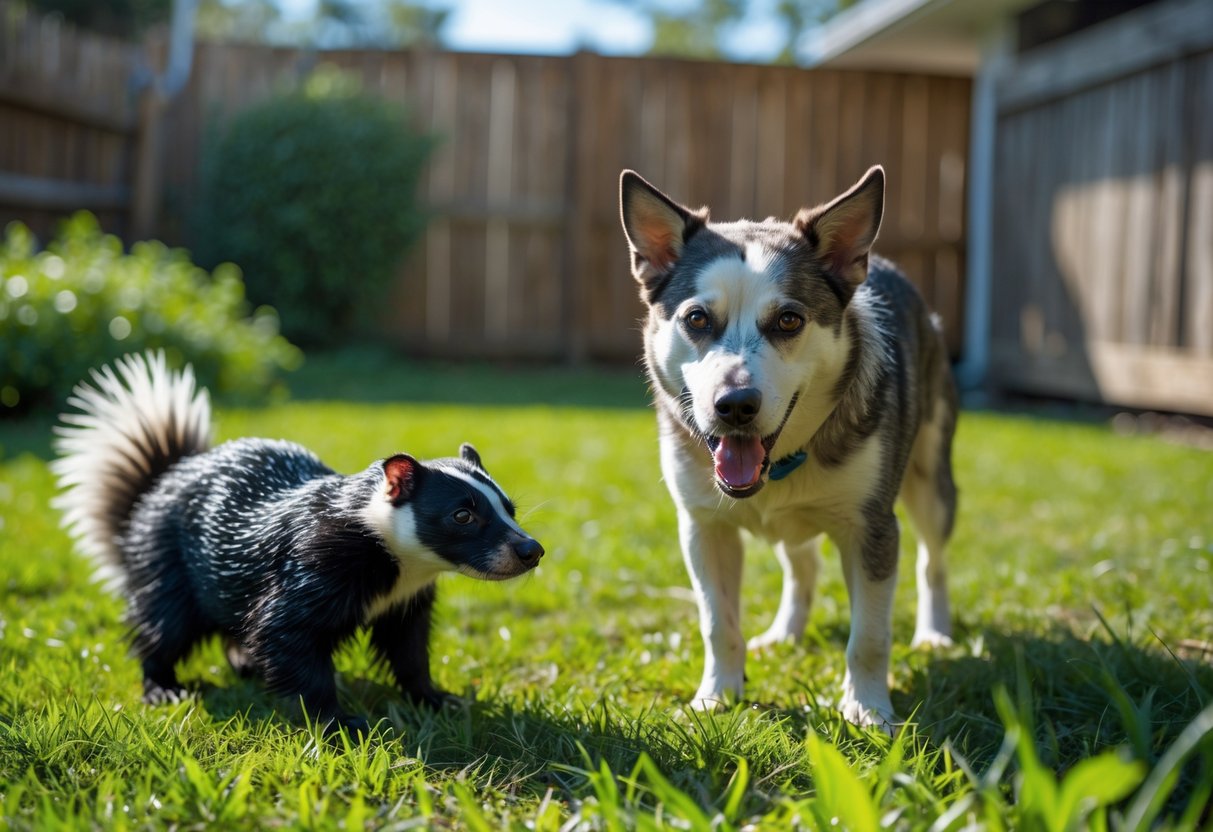
You might feel a bit lost about how to clean your dog or what you should watch for after they get sprayed. Taking the right steps helps protect your dog and makes that stink a lot more manageable.
This guide covers what happens when a dog gets sprayed, how you can treat it, and when it’s time to call the vet.
Immediate Effects of Skunk Spray on Dogs
When a skunk sprays your dog, you’ll see some physical signs and health concerns right away. The smell lingers, and your dog’s behavior might change on the spot.
It’s good to know what symptoms to look for and why skunks even bother to spray in the first place.
Physical Reactions and Symptoms
The most obvious thing? That horrible skunk smell stuck in your dog’s fur. You’ll probably see your dog shaking its head, rubbing its face on the ground, or coughing.
Red, watery eyes are common, and you might notice a lot of drooling or tearing. Some dogs sneeze, and if the spray hits their eyes, they might have trouble seeing for a bit.
The smell can cling for days if you don’t clean it up properly. If your dog reeks, try a special cleaning mix—skip the regular shampoo, since it won’t cut through the odor.
Health Risks and When to Call a Veterinarian
Most dogs just get mild symptoms after a skunk sprays them. Still, sometimes things get more serious.
Skunk spray can really irritate your dog’s eyes, nose, and skin. In rare cases, the chemicals in the spray can damage red blood cells, which leads to anemia.
Watch for signs like weakness, pale gums, trouble breathing, or sudden changes in how your dog acts. If your dog vomits, acts super tired, or has a swollen face or eyes, call your vet right away.
If any spray gets in their eyes or mouth, don’t wait—reach out to your vet to avoid bigger problems.
Why Skunks Spray Dogs
Skunks spray to defend themselves when they feel threatened. Their spray is a mix of oily chemicals that stinks and burns.
A skunk can shoot spray as far as 15 feet—especially if your dog gets too close or tries to chase it. That’s their way of escaping danger.
Dogs don’t always pick up on the warning signs and might get sprayed by accident, especially at night when skunks are out and about. Understanding skunk behavior can help you keep your dog safe and your nose happy.
For more details, check out this guide on caring for your dog after a skunk encounter.
How to Safely Remove Skunk Odor from Your Dog
If your dog gets hit by skunk spray, acting quickly helps dial down the smell and keeps your pet more comfortable. First, check your dog thoroughly, then use a special cleaning mix to tackle that stubborn odor.
You’ll also want to protect your home and maybe think about steps to keep skunks away next time.
Initial Steps to Take After a Skunk Encounter
Start by looking at your dog’s eyes, nose, and mouth. Skunk spray has oils that irritate and can even cause temporary blindness if they get in the eyes.
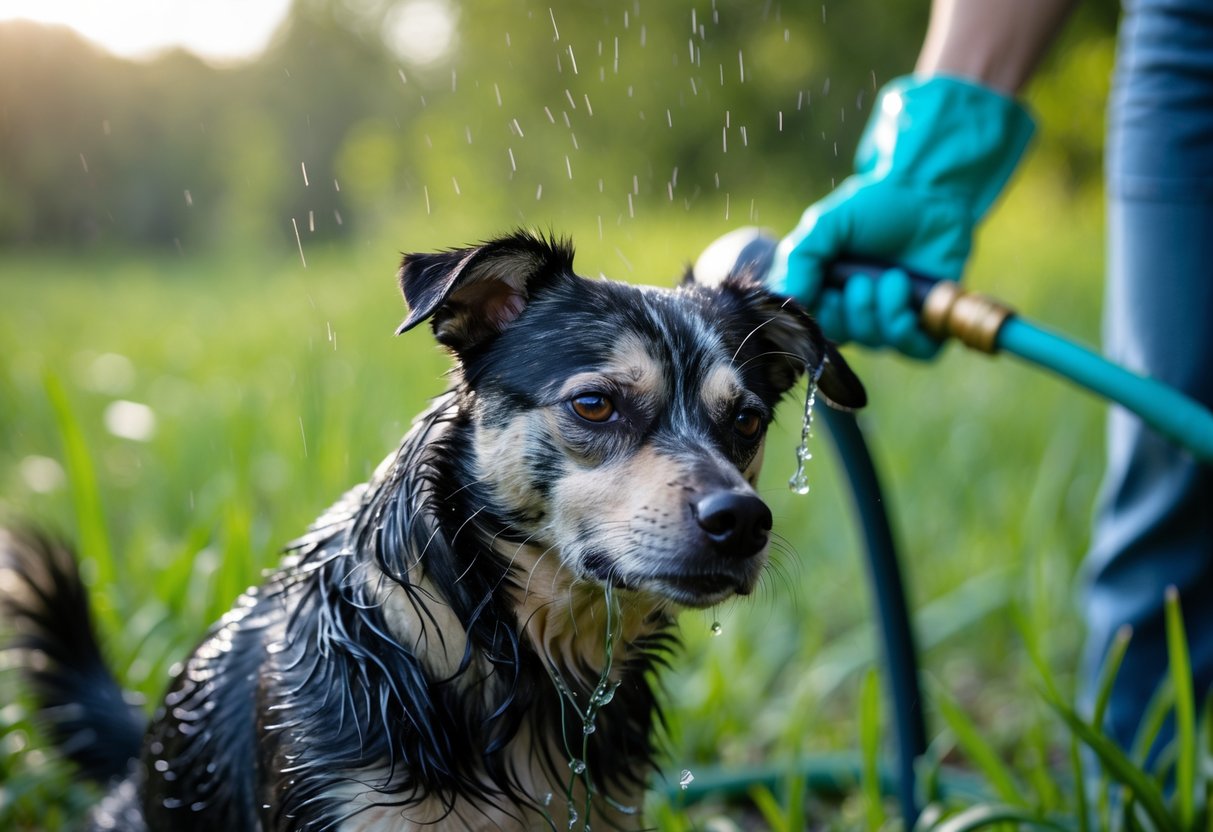
If your dog’s eyes look red or swollen, rinse them gently with lukewarm water for about 20 minutes. Try to keep your dog calm and stop them from rubbing their face, or you’ll just spread the skunk oil around.
Take your dog outside if you can, so the smell doesn’t fill your house. Wear old clothes or gloves since skunk spray sticks to fabric and skin.
Don’t grab the regular dog shampoo yet—plain soap won’t break down skunk oil and might make things worse.
Effective Skunk Odor Removal Solutions
The best trick for skunk odor is a homemade mix that breaks down the oils fast. Here’s what you’ll need:
- 1 quart (4 cups) of 3% hydrogen peroxide
- ¼ cup baking soda
- 1-2 teaspoons liquid dish soap
Apply this solution to your dog’s fur, but keep it away from their eyes and mouth. Let it sit for about five minutes—don’t leave it on too long, or you risk lightening their fur.
Rinse your dog thoroughly with water. Sometimes you’ll have to repeat the process if the smell sticks around.
This mixture works well but doesn’t store—it loses its punch, so make a fresh batch each time. If your dog got spray in their mouth or nose, call your vet to make sure they stay safe.
Protecting Your Home from Skunk Smell
If your dog comes inside before you clean them, that skunk odor can hang around your house for days. After you clean your dog, wash any bedding or blankets they used.
Odor-neutralizing sprays or an air purifier can help clear the air. Open windows or run fans to move the smell out.
Skip the heavy-duty scented cleaners—they can mix with skunk odor and make things worse. For carpets or furniture, use products made to neutralize pet odors, not just mask them.
Clean up quickly so the smell doesn’t spread everywhere.
Preventing Future Skunk Encounters
If you want to keep skunks from spraying your dog again, start by getting rid of food sources near your yard. Skunks love pet food, birdseed, and even compost piles, so stash those away if you can.
Block off spots where skunks might hide, like woodpiles, under decks, or beneath porches. Try stuffing holes with leaves or straw to make those spaces less inviting.
You could also set up motion-activated lights or sprinklers. Skunks really don’t enjoy sudden noise or bright lights, so these gadgets might just do the trick.
Keep an eye out for any signs of skunk activity in your yard. If you spot anything, act fast and get rid of whatever might be attracting them.
Want more tips? Check out how to remove skunk smell from your dog.


