
You probably think of tigers as fierce meat eaters, and that’s true. But what exactly can’t they eat? Tigers are obligate carnivores, so they just can’t survive on plants, processed human food, or a bunch of toxic substances — meat and whole prey parts give them the nutrients their bodies need.
If you’ve ever wondered why a tiger’s digestive system and its role as an apex predator make so many foods dangerous or useless, let’s dig in. You’ll get a better idea of how habitat, prey size, and even food safety shape what tigers eat—and what they really shouldn’t touch.
Foods That Tigers Cannot Eat
Tigers rely on meat and whole prey parts to stay healthy. A lot of common foods either do nothing for them or actually hurt them fast.
Why Tigers Cannot Digest Plant-Based Foods
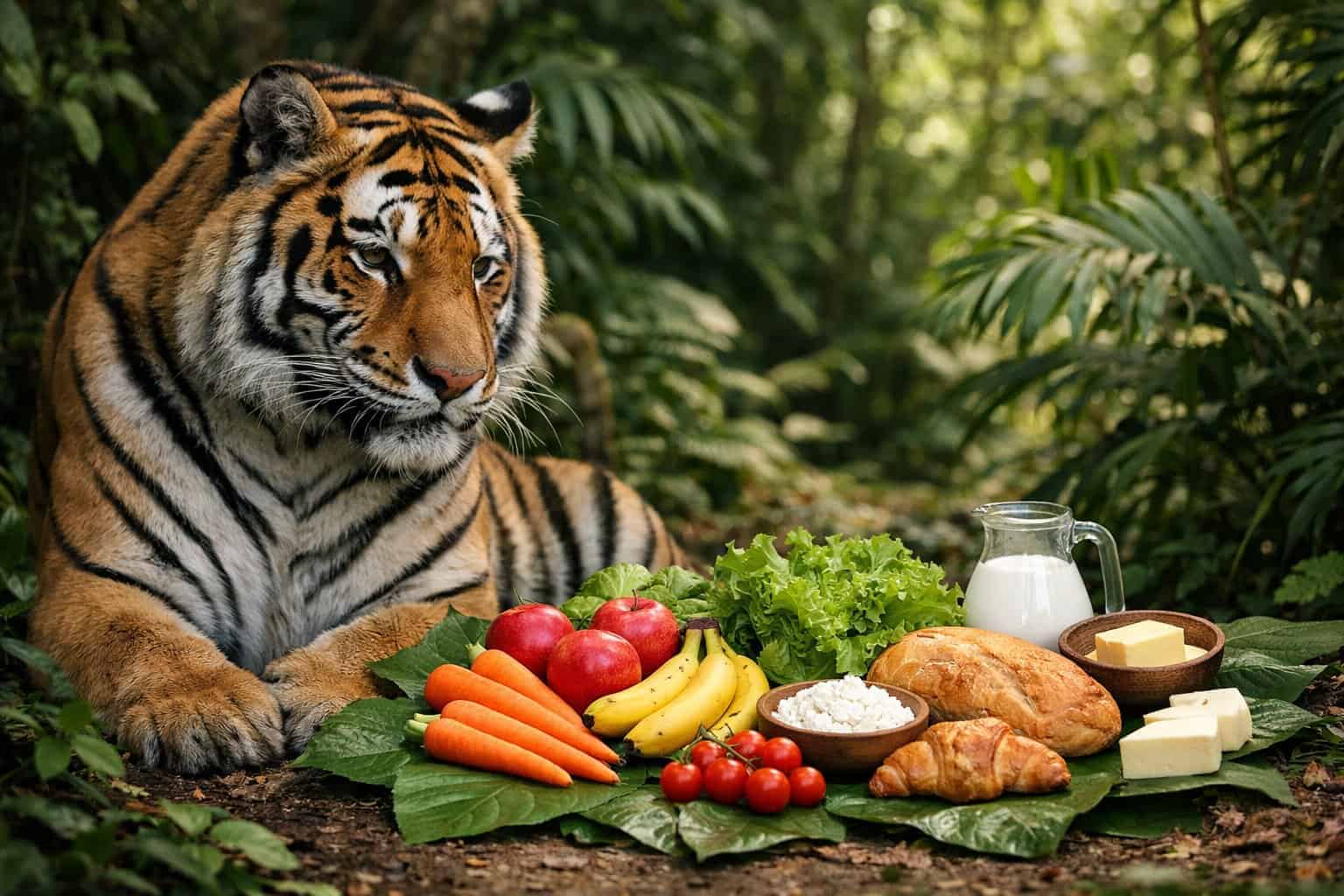
Tigers need nutrients found only in animal flesh. Their bodies just aren’t built to break down plant cell walls, which contain cellulose. Without the right enzymes, they can’t digest it.
Their digestive tracts are short and very acidic, perfect for breaking down protein and fat quickly. Herbivores ferment plants, but tigers just can’t.
Feeding tigers plants or fruit leaves them missing essential amino acids like taurine, plus concentrated vitamin A and certain fatty acids in organs. Sometimes, a tiger might nibble grass and then vomit to clear its gut, but that’s not real nutrition. Eating too much plant matter can even cause diarrhea or blockages.
Dangers of Processed Human Foods for Tigers
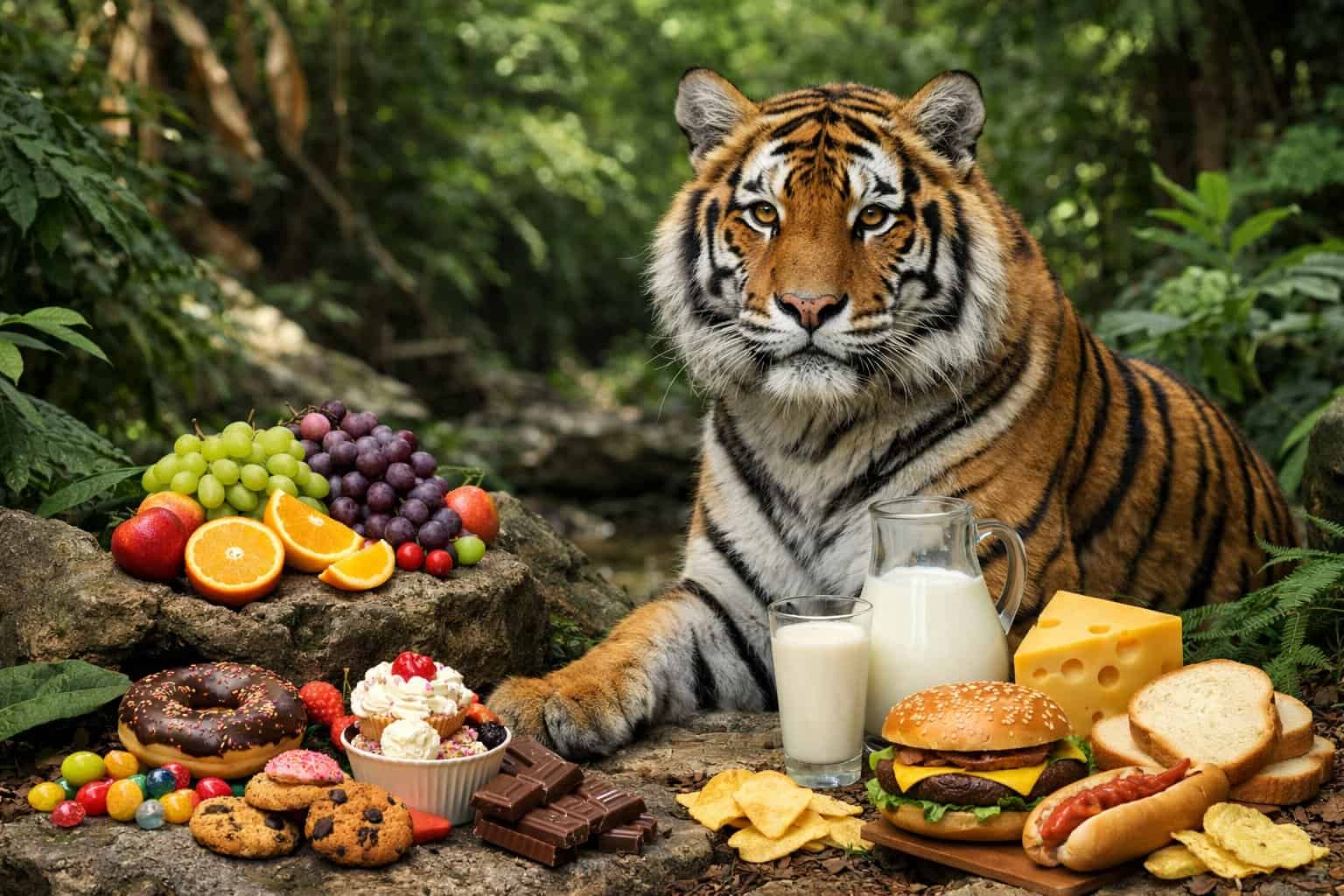
Processed human foods come loaded with sugar, salt, spices, preservatives, and all kinds of additives that tigers can’t handle. Cooked meats don’t have the organs, bone marrow, or connective tissue that provide minerals and balanced fats.
Some foods—like chocolate, onions, and garlic—are just plain toxic. They can damage organs or red blood cells fast.
Feeding table scraps or pet food made for dogs or house cats brings risks like obesity, dental disease, and vitamin imbalances. In captivity, experts feed big cats large raw cuts and special supplements to mimic whole-prey nutrition. In the wild, human food can even make tigers lose their fear of people, which leads to dangerous encounters.
Toxic Substances and Hazardous Items
Tigers can die if they eat chemicals or spoiled food. Things like pesticides, rodenticides, antifreeze, and heavy metals hit their organs or nervous system hard.
Tigers can get poisoned by water contaminated with industrial runoff or farm chemicals. Spoiled carcasses or animals loaded with parasites can pass on infections or toxins.
Even stuff that seems harmless—like plastic or baited traps—can choke them or cause internal injuries. Keeping habitats and water sources clean and free of traps really matters for their safety.
Physical Limitations With Certain Prey Animals
Not every animal makes sense for a tiger to hunt. Tigers skip prey that’s too small, like insects or tiny rodents, because it’s just not worth the energy.
On the flip side, adult elephants, rhinos, or big gaur are usually too dangerous for a tiger to tackle alone. Some prey parts can hurt them too: cooked bones splinter and might puncture their guts, and tiny bones or big splinters can choke.
Prey carrying heavy parasite loads or diseases can infect a tiger. Tigers use stealth, retractable claws, and a throat bite to kill efficiently, so when they go after prey outside their comfort zone, they risk getting hurt.
Prey That Tigers Rarely or Cannot Hunt
You might wonder which animals tigers avoid. Usually, it’s because they’re too dangerous, too small to be worth the trouble, or just not in the tiger’s usual hunting range.
Large and Dangerous Animals Tigers Avoid
Tigers tend to avoid fully grown rhinos, adult elephants, and big gaur or mature water buffalo—especially when adults are around and the herd’s on guard. These animals can gore or trample a tiger.
Even strong adults like gaur or big water buffalo can seriously injure a tiger, so they usually go after calves or weaker individuals instead.
Tigers often steer clear of adult bears because bears can fight back and leave wounds that end a tiger’s hunting career. Horses and cows in groups are risky too; a charging cow or horse can injure a tiger. When prey groups defend their young, the tiger usually backs off.
Prey Too Small or Difficult for Tigers
Tigers don’t really bother with tiny animals like mice, most birds, or insects as main food sources. Small prey like mouse deer, little birds, or rodents just don’t give enough calories for the effort it takes to hunt them.
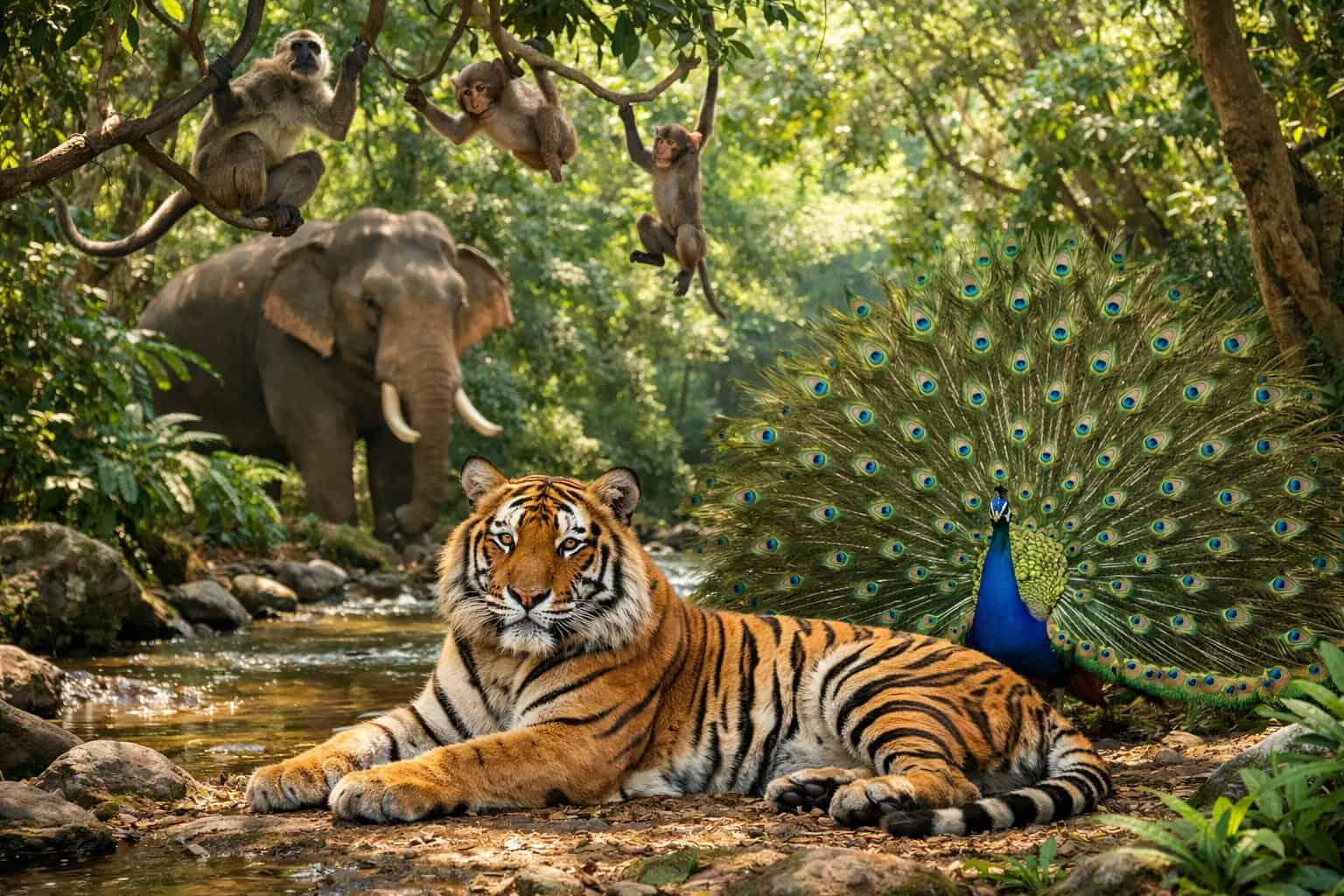
Sometimes, tigers might go after hares or peafowl, but those aren’t their main meals. They also avoid prey that’s hard to catch or not worth the risk—porcupines can stick them with quills, and super-agile animals like adult leopards or serow are tough to pursue.
Very small deer species—like roe deer, tufted deer, or barking deer—might get taken if the chance comes up, but not often.
Unique Limitations of Tiger Subspecies
Your local tiger subspecies really shapes what they go after when they hunt. Siberian tigers usually target moose and elk if they can find them. Most of the time, they steer clear of adult bison—probably not worth the risk.
Bengal tigers often stick to sambar deer, chital, and wild boar. They’ll only try for gaur or water buffalo if the situation feels just right.
Sumatran tigers live in thick forests, so they hunt smaller animals like tapirs and young deer. They almost never bother with really big prey.
Sundarbans tigers sometimes go after livestock near rivers. If a young rhino or elephant calf gets separated, they’ll take that chance too.
Every subspecies adapts to whatever prey lives nearby and to how those animals defend themselves. So, what one tiger ignores in one area might be exactly what another tiger hunts somewhere else.


