
You can spot squirrel poop by its size and shape. Look for small, barrel-shaped pellets about the size of a raisin—usually brown and often in clusters.
If you want a quick ID, check for oblong pellets with rounded ends, roughly 1/4″ to 1/2″ long and about 1/8″ thick.

When you find these droppings in your attic, near bird feeders, or along roof eaves, it’s a sign squirrels have been there. You’ll know where to check next.
This article gives you photos, simple comparisons with rat and mouse droppings, and safe cleanup tips. That way, you can act quickly and keep your home clean.
What Does Squirrel Poop Look Like?

You’ll see small, pill-shaped pellets that cluster in one spot. These dark, smooth pellets are about the size of a grain of rice or a coffee bean.
Usually, you’ll find them near nests, feeding areas, or in attic corners.
Shape and Size of Squirrel Droppings
Squirrel droppings look like cylindrical or oblong pellets. Each pellet measures about 1/4 to 1/2 inch long and about 1/8 inch in diameter.
They have rounded ends and a pretty uniform shape. Unlike rat droppings, they don’t taper off at the end.
Tree squirrels and ground squirrels leave similar shapes, but ground squirrel pellets can be a bit thicker. Flying squirrels make smaller pellets, but they’re still pill-like.
You’ll often spot many pellets grouped together in one place, not scattered all over.
If you compare them, mouse droppings are much smaller. Rat droppings are longer and more tapered.
Watch for size and uniform shape to help you tell if it’s squirrel poop.
Color and Texture of Squirrel Feces
Fresh squirrel scat looks dark brown to almost black. Over time, it lightens to brown, tan, or gray as it dries out.
Sometimes, if squirrels eat lots of nuts and seeds, the pellets might have a slight gloss to them.
The texture stays fairly smooth and firm when fresh. You might notice tiny plant fibers or seed bits inside.
In attics, dried pellets can crumble into dust. Be careful when cleaning, and wear protection.
Where to Find Squirrel Droppings
Squirrels pick favorite spots, or “latrines,” to do their business. Check under bird feeders, along rooflines, in attics, inside chimneys, and near tree hollows or nests.
Flying squirrels often use a corner of an attic or a hollow tree, making a deep pile.
Ground squirrels leave droppings around burrow entrances or on their runways. Tree squirrel pellets show up on rafters, beams, or in loft spaces near nests.
Look under nut-bearing trees and around pet food left outside.
Distinguishing Squirrel Droppings by Odor and Contents
Fresh squirrel pellets have a mild, musty odor. They’re not as strong-smelling as some other rodents.
If you notice a strong ammonia smell, it’s probably rat droppings or urine, not squirrel feces.
Inside the pellets, you’ll often see undigested bits like shell fragments, seed skins, or plant fibers. Rat droppings rarely show seed fragments and often look greasy.
So, use odor and what’s inside, plus size and shape, to confidently identify squirrel poop.
For extra ID tips and photos, check the visual guide at RidMyCritters.
Squirrel Poop vs Other Animal Droppings
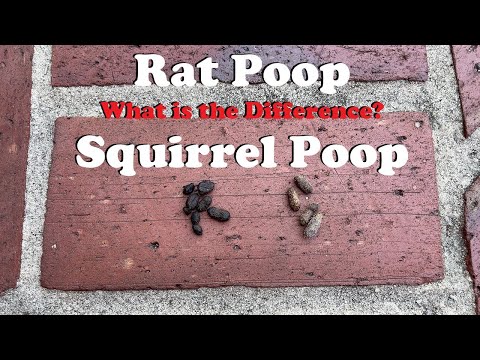
There are some clear visual and location clues that help you tell squirrel droppings apart from common rodents. Focus on size, shape, color, and where you find the pellets.
Squirrel Poop vs Rat Poop
Squirrel poop is small, cylindrical, and pretty uniform—about 1/4 to 1/2 inch long. The pellets usually have rounded ends and a smooth surface.
Color can range from dark brown to black, depending on what the squirrel’s been eating.
Rat droppings are longer and thicker, often 1/2 to 3/4 inch, and look more tapered with rougher edges. You’ll often find rat feces in scattered piles along travel routes, especially near walls or food.
If you spot droppings near gnawed packaging or greasy marks on baseboards, you’re probably looking at rat poop.
Location matters. Squirrel pellets turn up in attics, rafters, tree branches, or near nests.
Rats tend to leave droppings in pantries, behind appliances, and in basements. Use size and where you find them to avoid mixing up rodent droppings.
Squirrel Droppings Compared to Mouse Droppings
Mouse droppings are tiny—about 1/8 to 1/4 inch—and look like small grains of rice with pointed ends.
They’re smaller than squirrel feces and usually show up in larger numbers in one spot.
Mouse scat often lines baseboards, sits inside cabinets, or collects in corners where mice travel.
Squirrel poop is bulkier and more uniform than mouse droppings. If you find pellets clustered in high places like attic corners or on rafters, that’s a sign of squirrels.
Also, keep an eye out for other signs: shredded nesting material and chewed insulation usually mean squirrels. Greasy rub marks and tiny footprints more often point to mice.
Common Mistakes in Identifying Rodent Droppings
A lot of folks make the mistake of judging only by color. But honestly, rodent diets can change the color of droppings so fast—dark or light shades alone won’t really tell you which critter did it.
It’s smarter to look at size and shape first. After that, check the location and see what else is around.
Some people think that if they find clusters of pellets, it must be rats. Actually, squirrels leave clusters too, especially up in attics.
People often mix up old, dried droppings with fresh ones. Old scat just gets brittle and sometimes changes shape, which makes things confusing.
Always wear gloves and a mask when you’re checking droppings. If you can, snap a photo of the pellets next to a ruler before you clean up or call pest control.


