
You might think milk is harmless or even kind to a tiger, but honestly, that instinct will lead you astray. Tigers lose the enzyme that breaks down lactose after weaning, so if you give them milk, they’ll likely end up with stomach upset, gas, or diarrhea.
Milk does more harm than good for most adult tigers because they can’t digest lactose.
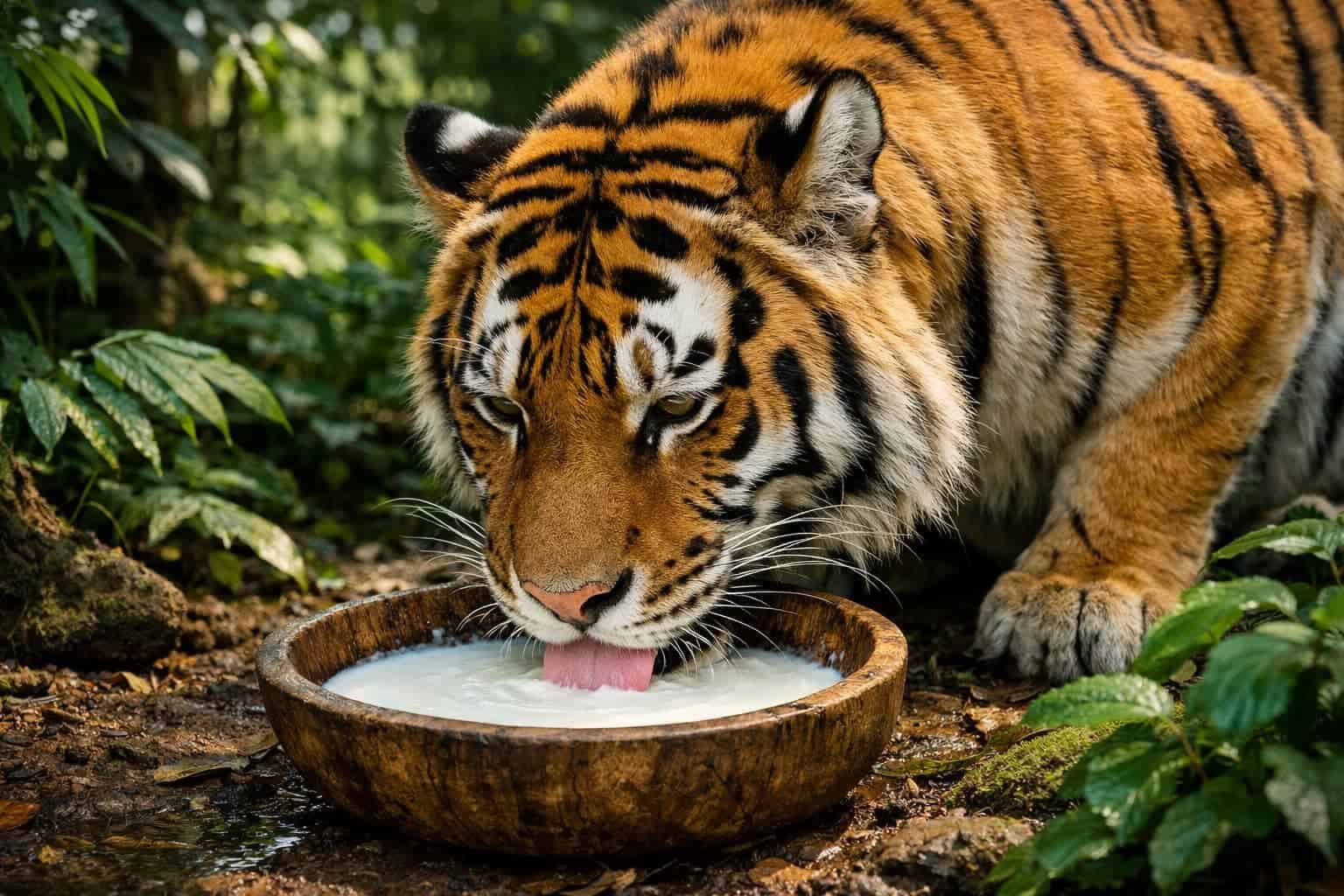
Ever wondered why milk hits tigers differently than it does human babies? This article digs into the biology behind lactose intolerance and how a tiger’s gut is really built for meat, not milk.
You’ll also hear about a fungus called tiger milk mushroom (with a name that’s honestly confusing) and what people actually use it for, if anything.
Milk Consumption and Tigers: Biological Realities
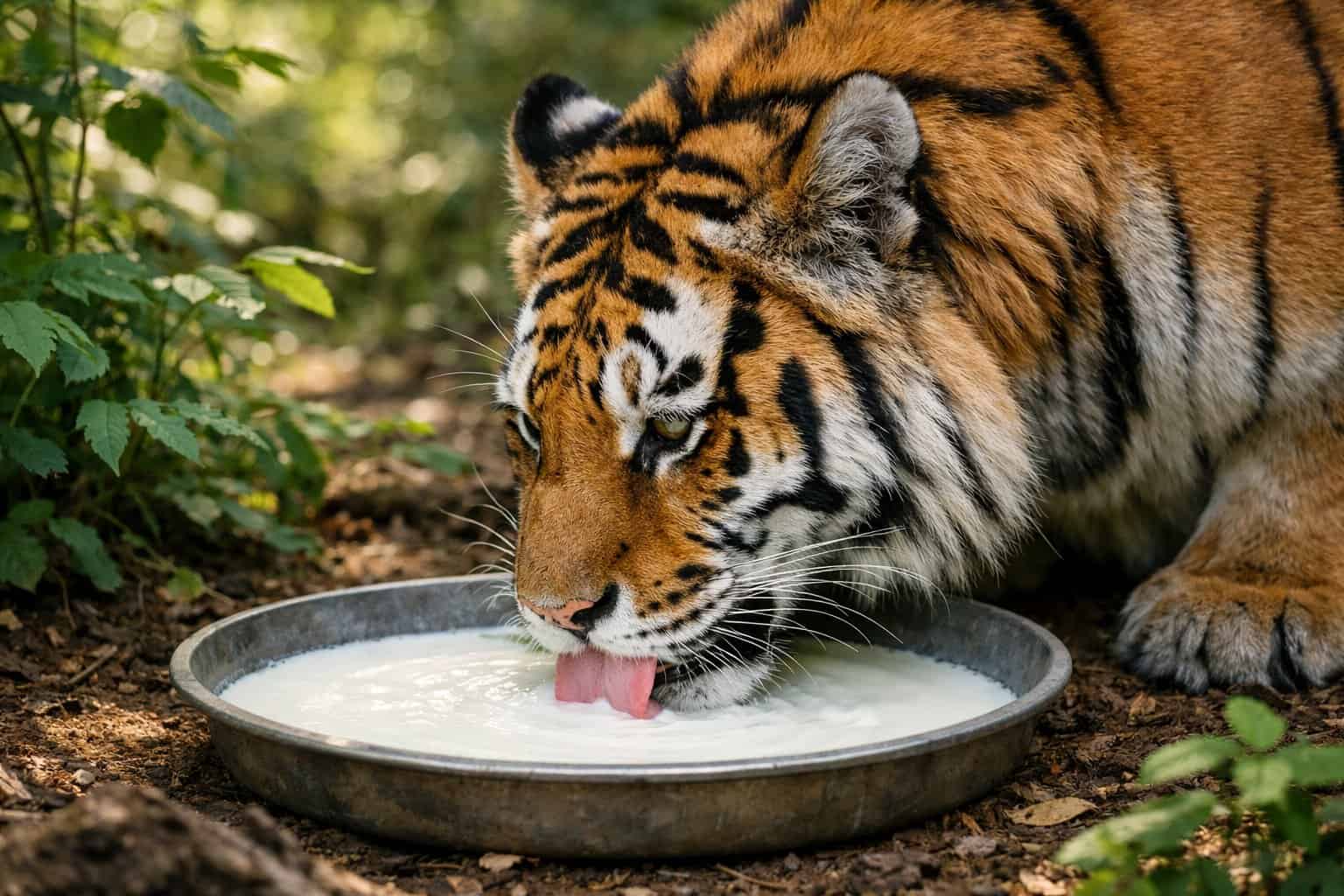
Milk helps tiny tiger cubs grow, but it can mess up older tigers who stop making the enzyme they need to digest lactose. Wild adult tigers just drink water and get their nutrients from meat.
Captive cubs sometimes need milk substitutes, but those have to match tiger milk’s high fat and protein.
Why Tigers Are Lactose Intolerant
Like a lot of carnivores, tigers stop making much lactase after weaning. Without that enzyme, lactose from cow or goat milk just passes through, undigested.
This undigested lactose feeds gut microbes and usually causes gas, diarrhea, and stomach cramps in adult tigers. If a tiger gulps down a lot of milk, the symptoms get worse.
Zoo staff avoid giving dairy to adults and keep an eye on stools and hydration if they have to use milk, even for a short time.
Tiger Cubs and Nursing Needs
Newborn tiger cubs rely on their mother’s milk for calories, fat, protein, and antibodies like IgA that protect their gut. Colostrum—the first milk—gives them immune protection in those first 24–48 hours.
Cubs grow quickly and need energy-packed milk until they’re ready for meat. If the mother’s gone, caretakers step in with special milk replacers high in fat and protein.
Vets figure out the right amount by weight and age, then cut back on milk as cubs start eating solid food.
Comparing Tiger Milk With Other Milks
Tiger milk has more fat and protein than cow, goat, or pig milk. It’s richer and packs more calories, which cubs need for their rapid growth.
Cow’s milk misses key nutrients unless you adjust it, so it’s risky for cubs. Pig milk gets closer in fat, but still can’t match tiger milk’s full nutrition.
Always use formulas made for big cats if you can.
Risks and Side Effects of Giving Milk to Tigers
If you give regular dairy to tigers, you’ll probably see diarrhea, dehydration, and weight loss. Repeated stomach issues can lead to infections and throw off their electrolytes.
Adults might show loose stools, bloating, or not want to eat after they drink milk. If a cub gets the wrong kind of milk replacer, you might notice poor growth or missing nutrients.
It’s best to work with a vet for the right dosage and supplements. Conservation programs really depend on proper feeding, so follow guidelines and listen to veterinary advice.
There’s more on why cow’s milk is a bad idea for tigers in articles about lactose intolerance and captive feeding, like this one: (https://cananimalssafelyeat.com/can-tigers-safely-eat-milk/).
The Tiger Milk Mushroom: Health Myths and Modern Uses
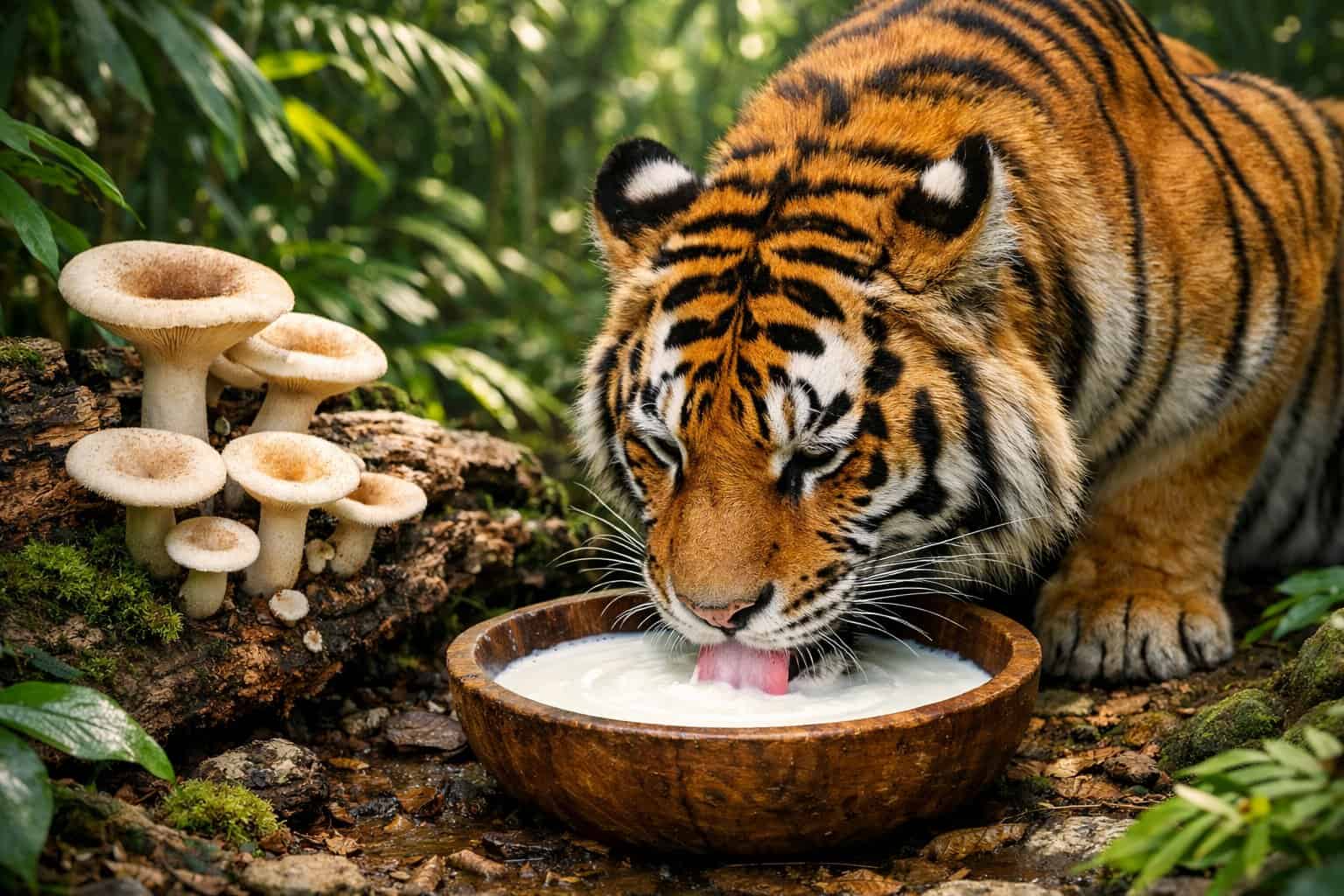
Tiger’s milk (Lignosus rhinocerus) is a medicinal mushroom from Malaysia and Southeast Asia. People use its extracts and powders for lung or immune support, though honestly, research is still catching up.
What Is Tiger’s Milk (Lignosus rhinocerus)?
Tiger’s milk is just the nickname for Lignosus rhinocerus, a fungus native to Malaysia and nearby regions. The part people want grows underground as a dense sclerotium.
Traditional healers have used it for decades to treat coughs and throat problems. Modern supplements use hot-water or alcohol extracts and sometimes just grind up the whole sclerotium.
Lab tests show the sclerotium contains polysaccharides and other plant-like chemicals that might affect immunity. Harvesting takes a while—years, sometimes—so the fungus can be pricey and potency varies.
Traditional and Contemporary Health Benefits
People in Malaysia have used tiger’s milk for coughs, asthma-like symptoms, and wound care. You’ll see it promoted for respiratory health—things like coughs, sinusitis, and other upper respiratory infections.
Practitioners usually make a decoction or mix the powdered sclerotium into drinks. Researchers are now exploring it as an immune booster.
Early studies suggest it may help immune responses and lower inflammation tied to respiratory issues. Still, be careful with cure-all claims; there aren’t many human clinical trials yet, although lab work hints at possible benefits for breathing and wound healing.
Antioxidants and Anti-Inflammatory Properties
Tiger’s milk extracts show antioxidant activity in lab tests. These antioxidants can neutralize free radicals, which could help protect cells from damage.
The sclerotium is where you’ll find most of the polysaccharides and phenolic compounds. Extracts also show anti-inflammatory effects in cell and animal studies, lowering markers of inflammation.
That might explain why people have used it for coughs and asthma. But let’s be real—what works in a test tube or mouse doesn’t always work the same way in people.
We need more well-designed human trials to know if it really helps and how much you’d need.
Dosage, Safety, and Potential Side Effects
Dosage really depends on the product. Most supplements suggest anywhere from 250 mg up to 1,000 mg daily of standardized extract.
Manufacturers aren’t always consistent about extract types or how potent they claim their product is. If you’re thinking about tiger’s milk for your immune system or your lungs, it’s probably best to pick something with clear extraction methods and a listed polysaccharide content.
We don’t have much solid safety data yet. Some people get mild stomach upset or allergic reactions.
If you know you’re seriously allergic to fungi, you should probably steer clear. There’s almost no human data about interactions with medications, so if you’re on strong immune drugs or chemo, don’t take it unless your doctor signs off.
Pregnant or breastfeeding? It’s just not worth the risk unless your clinician specifically says it’s okay.


