
When you spot bees swarming around your house, they’re probably hunting for a new home. Bees usually swarm because their old hive feels crowded, or there’s not enough food. So, a chunk of the colony leaves with the queen, hoping to start fresh somewhere else.
This is just bees doing what bees do—it helps them survive and keep their numbers up.
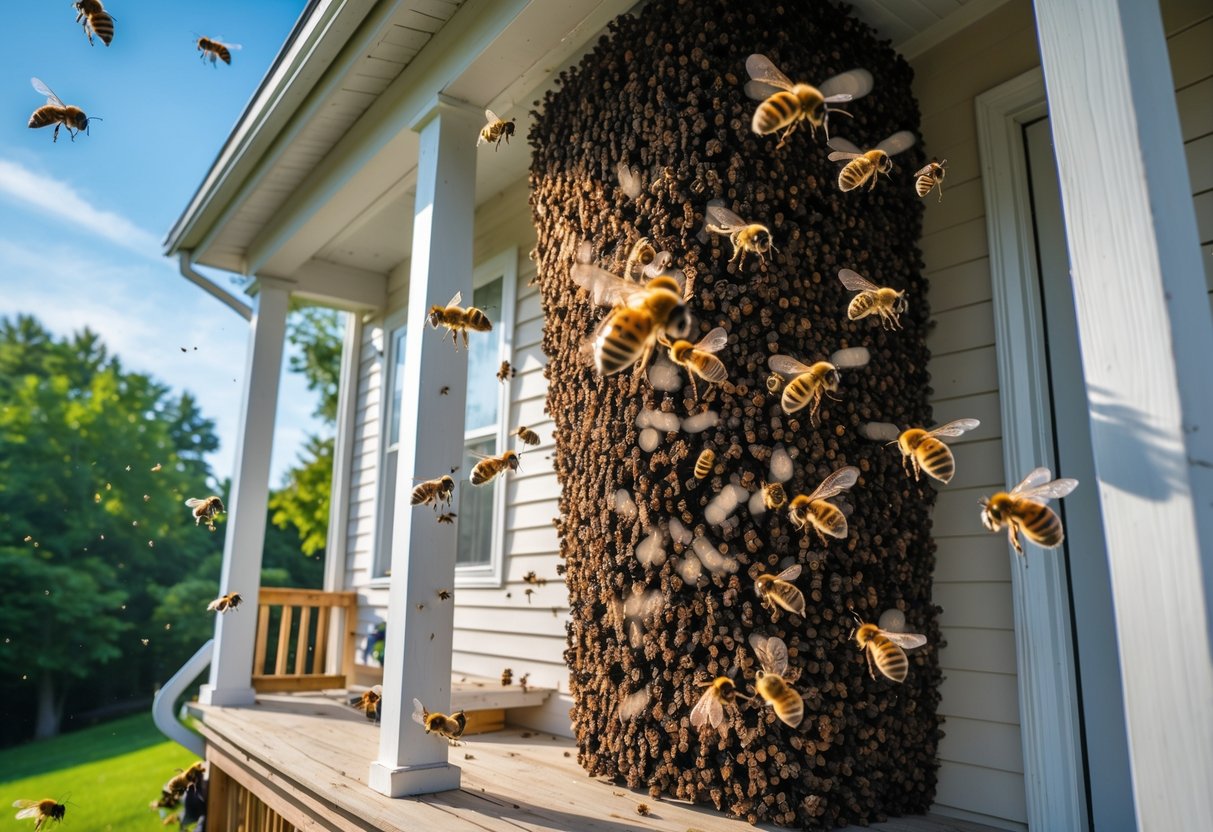
You might catch a big, buzzing ball of bees flying together or hanging on a tree or even your wall. Honestly, it looks a bit wild, but most of the time, these swarms are just passing by and won’t stick around.
Understanding why bees swarm can help you stay calm if it happens near your home. It’s not as dramatic as it seems.
Curious about what to expect or how to handle a bee swarm safely? Let’s get into some practical tips and facts about this common bee behavior.
Why Bees Swarm Around Your House

Bees swarm around houses mainly because they’re on the lookout for new homes or escaping crowded hives. They’re just following instincts, trying to keep the colony going.
If you know why bees swarm, you can respond with a bit more confidence and maybe a little less panic.
Understanding Bee Swarming Behavior
A bee swarm starts when a big group of bees leaves their hive with a queen, searching for a new place to live. Usually, they do this when things get too cramped.
The bees cluster around the queen to protect her, while scout bees zip around looking for a safe spot.
During this time, you might see the swarm hanging out on your property while they rest or scout. Swarming bees aren’t really in attack mode—they’re focused on moving, not fighting.
They use chemicals to chat with each other and stick together as a group.
Common Reasons Bees Swarm Near Homes
Bees love spots that offer shelter, so cracks in your walls, holes in wood, or even old bird nests can attract them. They’re just looking for a good place to start over.
Timing matters too. Bees usually swarm in warmer months when flowers bloom and food is easy to find.
If your place has wood with holes or cozy corners, bees might give it a closer look. It’s all pretty normal, but you should avoid messing with the swarm.
Want more details about why bees show up near houses? Check out this guide on causes of bee swarms near houses.
What To Do When Bees Are Swarming Around Your Home
If you see bees swarming near your home, they’re moving to find a new place to live. It’s best to stay calm and act with care.
There are a few simple steps that can help you stay safe and know when to get help.
Safe Actions for Homeowners
Don’t try to spray or hit the bees if you see a swarm. Bees can get defensive if they feel threatened, and you really don’t want to get stung.
Keep pets and kids inside, and steer clear of the swarm.
Close your windows and doors to keep bees from sneaking in. Check for tiny holes around your chimney or siding, since bees can squeeze through surprisingly small spaces.
Try to avoid loud noises or sudden movements. Just stay calm and watch from a safe distance.
If the bees settle somewhere like a tree or porch, let them be.
When to Contact Beekeepers
If the bees don’t leave or look like they’re building a hive, it’s time to call a local beekeeper or beekeeping group. They know how to move swarms safely, without hurting the bees.
Don’t try to take down a hive yourself, especially if it’s big. That can go wrong fast and make the bees angry.
Beekeepers can also check for issues like varroa mites, which can hurt bee colonies. They’re a great resource for keeping both your neighborhood and the bees safe.
Preventing Future Bee Swarms
You can cut down on bee swarms near your home by sealing up cracks or holes in siding, chimneys, or vents. Bees love to find little openings, so it’s worth checking those spots every now and then.
Clear your yard of loose wood, old tires, or any hollow junk that might attract a swarm. If you plant a flower garden, try to keep it away from your doorways—no one wants bees buzzing right by the front step.
Thinking about learning more? You might want to join a local beekeeping group. They’ll share tips and give you the scoop on swarm activity nearby.
If you’re curious, here’s a link for more info: Friendly Tips for Bees Swarming Around Your House.


