
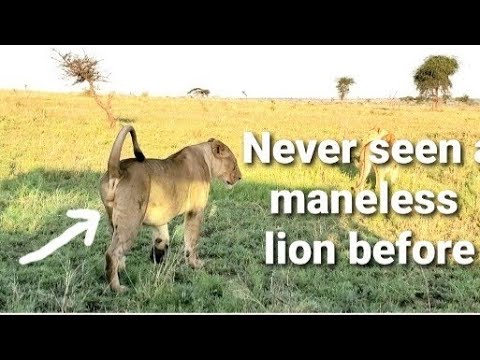
So, what do you call a lion without a mane? Most folks just say “maneless lion,” or maybe “maneless male lion” if you want to be specific. A maneless lion is basically a normal male that either never grew a full mane, or lost it because of genetics, hot weather, or who knows what else. That’s the short answer, but honestly, it’s kind of an interesting topic once you dig in.

In places like Tsavo, Kenya, you’ll spot lots of maneless males. Heat, genetics, and the local environment all play a part in what a lion’s mane looks like.
Let’s get into how these lions live, why they look so different from the storybook lion image, and even check out a few other animals that sometimes go hairless.
A Lion Without a Hair: Maneless Lions and Their Unique Appeal
These lions really show how appearance, history, and biology all mix together. Here, you’ll find out what “maneless” really means, hear about the famous Tsavo lions, look at rare hairless cases, and see how maneless males aren’t quite the same as truly hairless individuals.
Meaning of Maneless Lion and Scanty Mane Lion
A “maneless lion” or “scanty mane lion” just means an adult male without that big, fluffy mane you see in most photos. You’ll notice this a lot in East Africa, where some males might only have a bit of neck fuzz or short whiskers instead of a full mane.
Genetics, local climate, and hormone levels (especially testosterone) all play a role here. Hotter regions? Males tend to have smaller manes so they don’t overheat.
In some places, female lions prefer darker, fuller manes, but where manes are rare, the rules change. Just remember, “maneless” describes what you see—it’s not a disease.
Famous Tsavo Lions and Their History
The Tsavo lions in Kenya got famous back in 1898, and not for great reasons. Two maneless male lions near the Tsavo River started attacking workers building the Uganda Railway, actually stopping construction for a while.
Lieutenant Colonel John Henry Patterson hunted them down and killed them. Their skins and skulls ended up at the Field Museum in Chicago.
Tsavo’s lions still get a lot of attention because so many local males have little or no mane. Researchers think it’s a mix of the hot, thorny environment and maybe some unique genes in Tsavo lions.
If you’re curious, you can find lots of articles and conservation sites talking about both the history and what’s happening with Tsavo’s maneless lions today.
The Phenomenon of Hairless Lions
Now, a truly hairless lion—one with almost no fur at all—is super rare. Sometimes you’ll see lions with patchy fur from illness, parasites, or injuries, but being born without fur? That basically doesn’t happen in the wild.
If you hear about a “hairless lion,” double-check what’s really going on. It might be a maneless male, a lion with mange, or an animal recovering from injury. Mange, which mites cause, can strip off fur and make the lion sick.
Treat “hairless” claims with a bit of skepticism; most are temporary problems, not a natural thing like being maneless.
Maneless Male Lions Versus Hairless Lions
At first glance, maneless males and hairless lions might look similar, but the reasons behind their looks are totally different. A maneless male just has less mane, but still has normal body fur—common in places like Tsavo, thanks to climate, genetics, and behavior.
A hairless lion, on the other hand, loses body fur because of disease, injury, or a weird genetic glitch. That’s not good for insulation and usually means the lion isn’t healthy.
Here’s what to keep in mind:
- Appearance: maneless lions keep their body fur but lose the big mane; hairless lions lose fur all over.
- Cause: manelessness comes from adaptation or genetics; hairlessness is usually disease or rare mutations.
- Conservation: manelessness is normal variation; hairlessness signals health problems.
Why Some Lions Lack Manes or Hair: Causes, Adaptations, and Other Hairless Animals

Some lions grow huge manes, while others barely have any. Hormones, genes, and the local habitat all shape how much mane a lion gets.
Other species can go hairless too, but usually for different reasons.
Mane Development and Evolution
Testosterone and age drive mane growth. Males usually start growing a mane around two years old, and it fills in as testosterone rises.
A dark, thick mane often means higher testosterone, better immune health, and a better shot at winning fights or attracting mates.
Researchers believe the mane evolved as a way to show off and maybe protect the throat during fights. When they study the evolution of the mane, they compare African lions (Panthera leo melanochaita) and northern lions (Panthera leo leo) to spot differences in color, length, and what the mane actually does.
Ancient art—like some Egyptian pieces—shows lions with smaller manes, so clearly, mane traits have changed over time and place.
Environmental and Genetic Factors Influencing Manelessness
Heat and humidity shrink manes. In really hot places, a thick mane just makes a lion overheat and slows it down during hunts. That’s why natural selection favors smaller manes in those areas.
In the Tsavo region and parts of West Africa, you’ll see lots of males with weak or no manes. The hot climate and all that thorny brush make big manes a hassle.
Genes play a part too. Some male lions inherit genes that limit mane growth, even if their hormones are fine. Illness, parasites, stress, and bad nutrition can also thin out a mane.
Humans don’t help much—less prey and shrinking habitats can affect lion health and, by extension, their manes. That’s a worry for subspecies with lots of maneless males.
Lion Subspecies and Geographic Variations
Different lion groups grow manes differently. Asiatic lions (Panthera leo leo) in India usually have thinner manes than African lions.
West African and some northern African lions also often have weak manes.
Tsavo males in Kenya are famous for being mostly maneless. Researchers think both climate and all the thorny plants play a role.
Some historical populations, like the Mesopotamian lion and lions in ancient Greek and Egyptian art, often lacked full manes too. That could be because of subspecies differences or just local adaptation.
White lions are a special color variant and can still grow manes, although their mane traits vary just like other lions.
Curious Cases: Other Hairless and Nearly Hairless Animals
You can actually compare maneless lions to some of the deliberately hairless pets out there, and even to wild species that just happen to lack fur. Think about hairless cat breeds like the Sphynx, or those odd-looking dogs—Xoloitzcuintlis and Peruvian Inca Orchids. They don’t have fur because certain genetic mutations made it that way.
People have bred hairless guinea pigs, rats, and even Syrian hamsters. These little guys lose their fur because of mutations or intentional breeding choices.
Naked mole rats? They naturally go without fur, and it really works for them underground. Their hairlessness helps them control body heat and move through tunnels.
Some wild mammals, like hippos and babirusas, only look hairless. They actually have thick skin and a lifestyle that doesn’t need much fur, rather than a true genetic lack of hair.
So, it seems like hair reduction pops up for a bunch of reasons—controlling heat, digging underground, or just because of a random gene. The same kind of pressures probably shape whether lions have manes or not.


