
You might have heard the fun question about whether dogs evolved from dinosaurs. Dogs did not evolve from dinosaurs. Instead, they share a closer ancestry with wolves. This journey from wild canines to our beloved pets is a fascinating tale of evolution and domestication.
As you explore the history of dogs, you’ll find that they have been companions to humans for thousands of years. While their lineage stretches back to ancient canids, understanding their evolution helps you appreciate the bond you share with your furry friend. The story of dogs is not just about their ancestors but also about how they became an important part of our lives.
So, let’s dig into the interesting facts about how these loyal creatures came to be, the role of evolution in their development, and what sets them apart from dinosaurs and other ancient species.
Misconceptions About Canine Ancestry
Many people think that dogs evolved from dinosaurs, but that’s not correct. Understanding where dogs come from helps clear up common myths. Let’s explore these misconceptions further.
Dogs vs. Dinosaurs: Clarifying the Evolutionary Path
Dogs are not direct descendants of dinosaurs. Instead, they belong to a group called carnivorans, which includes animals like cats and bears. Dinosaurs, on the other hand, are reptiles that lived millions of years ago.
The nearest relatives of dogs are canids, which include animals like wolves, foxes, and coyotes. Dogs specifically evolved from an ancient species of wolves. This happened long after dinosaurs had already disappeared from the Earth.
So, while dinosaurs were fascinating creatures, they do not play a part in your dog’s ancestry.
Recognizing Distinct Evolutionary Lineages
Canines and dinosaurs represent different branches in the tree of life. Dogs share a more recent common ancestor with primates and other mammals than with dinosaurs.
When we look at evolution, we find that mammals and reptiles took separate paths millions of years ago. Canids like dogs evolved traits that differ greatly from those of dinosaurs. For example, dogs have evolved social behaviors that we see in wolves, while dinosaurs developed unique adaptations to their environments.
Understanding these distinct lineages can help you appreciate your dog’s unique evolutionary background. It’s a story that goes back thousands of years, rooted deeply in the history of mammals.
Evolution of Early Canids
The early evolution of canids reveals fascinating connections between ancient species and modern dogs. Understanding these links can deepen your appreciation for your furry friends today.
The First Canids: Hesperocyon and Its Kin
The first canids appeared during the Eocene Epoch, about 40 million years ago. One significant ancestor was Hesperocyon, which is believed to be directly ancestral to all later canids.
Hesperocyon was relatively small, similar in size to a modern-day fox. Its physical traits, like the structure of its inner ear, suggest adaptations for improved hunting. Fossils show that Hesperocyon was an agile creature, likely pursuing small prey in its environment.
This genus marked the beginning of the Canidae family, which later branched out into various lineages. Other early canids, often called “bone-crushing dogs,” also emerged around this time, further diversifying the family.
From Miacis to Modern Carnivores
Before canids existed, the miacids were small carnivorous mammals that roamed the earth. They lived during the late Paleocene to the late Eocene, about 65.5 to 33.9 million years ago.
Miacis is considered a common ancestor for several groups, including the canids. These small mammals were adaptable and thrived in a changing environment. Fossils suggest that miacids had features that would eventually lead to the development of both dogs and other modern carnivorans.
As canids evolved, their hunting skills and social behaviors improved. This is seen in their ability to adapt to various habitats. Canids became highly efficient predators, paving the way for the diverse dog breeds and wild canids we know today.
The Canine Journey Through Time
The evolution of dogs is a fascinating tale that connects them to ancient ancestors and highlights their transformation over millions of years. Understanding the key milestones in their evolution and how environmental changes influenced them gives you a clearer view of your canine companion’s past.
Evolutionary Milestones of the Canidae Family
The Canidae family includes dogs, wolves, foxes, and other similar animals. Canine evolution started with early ancestors around 40 million years ago, during the Eocene epoch. These small, weasel-like creatures began to diversify over time.
Ancient wolves, specifically members of the Canis genus, were crucial in the evolution of modern dogs. Genetic evidence shows that dogs evolved from wolves about 15,000 to 20,000 years ago. Early humans interacted with these wolves, leading to domestication.
During the Pleistocene epoch, large megafauna roamed the Earth. The bone-crushing dogs of this time adapted to hunt these large animals. Their strong jaws and hunting skills allowed them to thrive alongside humans, creating a bond that has lasted through the ages.
The Role of Climate and Environmental Change
Climate and environmental shifts greatly impacted canine evolution. As the Earth experienced warming and cooling periods, habitats changed. This forced canids to adapt to new conditions.
For instance, as forests turned to grasslands, early dog relatives evolved traits that helped them survive in these open spaces. Their physical adaptations, such as increased endurance, allowed them to hunt more effectively.
Moreover, fluctuations in prey populations, including megafauna, also shaped their evolution. Canids had to adjust their hunting strategies and social behaviors to cope with these changes. The interplay between the environment and dog evolution highlights how resilient and adaptable your furry friend truly is.
Domestication and the Role of Humanity
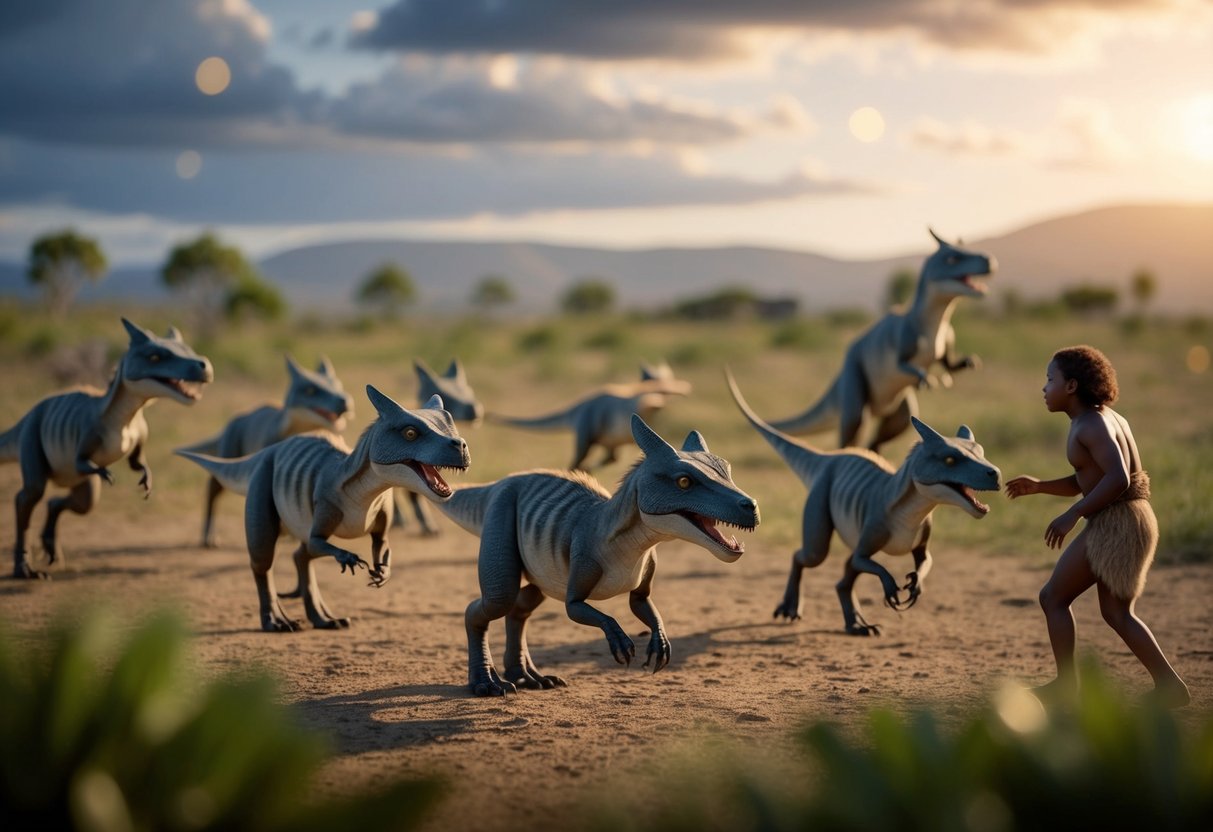
Understanding how dogs became part of human life involves looking at their journey from wild wolves to loyal companions. This transformation was influenced by human actions and needs, shaping the unique bond we share with dogs today.
From Wolves to Man’s Best Friend
Dogs evolved from wolves, with their history stretching back 27,000 to 40,000 years. During this time, human civilization and wolves began to interact. Some wolves likely scavenged near early human settlements, leading to a mutually beneficial relationship.
Humans provided food, while wolves offered protection and assistance in hunting. Over generations, the wolves that were friendlier and less aggressive were favored. This natural selection made them more adaptable to living with humans, paving the way for the first domestic dogs.
Selective Breeding and the Emergence of Dog Breeds
As societies evolved, so did the roles of dogs. Humans started focusing on specific traits, leading to selective breeding. This process enhanced characteristics that suited various tasks like hunting, herding, and guarding.
As a result, numerous dog breeds emerged, each with unique skills and temperaments. Some breeds were developed for companionship, while others focused on work. The genetics behind these breeds show how closely linked they are to their wild ancestors.
Today, the bond between you and your dog reflects thousands of years of shared history. Your dog is not just a pet but a testament to an incredible journey involving evolution and partnership.


