
You’ll spot the lion-headed demon Buer right in the middle of old grimoires. Writers usually describe Buer with a lion’s head and a strange ring of goat-like legs, and he pops up in 16th-century texts as a president among the infernal ranks.

Old texts tie Buer to lessons in philosophy, plants, and healing. Artists later drew him as a wheel-shaped creature with lots of legs.
You’ll get some historical context, descriptions, and a peek at how Buer’s weird image ended up influencing art and even bits of modern culture.
Buer: The Lion-Headed Demon of the Grimoires
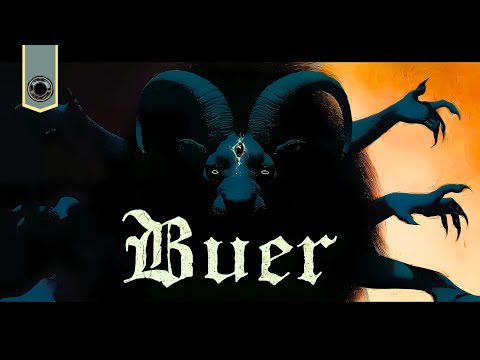
Buer shows up in old grimoires as a teacher, healer, and commander of spirits. He’s got a lion’s head and a mess of legs, and writers connect him to Sagittarius and a whole army—fifty legions, to be exact.
Origins in the Pseudomonarchia Daemonum
Johann Weyer’s Pseudomonarchia Daemonum introduces Buer, tucked into a 16th-century catalog of spirits. Weyer points out Buer’s power and his impressive rank.
He says Buer appears when the Sun sits in Sagittarius and teaches moral and natural philosophy. Buer’s got a knack for herbs and healing, too.
Modern sites like Esoteric Archives keep Weyer’s text alive, letting people study the exact old wording and order of entries.
Physical Depictions and Iconography
You’ll notice two main ways artists draw Buer in grimoires and later art. One version looks like a wheel or star with lots of legs.
Another, thanks to Louis Le Breton’s engraving, shows a lion’s head surrounded by five or more goat or horse legs sticking out from a central body. Artists change up the number of legs—sometimes five, sometimes six, sometimes more.
Sometimes they toss in a human or centaur vibe. The lion head screams strength, while all those legs hint at movement in any direction.
You’ll see this odd look in goetic works like the Ars Goetia and in reference books like the Dictionnaire Infernal.
Buer’s Role as President of Hell
Writers say Buer holds the title of President in the lists by Weyer and in the Lesser Key of Solomon. As a Great President of Hell, he leads fifty legions of spirits.
That means he’s got a management gig—overseeing teaching and healing among infernal ranks. The Ars Goetia puts him among the 72 spirits tied to Solomon’s stories.
People use terms like “Goetic demon” or “president of hell” to talk about both his authority and his spot in ritual magic.
Lion Symbolism in Buer’s Appearance
The lion head carries a lot of symbolic weight. It stands for authority, courage, and a teacher’s vibe—pretty fitting for a demon who’s supposed to be a philosopher and healer.
Some folks compare Buer to Chiron, the centaur who taught medicine and ethics, since Buer’s also linked to philosophy and herb lore.
You’ll find the lion motif in the Infernal Dictionary and other demonology books. In art, the mix of a lion’s head with goat or horse legs makes a wild hybrid—strength, agility, and a kind of otherworldly motion.
That’s probably why Buer’s image keeps showing up in grimoires and occult circles.
Abilities, Symbolism, and Cultural Impact

Buer pulls together teaching, healing, and a bit of occult practice into one strange figure. You’ll run into notes about healing skills, links to alchemy and philosophy, and how rituals use plants and candles.
He pops up in books and even in some media now and then.
Powers of Healing and Wisdom
Buer’s teachings mix logic with hands-on remedies. He’s said to teach philosophy and logic, guiding people through arguments and exercises.
Texts connect him to herbal knowledge—aloe and other plants show up in lists of remedies and simple salves.
Some traditions call Buer a teacher of herbalism and basic wound care. People light blue candles and use charms while making herbal poultices, hoping to focus their intentions and calm patients.
The healing stuff stays practical: aromatic herbs, some alchemical metaphors, and just plain observation—not really miracles.
Buer in Alchemy and Philosophy
You’ll spot Buer in alchemy texts, where he’s tangled up with symbolic language. Alchemists use mercury as a symbol for change, and they reference Buer in lessons about transformation and balance.
Grimoires list him as a teacher of philosophy and logic. They offer little lessons on syllogism, ethics, and reasoning.
Manuals suggest using diagrams, Latin phrases, and meditation to really learn the material. The idea of familiars comes up as a metaphor—a familiar helps you study, and Buer acts as an intellectual companion.
Rituals and Summoning Traditions
Rituals focus on controlled, symbolic acts. The Lemegeton and similar grimoires lay out steps: draw protective circles, use consecrated herbs, and pick the right candle color.
Light blue candles get recommended for clarity and calm during invocation. Herbs like aloe go into ritual baths or as offerings to clean the space.
Mercury is mentioned more as a symbol than a real ingredient—nobody wants mercury poisoning. Practitioners emphasize protection: inscribing names, using talismans, and calling on guardian spirits.
Summoning traditions push discipline: clear intent, repeated invocations, and careful notes. If you’re curious about these rites, stick to safety and ethical boundaries.
Buer in Modern Culture and Media
You’ll spot Buer’s image in old occult books, role-playing games, and plenty of online occult communities.
Writers often pull from its teaching and healing roles, shaping characters who guide heroes or whip up herbal remedies.
Game designers sometimes give Buer-inspired figures abilities tied to medicine, logic, or even animal sidekicks.
Online, people swap recipes for herbal blends and toss around advice about using light blue candles during meditation.
Scholars usually place Buer among goetic demons and pick apart its background in the Lemegeton.
Artists get creative, blending lion traits with human or other symbolic touches to highlight both strength and wisdom.


