
Thrift shopping can help you save money and find unique pieces. It also raises a fair question: what are the chances of getting bed bugs from a thrift store?
The risk is real, but it is usually low when you know what to inspect and how to handle secondhand items carefully.
Your chances go down a lot when you focus on seams, folds, cracks, and any item that could hide a pest. Clean and quarantine your finds as soon as you get home.
Bed bugs are more likely to show up in certain thrift store purchases than others. A little caution goes a long way.
If you like thrifting and second-hand items, you can keep enjoying the bargain hunt without bringing an infestation home.

How Likely It Is and What Changes the Risk

What you buy and how the item was handled before you saw it affect your risk. Clothes can carry pests, but furniture with hiding places gives bed bugs more chances to stay hidden and survive.
Why Clothes Are Usually Lower Risk Than Furniture
Clothes from thrift stores usually carry lower risk because they do not offer the same deep hiding spots as used or upholstered furniture. Bed bugs can still hide in seams, cuffs, linings, and pockets, especially in thick or folded fabrics.
When A Bed Bug Infestation Is More Likely
Risk rises when an item has padding, stitching, crevices, or fabric layers that are hard to inspect. Bedding, upholstered furniture, and anything tied to a bed bug infestation are more concerning because bed bugs like dark, protected places close to where people rest.
The Highest-Risk Secondhand Finds
Mattresses, sofas, armchairs, padded headboards, and bedding carry the highest risk. These items can hide live bugs, bed bug eggs, and other signs deep inside the material, making them harder to inspect than plain thrift store clothes.
What To Check Before You Buy

A quick scan will not catch everything. You want to look for both live bugs and the small traces they leave behind, especially on used furniture and bedding.
Signs In Seams, Folds, and Pockets
Check seams, folds, cuffs, collars, waistbands, and pockets for bed bug eggs, droppings, and shed skins. Tiny dark specks, pale shells, or clustered white dots can be enough reason to skip the item.
Clues On Furniture, Cracks, and Undersides
Inspect cracks, joints, screw holes, tags, zippers, tufts, and the underside of used furniture. Bed bugs often hide where fabric meets wood or where upholstery folds around a frame, so use your phone light and look carefully.
Red Flags That Mean Walk Away
Walk away if you see live bugs, multiple dark stains, shed skins, or evidence of an active problem in nearby items. If the store item smells musty, has heavy staining, or feels impossible to inspect fully, it is not worth the risk.
What To Do With Thrifted Items When You Get Home
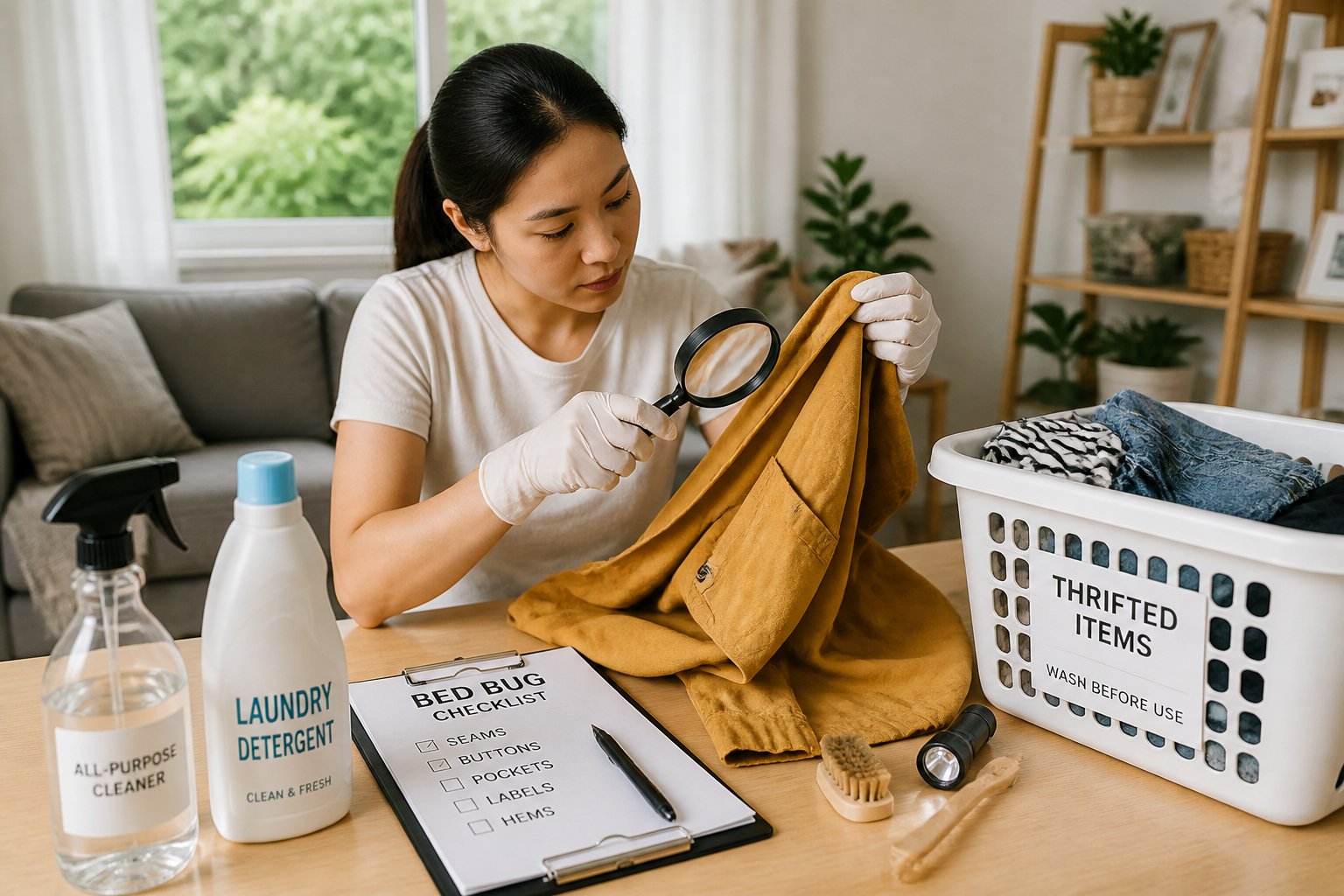
What you do in the first hour at home matters just as much as what you did in the store. Treat thrift store clothes and larger second-hand items as if they need a clean buffer before they touch your living space.
How To Handle Thrift Store Clothes Safely
Put thrift store clothes straight into a bag, then move them directly to the washer. A hot wash and a high-heat dry help kill bed bugs and their eggs.
Heat treatment is especially useful for used clothing that was hard to inspect fully.
How To Quarantine and Treat Used Furniture
Keep used furniture out of your main living area until you inspect it in a garage, driveway, or other isolated spot. Vacuum seams, use heat where safe, and consider professional help for upholstered furniture that seems high-risk or hard to check thoroughly.
When Goodwill or Other Store Purchases Need Extra Caution
Give extra caution to bulky, padded, or heavily layered items from Goodwill and other thrift stores. Anything with upholstery, bedding, or hidden interior spaces should be treated like a possible hitchhiker until you are confident it is clean.
Smart Habits That Lower Your Chances Long Term

If you want to know how to avoid bed bugs while still enjoying thrift shopping, focus on inspecting, isolating, and cleaning. This habit keeps thrifting fun and helps you avoid pest problems at home.
How To Avoid Bed Bugs Without Giving Up Thrifting
Bring a flashlight, check hidden areas, and treat every item like it could have traveled through a risky environment. Staying alert while thrifting is the easiest way to lower your chances without giving up the savings.
Which Items Are Usually Worth Buying Secondhand
Clothing, books, hard decor, dishes, and many non-upholstered secondhand items are usually worth buying if they pass inspection. These are easier to clean and less likely to hide pests than soft or padded goods.
When Saving Money Is Not Worth The Risk
Inspect items carefully before buying, especially mattresses, heavily padded furniture, and bedding. Look for signs of wear or staining.
If you might spend more on treatment than you save, leave the item behind.


