
Bed bugs can ride home with you after a hotel stay, and the risk is more common than many travelers expect. If you sleep in an infested room or place your bags on soft furniture, you might get bed bugs from a hotel without noticing it right away.
You can lower your odds by checking the room early and keeping your luggage isolated.
Act quickly when you get home to reduce risk.

How Real The Risk Is

Any hotel can have bed bugs, even a clean, upscale one. The risk rises when you sleep in the room, keep bags near the bed, or leave clothing on upholstered surfaces.
Why Any Hotel Can Have Bed Bugs
Hotels turn over guests constantly, which gives bed bugs more chances to move from one visitor to another. Bed bugs can hide in shared spaces long before you notice them, especially in beds, couches, and storage areas.
How Bed Bugs Hitchhike Into Your Belongings
Bed bugs do not need dirt to travel, they need contact. They crawl into seams, zippers, folds, and fabric layers, then ride out inside your luggage, coat, or laundry.
A suitcase left beside the bed becomes an easier target than a bag kept on a hard surface away from furniture.
What Raises Or Lowers Your Odds During A Stay
Your odds go up with overnight stays, soft luggage placement, and lots of contact with the room. Your odds go down when you inspect early and keep bags off the bed.
Avoid storing clothes on chairs or carpet. Quick inspection and careful luggage placement can lower the chance of bringing bed bugs home.
What To Check Before You Unpack
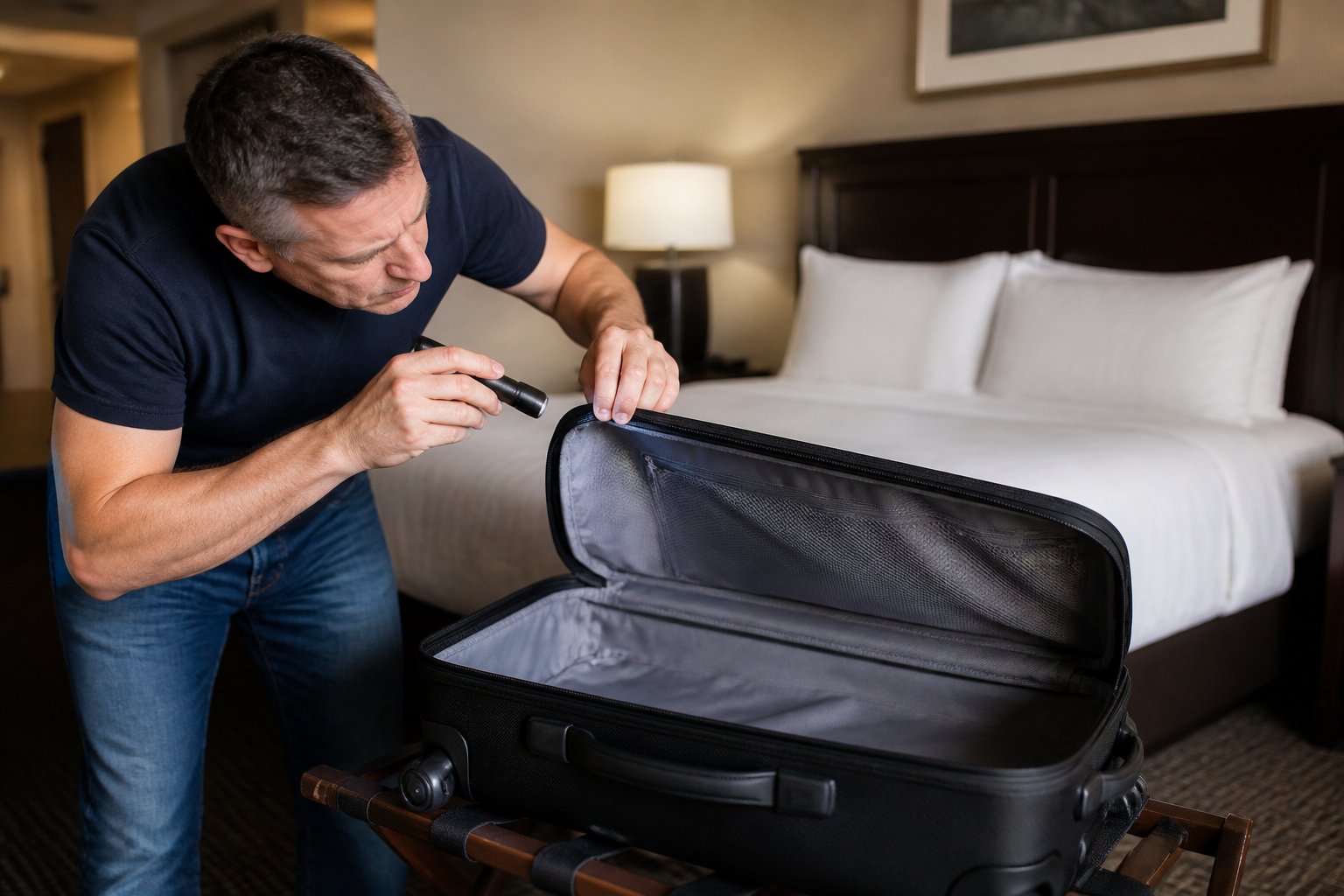
A fast inspection gives you the best chance to catch trouble before your things spread through the room. Focus on the bed first.
Check nearby furniture and surfaces where bugs like to hide.
Where To Look First Around The Bed
Start with the mattress seams, the box spring, and the headboard. Bed bugs often cluster in tight cracks close to where people sleep.
Check folds, piping, corners, and any dark gaps along the bed frame.
Signs That Point To Bed Bug Activity
Look for live bugs, tiny dark spots, rusty stains, shed skins, and small pale eggs. Shed skins are a strong clue because bed bugs molt as they grow.
Those cast shells can collect near seams and cracks. You may also notice a musty smell in heavier infestations.
What To Do If You Find Evidence
If you see signs of activity, do not unpack. Put your luggage back together and move to another room if available.
Ask for a different room that is far from the original one. If the hotel cannot offer a safer room, consider leaving and document what you found.
How To Keep Your Bags And Clothes Safer

Your packing habits matter because bed bugs spread by contact. Small choices like where you set your bag and how you store clothing can make a big difference.
Best Places To Store Luggage In The Room
Keep your suitcase on a luggage rack, a hard table, or another smooth surface away from the bed and sofa. Avoid placing it on carpet, the comforter, or upholstered chairs.
Those spots give bugs more ways to crawl inside.
Why Packing Habits Matter
Use packing cubes to keep clothing grouped and easier to inspect. A tidy bag makes it simpler to spot anything unusual.
It reduces the amount of loose fabric that can touch infested furniture. It also helps if you need to isolate worn items quickly.
Simple Steps To Reduce Exposure Before Checkout
Keep dirty clothes separate from clean ones. Before you leave, give your luggage a quick look at seams, zippers, and pockets.
Shake out items only if you have already checked the room and bag carefully. If anything seems suspicious, seal it apart from the rest of your belongings.
What To Do When You Get Home

Once you are home, the goal is to avoid bringing bed bugs deeper into your house. A careful unpacking routine can stop a small travel problem from becoming a larger infestation.
Where To Unpack Without Spreading Bugs
Unpack in a garage, laundry room, bathroom, or another hard-surface area if possible. Keep the suitcase off beds and couches.
Avoid setting travel items on carpets or upholstered furniture until you have checked them.
How To Clean And Inspect Travel Items
Wash and dry travel clothes on the hottest fabric-safe setting, since heat kills bed bugs effectively. Vacuum the suitcase, inspect seams and pockets, and empty the vacuum contents into a sealed bag right away.
If you used sealed bags for dirty laundry, open them carefully and move items straight to the washer.
Early Clues You May Have Brought Them Back
Watch for bites that seem to appear after sleeping.
Look for tiny dark spots on sheets and bugs around mattress seams or bed frames.
If you notice repeated signs, act quickly to prevent a full bed bug infestation.
If you see live bugs, contact a professional for an inspection to stop the problem from spreading.


