
Let’s break down the main benefits and drawbacks of squirrel cage induction motors so you can decide if they’re right for your machine or project. These motors are affordable, tough, and easy to keep running, but they come with low starting torque and limited speed control.
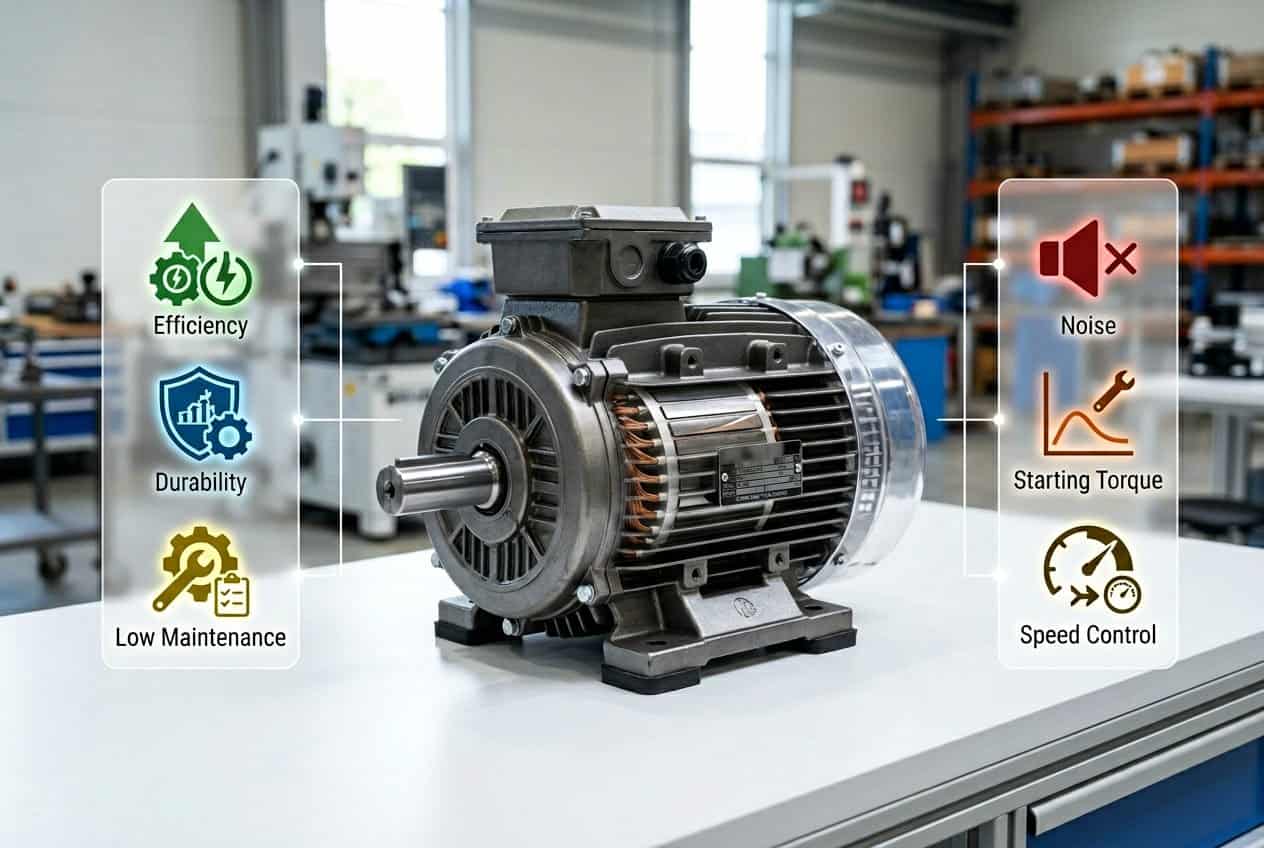
I’ll compare how these motors actually perform in real machines, what makes them reliable, and where their limits start to matter. Hopefully, that’ll help you pick the right motor—or realize when it’s time to look for something else.
Key Advantages of Squirrel Cage Induction Motor
These motors bring together a simple design, solid reliability, and low running costs. They fit a lot of industrial uses where steady speed and long life really matter.
Simple and Robust Construction
Squirrel cage motors use a cast or stamped rotor shaped like a cage. The stator core is laminated and has windings.
This setup skips brushes and slip rings, so there are fewer parts that wear out. With fewer wearing parts, repairs and inspections get a lot easier for your maintenance crew.
The rotor bars and end rings are solid and tough. That makes the motor stand up to shock, vibration, and rough industrial environments.
Usually, the main things that wear out are the bearings and the housing. You can focus your routine checks on just a few components.
High Efficiency and Low Maintenance
Squirrel cage motors avoid copper losses in the rotor since they don’t need separate winding connections. That bump in efficiency really shows in three-phase motors running continuous loads.
You’ll save energy and cut down on operating costs for a lot of industrial drives. Maintenance is a breeze.
No brushes or slip rings means you skip brush changes and commutator cleaning. Usually, just oil the bearings and check the stator windings and core.
Cost-Effectiveness and Reliability
These motors cost less to buy and install than slip-ring types and many others. The simple rotor and standard manufacturing methods keep material and production costs down.
You’ll also see lower lifecycle costs since the reliability reduces surprise repairs and the need for lots of spare parts. Because so many industries use these motors, finding parts and service is rarely a headache.
Standard sizes and ratings make it easy to swap or scale motors for pumps, fans, compressors, and conveyors. No long waits for replacements.
Consistent Speed and Overload Capacity
Squirrel cage motors run at nearly constant speed under steady load. That’s great for keeping industrial processes stable.
If you need predictable performance for pumps, blowers, or anything where timing or flow matters, these motors do the job. They can handle short overloads thanks to strong construction and good thermal capacity in the stator windings and core.
You get a bit of cushion for startup spikes and brief overloads, as long as the motor is sized and cooled right.
Disadvantages and Limitations of Squirrel Cage Induction Motor
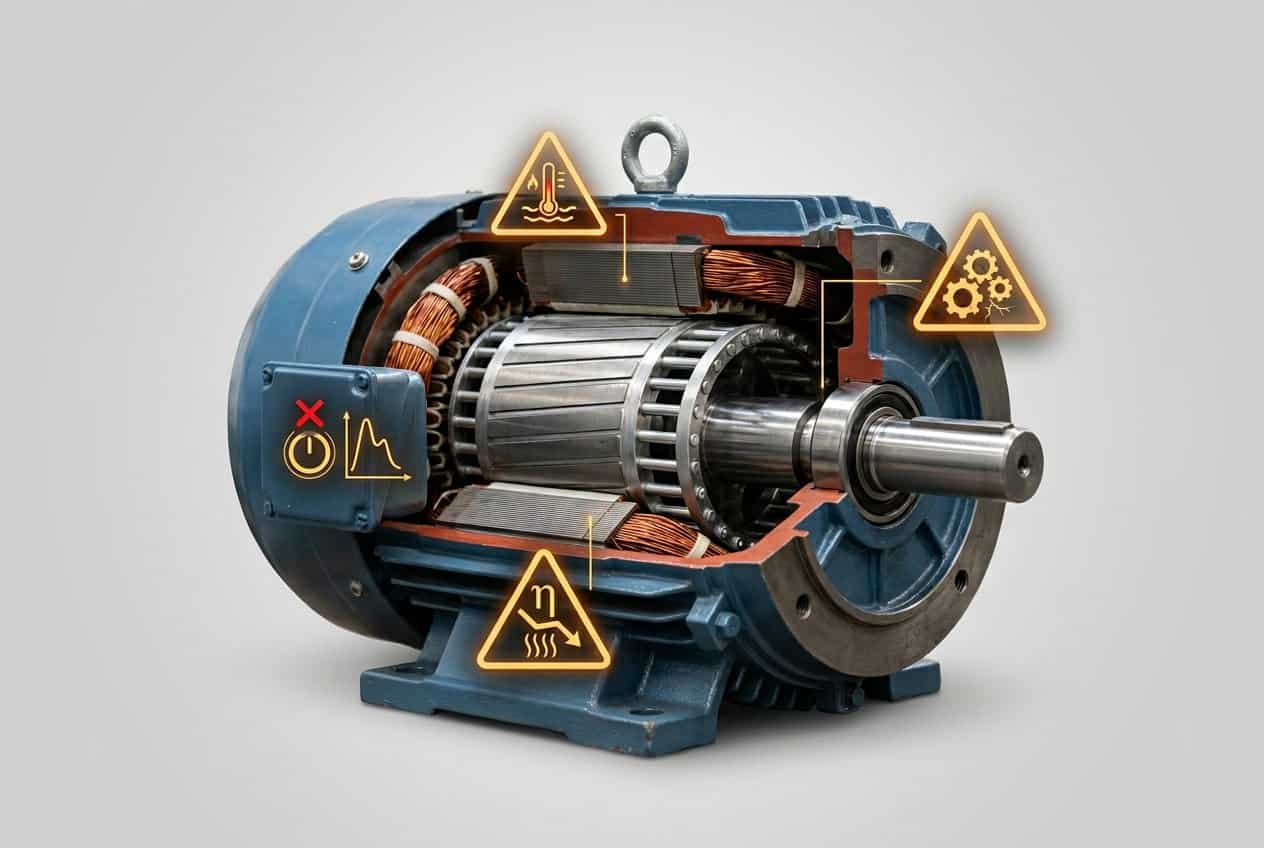
While these motors save money and require little maintenance, they’ve got some limits you can’t ignore. Weak starting performance, poor speed control, and being picky about supply voltage are the main things to watch out for.
Each of these issues affects how you start, control, and protect the motor in your system.
Low Starting Torque and High Starting Current
You’ll usually get starting torque that’s only about 1.5 to 2 times the full-load torque in most squirrel cage designs. That’s not a lot.
If you need to move heavy loads from a dead stop, you might need mechanical help or to reduce the load at startup. Frequent starts under load can lead to stalled starts or slow acceleration.
When you start these motors, the current can jump to 5–9 times the rated amount. That inrush can stress your power supply, trip fuses, and cause voltage dips—especially on weaker feeders.
You can’t just add rotor resistance like you could with slip ring motors. Instead, you’ll need to use things like soft starters, reduced-voltage starters, or a variable frequency drive (VFD).
A VFD gives you the best control over starting torque and limits that inrush, but it also adds more cost and complexity.
Limited Speed Control
Squirrel cage motors basically run close to synchronous speed minus slip. That means you get a pretty narrow speed range.
If you want precise or wide-ranging speed control, these motors just can’t do it on their own. You can’t tweak rotor resistance to change speed like you could with a slip ring motor.
This limits their use in jobs where you need tight speed regulation, good torque at low speeds, or frequent speed changes. You can use a VFD to vary supply frequency and get better speed control.
But adding a VFD changes your whole system design. You’ll need to size filters, watch out for harmonics, and add extra protection.
Open-loop frequency control works fine for many tasks, but if you need precise positioning, you’ll need closed-loop feedback.
Sensitivity to Voltage Fluctuations
Squirrel cage motors pull more current when the supply voltage drops. That extra current leads to more heating and can cut down torque during voltage sags.
You might notice poor performance if you’re running on a weak grid or a long, skinny supply line. When the voltage surges, magnetic parts can get saturated, which bumps up losses.
Since you can’t tweak rotor resistance, the motor really doesn’t have many ways to handle supply swings. It’s a good idea to install proper protection, like under-voltage relays, overloads, and surge arrestors.
If your voltage isn’t stable, you could pair the motor with a VFD. Sometimes a slip ring design makes sense if you need high starting torque and want more reliability.


