
Bedbugs bite and cause small skin reactions when they feed on human blood, usually while you sleep. These bites often show up as itchy, red bumps, and the pattern can help you figure out if bedbugs are the problem.
Bedbug bites do not usually spread disease, but they can disrupt your sleep and trigger scratching. If you keep scratching, you might develop irritation or infection.

How To Recognize The Bites
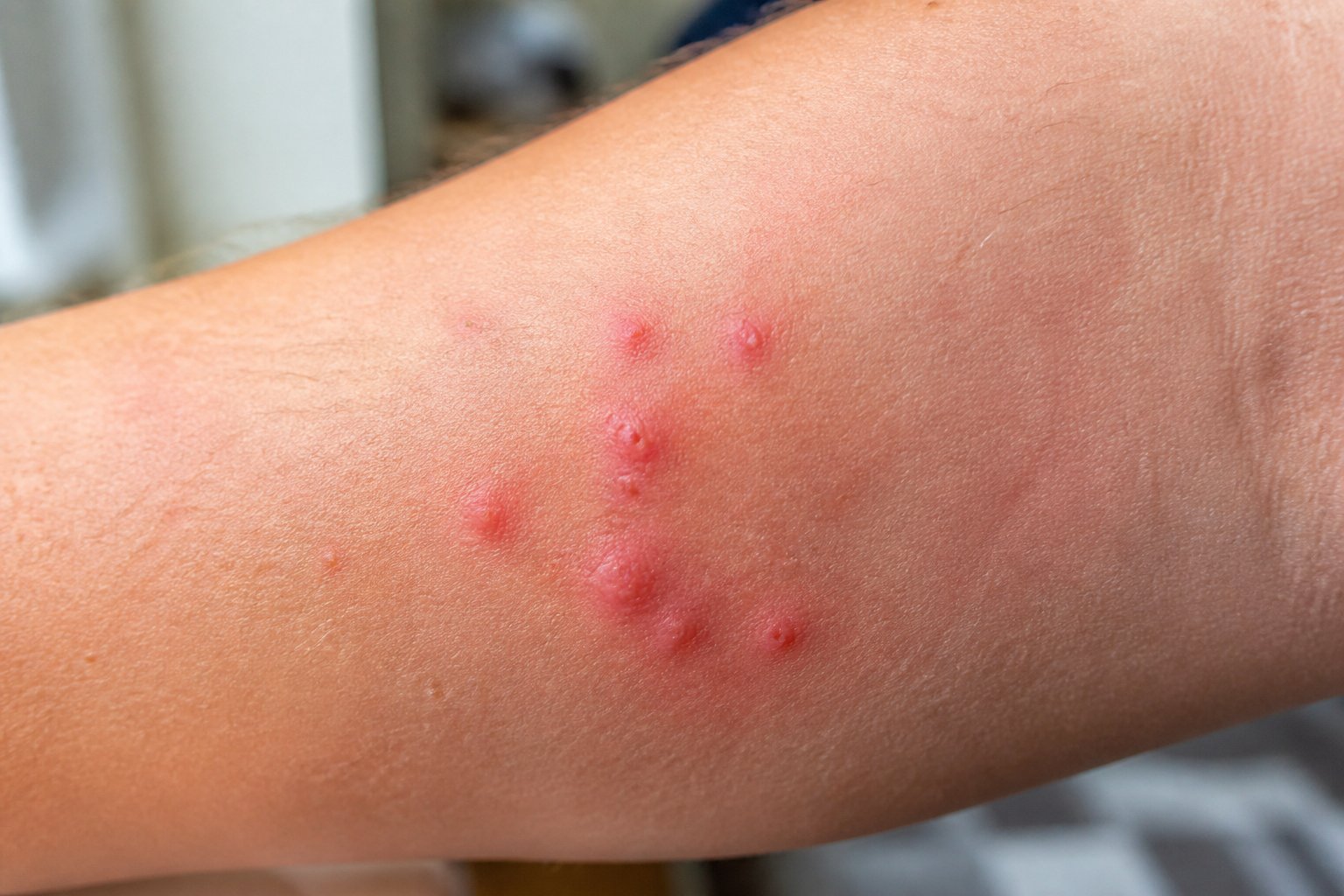
Bedbug bites can look like other insect bites at first glance. You can get the best clues from the shape of the bite marks, the patterns, and where the irritation appears on your body.
What Bite Marks Usually Look Like
Bedbug bites often show up as small red bumps that may be slightly swollen or raised. They can be itchy, and some people develop clusters of irritated spots or a stronger skin response.
Common Bite Patterns And Body Locations
Bedbug bites may appear in lines, zigzags, or small clusters of three to five, especially on exposed skin like your arms, shoulders, neck, or legs. Because bedbugs feed at night, you may notice the bites after waking up.
Bed Bug Bites Vs Flea Bites And Other Lookalikes
Flea bites often show up around the ankles and lower legs, while bedbug bites are more likely to appear on skin exposed during sleep. The itching can feel similar, and an allergic reaction can make either one look worse, so checking your home matters as much as the skin changes.
Bedbug bites can also look like mosquito bites, spider bites, or a rash, so bite patterns and timing help with identification.
What Symptoms Mean And When To Get Help

Most reactions stay limited to itching, redness, and swelling. Many people improve with simple care.
Strong swelling, spreading redness, or signs of an allergic reaction call for closer attention.
Normal Reactions Vs Severe Reactions
A normal reaction may feel itchy and look red or slightly raised. A severe allergic reaction can cause large swollen welts, intense pain, or widespread skin changes, and very rarely it can progress to anaphylaxis.
Relief Options For Itch And Swelling
Wash the skin with soap and water, then use hydrocortisone cream to calm irritation. An oral antihistamine or a cool compress may ease swelling and itching.
If itching keeps you awake, treating the symptoms early can help you rest.
When Allergic Reactions Need Urgent Care
Get urgent medical help if you have trouble breathing, swelling of the lips or face, dizziness, or signs of anaphylaxis. Seek care if the bites look infected, if swelling keeps worsening, or if home relief is not helping.
How To Confirm Bed Bugs In Your Home

You need to check for signs of infestation in the places bedbugs hide and the traces they leave behind.
Early Signs Around The Bed
Look for blood spots on sheets, dark specks, or small rust-colored marks on bedding. You may also find signs in mattress seams, box springs, bed frames, headboards, and nearby bedding.
Where They Hide During The Day
Bedbugs and cimex species hide in cracks and crevices during the day, including furniture joints, dresser edges, and wallpaper seams. They can spread slowly at first, so careful inspection matters.
What Adult Bed Bugs Eggs And Shed Skins Look Like
Adult bedbugs are small, flat, reddish-brown insects. Their eggs are tiny and pearl white, while shed skins and cast shells signal a growing population.
Stopping Spread And Getting Rid Of Them

Bedbugs hitchhike and spread through travel and shared items. Prevention works best when you protect your luggage, bedding, and furniture before bedbugs get established.
How Bed Bugs Travel From Place To Place
Bedbugs can move in luggage, clothing, secondhand furniture, and bedding. They also spread between rooms or apartments by using furniture, electrical gaps, and other hidden routes.
Prevention At Home And While Traveling
Keep luggage off beds and upholstered furniture when you travel. Inspect mattress seams, box springs, headboards, and dresser drawers before settling in.
At home, check secondhand furniture carefully. Wash and dry clothing on hot cycles after travel, and inspect bags before bringing them indoors.
When To Call Pest Control
Call pest control when you find clear signs of a bed bug infestation. The problem can be hard to eliminate on your own.
A qualified exterminator can inspect your home. They can help you choose an effective plan for your space.


