
Ever wonder what animal counts as a giraffe’s closest cousin? You might picture a mini-giraffe with stripes—and honestly, you’d be spot on. The okapi, sometimes called the forest giraffe, is actually the giraffe’s closest living relative and the only other member of the Giraffidae family.

The okapi blends giraffe-like features with zebra stripes and leads a quiet, secret life in the thick forests of the Congo. Let’s look at what makes the okapi tick, how it lives, and why it matters for the giraffe family.
Meet the Giraffe’s Closest Cousin: The Okapi
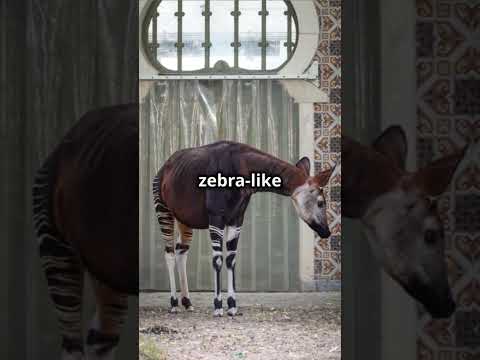
Let’s get into where the okapi fits in the giraffe family tree, what features they share, and what sets them apart so each thrives in its own way.
Okapi and Giraffe: Family Connection
The okapi (Okapia johnstoni) and the giraffe (Giraffa camelopardalis) both belong to the Giraffidae family. They share a common ancestor from millions of years ago, so you can think of them as close cousins in the mammal world.
Genetic studies show they split about 11–12 million years ago, connecting them to extinct giraffids like Canthumeryx and Giraffa jumae.
Both okapis and giraffes are artiodactyls, or even-toed ungulates, so they have cloven hooves. You’ll spot some similar habits too: both use long, prehensile tongues to grab leaves and to groom.
Males of both species grow ossicones (those horn-like bumps), although their size and hairiness aren’t quite the same.
Scientific Classification and Shared Features
Scientists group okapis and giraffes together under Giraffidae, in the order Artiodactyla. Okapi’s scientific name is Okapia johnstoni, and giraffe’s is Giraffa camelopardalis.
This close classification explains a lot of their shared features. Both have a long, dark, prehensile tongue and a ruminant digestive system with several stomach chambers to break down tough plants.
They both sport ossicones, cloven hooves, and similar teeth designed for browsing. Their senses—especially hearing and smell—are pretty sharp, which helps them find food and dodge predators.
Key Differences in Appearance and Adaptations
Okapis look pretty different from giraffes. They stand around 1.5 meters at the shoulder and have compact bodies with zebra-like stripes on their legs and hindquarters.
These stripes help them blend into the patchy light of dense forests. Giraffes, on the other hand, grow much taller and have those famous long necks and legs for reaching treetop snacks.
Both have ossicones, but giraffes show them on both males and females, while okapi ossicones usually only show up on males or stay smaller.
Okapis use their long tongues to feed in the forest understory, while giraffes use theirs to reach high branches. Their habitats shape these differences: okapis hide in forests with their camouflaged coats, while giraffes developed height for open savanna browsing.
Okapi in the Wild: Habitat, Behavior, and Conservation

Okapis live deep in the rainforests of the Democratic Republic of Congo. They keep to the shadows and feed on a wide mix of plants.
Let’s see where they actually live, what they eat, how they behave, and what threatens their survival.
Natural Rainforest Habitat and Camouflage
Okapis mostly stick to the Ituri Rainforest in northeastern Democratic Republic of Congo. You’ll find them in thick, closed-canopy forests at elevations between about 500 and 1,500 meters.
Most of their population lives inside the Okapi Wildlife Reserve, which is a protected area and a UNESCO World Heritage site.
Their coats are dark brown with white stripes on the legs. This pattern helps them almost disappear in dappled light and among ferns, vines, and fallen logs.
They have big, flexible ears that pick up the slightest sounds. Their long, black tongues help them grab leaves from branches.
Okapis leave scent marks from glands on their feet and use urine to mark paths and feeding spots within their overlapping home ranges.
Diet and Unique Feeding Adaptations
Okapis eat only plants. They browse understory leaves, buds, shoots, and fruits.
You’ll see them munching on shrubs, vines, and more than 100 plant species in the Ituri Forest. They especially like treefall gaps where sunlight brings out new growth.
Their tongue—about 45 centimeters long—lets them strip leaves and reach into tight spots. Their teeth and a big cecum help break down tough, fibrous plants.
Okapis swallow some seeds whole, so they help spread plants around the forest. They even eat fungi and some plants that other animals find toxic.
No single plant dominates their diet; they mix it up.
Behavior, Reproduction, and Lifecycle
Okapis usually live alone. You won’t often see more than one together unless it’s mating time or a calf following its mother.
Males claim bigger home ranges and mark territory with urine. Females often use common spots to defecate.
Females mature at about one year old. Pregnancy lasts around 440–450 days, and mothers give birth to a single calf.
Newborns hide in thick vegetation for weeks while their mothers forage. Nursing doesn’t happen all that often; calves start trying solid food at three months and wean by six months.
Their calls are pretty subtle—soft chuffs and bleats. Scent marking and the Flehmen response help with mating and recognition.
Conservation Status and Threats
The IUCN lists the okapi as endangered. Across their range, threats pop up everywhere—logging, mining, and agriculture all chip away at their habitat, causing a lot of deforestation.
Poachers hunt okapis for bushmeat and skin, which puts even more pressure on their numbers. Armed conflict in parts of the DRC makes it tough for anyone to enforce wildlife protection.
Conservation groups like the Okapi Conservation Project actually support patrols, do community outreach, and run research inside the Okapi Wildlife Reserve. They’re trying to cut down on poaching, keep the habitat safe, and keep an eye on okapi populations.
If you care about conservation, you can help by funding protection efforts, supporting sustainable land use, or even just spreading the word about how important the reserve is for biodiversity. The okapis aren’t alone out there—species like leopards rely on the same forests.


