
Raccoons are fascinating creatures that many people encounter. You might be surprised to learn that they belong to a family called Procyonidae, which includes several other animals. Raccoons are closely related to coatis, kinkajous, cacomistles, and ringtails, among others.
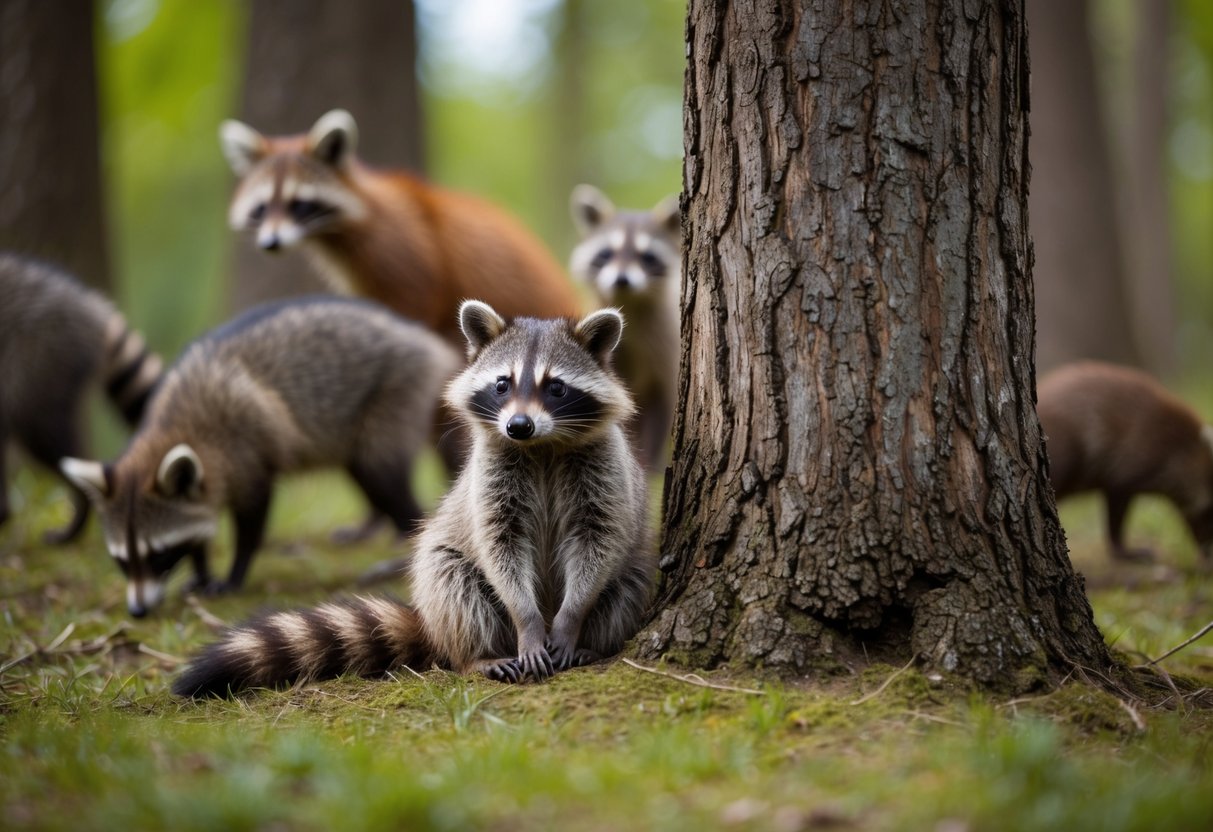
These relatives often share similar traits, like being clever and adaptable. Coatis, for instance, look like raccoons but have long tails and live in groups. Kinkajous are more nocturnal, and they thrive in tropical forests, showing how diverse the Procyonidae family can be.
If you’ve ever wondered about what makes raccoons so unique or how they relate to their family members, you’re in the right place. Let’s explore the connections and similarities that make these animals so interesting!
Taxonomy and Evolution of Raccoons
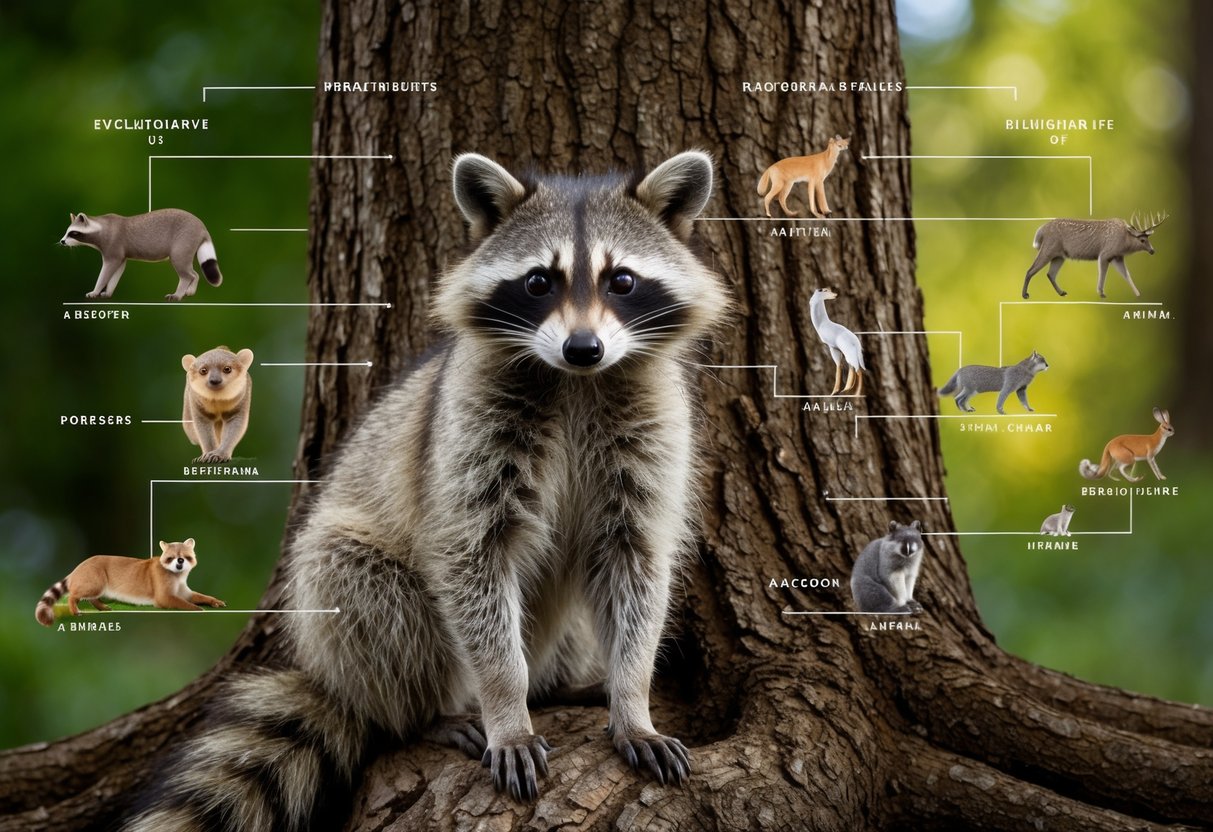
Raccoons belong to a unique family in the animal kingdom that shows interesting connections to their relatives. Understanding their taxonomy and evolutionary history helps to highlight their place in the natural world.
Raccoon Family and Relatives
The raccoon is part of the family Procyonidae, which includes a variety of related species. This family contains:
- Olingos
- Coatis
- Kinkajous
- Cacomistles
- Ringtails
All these animals share similar characteristics and are part of the order Carnivora. The Procyonidae family originates from the mammalia class. Raccoons are the largest members of this family, known for their adaptability and diverse habitats, ranging from urban areas to forests.
Origin and Evolutionary History
Raccoons and their relatives have an interesting evolutionary story. Fossils suggest that the Procyonidae family diverged from other carnivores around 30 million years ago. These mammals evolved in North America before spreading into Central America.
The phylogeny of raccoons indicates that they share a common ancestor with other members of Carnivora. Genetic studies show how raccoons and their relatives developed unique traits, such as their dexterous front paws and masked faces. Their evolution reflects changes in climate and habitat that shaped their behavior and survival strategies over millions of years.
Physical Characteristics and Behavior
Raccoons have unique features and interesting behaviors that set them apart from other animals. Understanding these aspects helps you appreciate their adaptability and intelligence in various environments.
Distinctive Traits of Raccoons
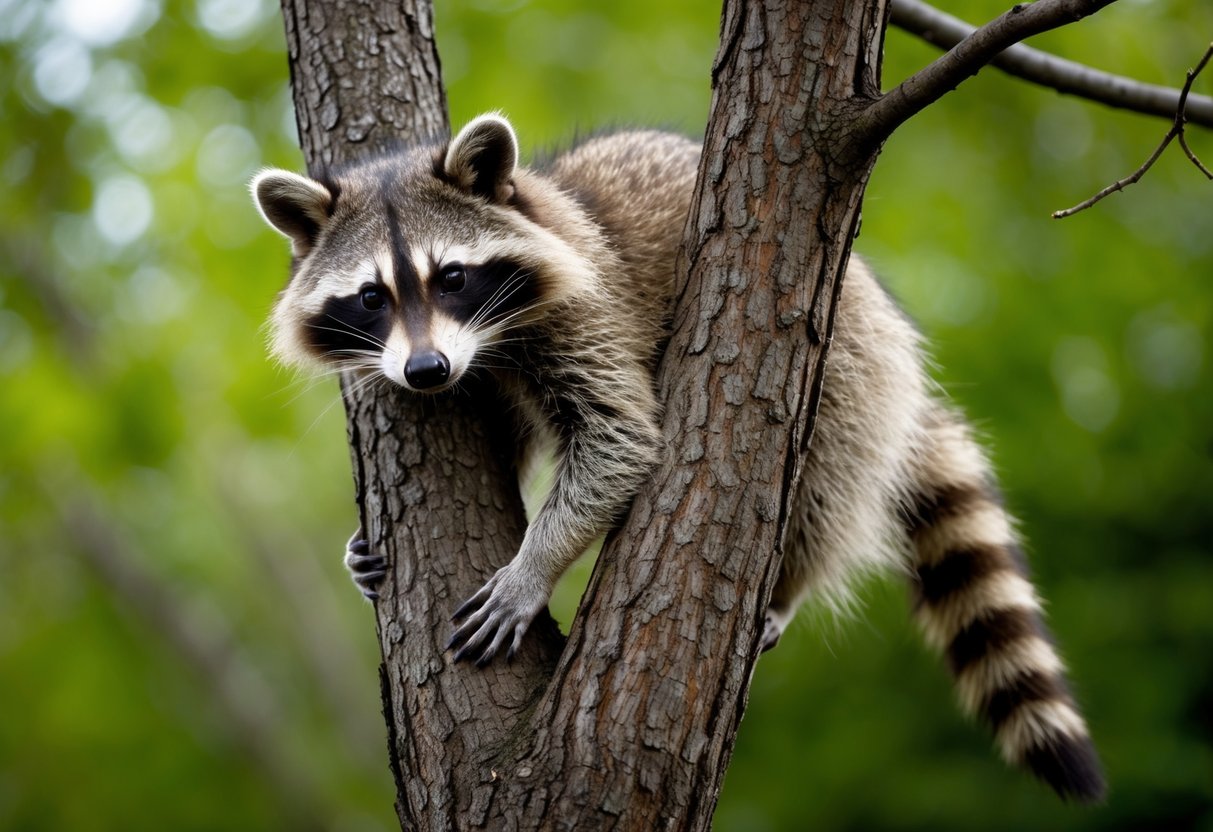
Raccoons are known for their grayish fur and the famous black “mask” across their eyes. This distinctive facial marking allows them to stand out in the animal kingdom. Their bodies are mainly stocky, measuring 16 to 28 inches in length, and they can weigh between 8 to 20 pounds.
One of their notable physical traits is their bushy tail, often displaying ringed patterns. This tail is not just for looks; it helps with balance when climbing. Raccoons are also excellent tree climbers, thanks to their strong limbs and flexible ankles. Their dental formula includes sharp teeth that are well-suited for their omnivorous diet, which consists of fruits, nuts, insects, and small animals.
Social Behavior and Intelligence
Raccoons exhibit complex social behaviors despite being seen as solitary animals. They often form small groups, particularly consisting of related females. These groups can display sex-specific behaviors, where males may gather in groups to compete for mates.
These animals are surprisingly intelligent. Their ability to solve problems is notable; they can remember solutions to tasks for up to three years. This intelligence is one reason they adapt well to urban environments. Raccoons use their front paws skillfully to manipulate objects, which shows their advanced dexterity.
The Cozumel raccoon, a subspecies, also displays similar traits, making them part of this clever family, which includes ringtails from the genus Bassariscus.
Raccoons and Their Habitats

Raccoons are known for their adaptability and cleverness, allowing them to thrive in a variety of environments. From dense forests to urban areas, these animals have found ways to make themselves at home.
Habitat Diversity and Adaptability
Raccoons are native to North America and Central America, where they occupy diverse habitats. You might find them in woodlands, wetlands, and even tropical forests. They prefer areas near water sources, which help them hunt for food.
Their adaptable nature allows raccoons to survive in changing environments. They can adjust their diet based on what’s available, eating fruits, insects, and small animals. With their dexterous front paws, raccoons can open containers or dig for food, showcasing their resourcefulness.
Urban and Wild Environments
In urban areas, raccoons have found a wealth of food sources, including trash cans and gardens. They often rummage through waste, looking for leftovers. Cities also provide them with shelter in attics, garages, and other hidden spots.
Despite these urban habits, raccoons also thrive in wild settings. In forests, they rely on their natural instincts to hunt and find food. Their ability to transition between urban and wild habitats is a key factor in their survival. Raccoons truly excel in diverse settings!


