
You might picture a lion as unbeatable, right? In reality, some animals can take down a lion—sometimes with brute force, sometimes with clever tactics, or just by sheer numbers.
An elephant or a big buffalo might kill a lion in a showdown. Crocodiles have even snatched lions at watering holes.

Let’s look at which animals actually threaten lions and what makes those matchups so interesting.
Size, group defense, terrain, and the element of surprise can all change the odds.
Keep reading for the top contenders, how these clashes usually unfold, and which animals might just unseat the so-called king of the savanna.
Animals That Can Defeat a Lion
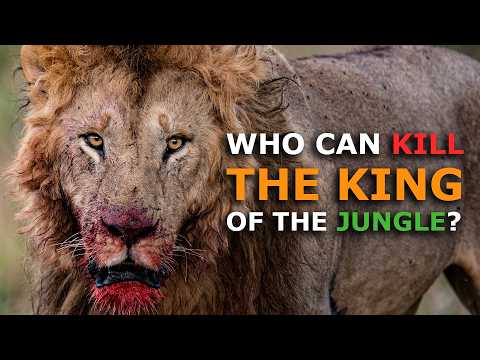
Some animals use size, armor, or surprise to take down a lion.
You’ll see how force, unique weapons, and the right setting give them a real shot in these rare but wild encounters.
Elephants: Size and Strength Advantage
Elephants easily outweigh lions—adult bulls can tip the scales at 6,000 kg.
A single adult elephant can stomp, gore, or just crush a lion if it feels threatened.
Elephants circle their calves and charge at anything suspicious.
If you’ve ever watched a mother elephant defend her young, you’ll notice coordinated trunk swings and quick footwork that can leave a lion seriously injured, or worse.
Lions do sometimes go after calves, but attacking a healthy adult elephant? That’s almost never worth it.
Honestly, elephants win most one-on-one fights thanks to their massive size and those wicked tusks.
Hippopotamus: Territorial Aggression
Hippos weigh between 1,500 and 3,200 kg, and their jaws are just terrifying.
If you get too close to a hippo near water—well, you’re probably in trouble, and so is a lion.
Hippos defend riverbanks with lunges and huge bites that cut deep.
Their thick skin helps, but their real weapon is that jaw, which can snap bone and rip flesh.
Lions usually steer clear of adult hippos.
When a lion does test a hippo herd, the hippos’ teamwork and the tricky terrain tip the scales in their favor.
Rhinoceros: Armored Power
A black or white rhino can weigh anywhere from 800 to 2,300 kg.
Their horn is no joke—it can pierce muscle and bone in a flash.
Rhinos have thick skin and keep low to the ground, making them tough to knock over.
When threatened, they’ll charge and aim that horn right at the attacker’s middle. One well-placed strike can end a fight instantly.
Lions hardly ever try to hunt a healthy adult rhino.
Most of the time, you’ll only see trouble if lions target calves, and even then, a mother rhino can be downright lethal.
Nile Crocodile: Aquatic Ambush Predator
Nile crocodiles can grow up to 5 meters long and use stealth to ambush prey at the water’s edge.
A crocodile kills differently—it bites, holds, and drowns its target. Lions that come to drink risk a deadly surprise.
Crocodiles have jaw strength that’s hard to believe and a death roll that tears prey apart.
Even a big lion can get dragged under and drown in seconds.
A crocodile’s armored hide and ability to hide in water give it a serious edge near rivers and lakes.
Lions sometimes scavenge from crocs and will face off on land, but near water, the croc’s ambush tactics usually win.
If you want more on these encounters, check out this summary of animals that can kill a lion.
Other Powerful Lion Challengers

Some animals and groups fight off lions with size, weapons, teamwork, or just knowing the land better.
Each has a go-to move—heavy horns, brutal kicks, group attacks, or even clashes within a lion pride.
Cape Buffalo: Herd Defense
Cape buffalo don’t back down when they’re together.
A single buffalo can weigh up to 1,900 pounds and has thick, curved horns that can gore a lion.
When lions try to grab a calf or single out an adult, buffalo herd members form a protective ring or charge as one.
Adults face outward with calves in the center—a move that’s saved many young buffalo.
Buffalo also use group charges to scatter or injure attackers.
Lions usually target weak or isolated buffalo because a healthy adult in a herd is just too dangerous.
Giraffe: Deadly Kicks
Giraffes protect themselves with strong, accurate kicks.
An adult giraffe’s legs can break a lion’s skull or spine with one hit.
Lions almost never go after adult giraffes unless they can surprise a calf or catch a distracted adult.
Giraffes use their height to spot threats early and swing their legs with surprising speed.
In a standoff, the giraffe keeps its distance and kicks sideways instead of facing off head-to-head.
For a lion, mistiming that kick can be fatal.
Hyenas: Pack Tactics
Hyenas outsmart lions by working together and using sheer numbers.
A spotted hyena clan can have dozens of members, and several adults can mob and push lions off a kill.
Hyenas use loud calls and relentless harassment to wear lions down.
You’ll see them shadow a lion pride, waiting for a chance to steal food or force them away.
Hyenas have bone-crushing jaws and stamina for long fights.
They attack in shifts and keep biting until the lions give up.
When you see hyenas and lions clash, remember: hyenas rarely try to kill a healthy adult lion alone—they count on teamwork and pressure.
Other Lions: Intraspecies Battles
Lions usually face their toughest fights against each other. Male coalitions and rival prides clash over territory, mates, and food.
Sometimes you’ll see brutal scenes—a male coalition might chase out or even kill cubs fathered by their rivals. Why? They want to bring the females back into estrus.
When a takeover happens, several males often work together to overpower the defenders. Pride structure really matters here.
A big pride with multiple males can usually fight off outsiders. On the other hand, single males or small groups are much more vulnerable.
It’s interesting to watch their strategy. Attackers don’t waste energy on long one-on-one battles—they try to isolate and overwhelm the defenders fast.


