
If you spot squirrel droppings or rat droppings, you might save yourself a lot of hassle. Squirrel poop is usually smaller, rounded at both ends, and tends to pile up in one spot. Rat poop, though, is longer, pointed at the ends, and you’ll often see it scattered along their travel paths. This makes it easier to pick the right cleanup and decide if calling pest control is the next move.

As you read on, you’ll pick up tips on how to spot the differences by checking out shape, size, texture, and where droppings show up in your house.
You’ll also find out about other signs—like nests, chewed-up stuff, and the health risks that come with each animal—so you can handle things safely and quickly.
Squirrel vs Rat Droppings: Visual and Physical Differences

You can actually figure out a lot about what’s living in your home just by checking out the droppings.
Size, shape, color, texture, the number you find, and where they’re sitting all point to either squirrels or rats.
Shape and Size Comparison
Pay attention to the length and ends. Squirrel poop usually comes in at about 3/8 inch long, with rounded ends.
These pellets look more like little capsules and might seem a bit stubby.
Rat droppings are bigger—think 1/2 to 3/4 inch—with more pointed ends.
They’re usually more uniform and stretched out.
If you stumble on a mix of sizes, you could have both young and adult rats hanging around.
Squirrel droppings tend to be fewer and smaller, so if you spot a bunch of big, pointy pellets, it’s probably rats.
For a quick check, try comparing what you find to a coin or a ruler.
Color and Texture Changes
Fresh droppings look darker and feel moist.
Both squirrel and rat droppings start out dark brown or black when new.
As they dry, squirrel poop often fades to brown or gray and keeps a smoother look.
Rat droppings dry out to a more crumbly, flaky texture.
Squirrel droppings feel smoother and look more consistent.
Rat droppings get rough and may show lines or seams, especially as they age.
Take note of both the surface and color to guess the age and which animal left them.
Dropping Quantity and Distribution
Count what you see and check the spots they show up.
Rats can leave dozens of droppings a day, so you’ll usually find scattered piles near food, along baseboards, or under appliances.
Rat poop often lines up along their travel routes and close to water.
Squirrels usually leave fewer droppings, and you’ll find them in higher places like attics, rafters, or by vents.
If you see pellets in insulation or near chewed wood, you’re probably looking at squirrel droppings.
A spread-out mess at ground level or in the kitchen is more likely from rats.
Freshness and Smell
Fresh droppings have a strong smell and look shinier.
New squirrel or rat poop gives off an obvious odor and a glossy shine.
As they dry, they lose their shine and the smell fades—unless you disturb them and stir up dust.
Smell alone can’t tell you what’s what, so combine it with where you find the droppings and what they look like.
A strong smell in the attic with small, rounded pellets? That’s probably squirrels.
A sharp, lingering odor near food or in the basement, with big, pointy droppings? That’s likely rats.
If you’re not sure, don’t touch anything—maybe just call in a pro.
Other Signs and Risks Associated With Droppings
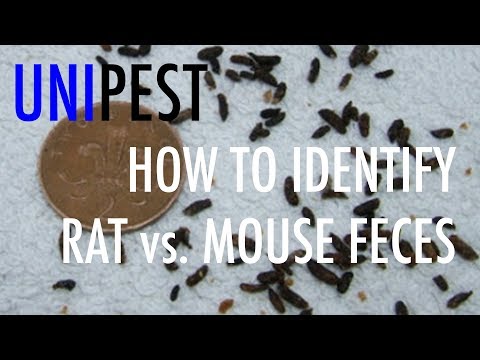
You might spot droppings near nests, food, or entry points.
Watch for placement, chew marks, and nesting signs to help you figure out which critter you’re dealing with and how bad the situation is.
Common Locations and Nesting Habits
Squirrel feces usually turn up in attics, inside vents, or on rafters, since that’s where squirrels like to nest and scurry along rooflines.
You’ll also catch droppings near attic insulation, piles of nesting stuff, or where squirrels stash nuts.
Squirrels often chew holes in soffits or rooflines to get inside.
Rat droppings show up more along baseboards, behind appliances, in garages, or down in basements.
Norway rats tend to drop clusters along their runways and near food.
Rats build nests from shredded paper, fabric, or insulation, usually close to floors or tucked inside wall spaces.
You can follow a trail of droppings to find a nest or entry spot pretty fast.
Nests, Tracks, and Associated Damage
Squirrels build bulky nests out of leaves, twigs, and shredded insulation, usually in attic corners, chimney gaps, or big tree holes.
You might spot squirrel tracks in attic insulation or greasy smudges along beams where they travel.
Squirrels chew wood, tear up insulation, and gnaw on wires—sometimes exposing electrical lines, which is never good.
Rats build nests lower down, using softer shredded stuff.
Look for small, round nests hidden in dark corners or behind appliances.
Rat damage shows up as chewed packaging, gnawed pipes, and frayed wiring.
Both rats and squirrels leave tooth marks, but squirrels make bigger, cleaner chews, while Norway rats leave smaller, rougher grooves.
Health Hazards From Rodent Droppings
Rodent droppings bring real risks you shouldn’t ignore. Rat feces can spread hantavirus, leptospirosis, salmonella, and rat-bite fever.
Hantavirus mostly comes from deer mice, but honestly, any rodent droppings can cause trouble. Squirrel feces might carry leptospirosis and other bacteria.
Sometimes, just breathing in particles from dried droppings can set off allergies or asthma. That’s a pretty unsettling thought, isn’t it?
Try not to stir up dust while cleaning. Put on gloves and a mask, and always dampen droppings with disinfectant before picking them up.
If you notice a lot of droppings or catch a strong ammonia smell, it’s probably time to call a professional. Big infestations mean higher disease risk—and probably hidden nests or chewed wiring, which could even start a fire.


