
Ever spot a small, gliding mammal up in a tree and wonder what other animals have that same look or skill? Flying squirrels and a few other creatures can glide through the air, but some just look or act like them without being closely related. Here, I’ll break down which animals actually share that gliding body plan, and which ones just kinda resemble flying squirrels from a distance.

We’ll check out real gliders, some lookalikes that only mimic the shape, and the traits that tie them together—like those skin flaps for gliding, big eyes, or their love for the night. Curious which animals move like flying squirrels, or why they even evolved those tricks? Let’s find out.
Animals Similar to Flying Squirrels

We’ll dig into which small mammals really glide, which ones just look the part, and where they come from. Bodies, family trees, and how they actually move through the trees—it’s all on the table.
Sugar Gliders: Appearance, Behavior, and Origins
Sugar gliders are small marsupials with a stretchy membrane called a patagium that runs from their forelegs to their hindlegs. They’re light, about 100–160 grams, with soft gray fur, a long tail, and a dark stripe running from nose to back.
You’ll spot big eyes for night vision and a thin tail they use for balance. Their behavior matches flying squirrels a lot: both glide, live in tree hollows, and stay up all night. But sugar gliders belong to the Petauridae family and are marsupials, so females carry their young in a pouch.
Most pet sugar gliders in the U.S. actually come from New Guinea, not the Australian Petaurus breviceps. If you want more, check out the sugar glider entry on Wikipedia.
Overview of Gliding Mammals Beyond Flying Squirrels
Gliding popped up a few different times in evolution. You’ll see gliding mammals in different groups—sciurids like Glaucomys (that’s northern and southern flying squirrels), marsupials like Petaurus (sugar gliders), and some distant relatives like anomalures (scaly-tailed squirrels) and colugos (sometimes called flying lemurs).
Sizes jump all over the place—from tiny southern flying squirrels to the giant flying squirrel species and the spotted giant flying squirrel. Gliding membranes and strong limb control help these animals cross gaps without touching the ground.
This kind of gliding comes from convergence, not close kinship. Glaucomys sabrinus (northern flying squirrel) is a placental rodent, while sugar gliders are marsupials. All these gliders need continuous tree cover and wildlife corridors to survive.
Tree Squirrels, Ground Squirrels, and Their Lookalikes
Tree squirrels (Sciuridae) include lots of species with bushy tails you’ll see during the day. They don’t glide, but they leap far and climb fast.
Ground squirrels and marmots mostly hang out on or under the ground, with chunkier bodies and different diets. Chinchillas and some rodents might look similar at first glance, but they don’t have patagia or glide at night.
Some lookalikes, like scaly-tailed squirrels (Anomaluridae), glide using a tail scale for grip. Small gliding squirrels in genera like Hylopetes and Eupetaurus (think woolly or red giant species) vary by region.
If you’re thinking about a pocket pet or exotic pet, you’ll want to check the local rules and what the species needs. Some gliders need social groups, tree space, and specific diets to stay happy and healthy.
What Makes Animals Similar to Flying Squirrels?
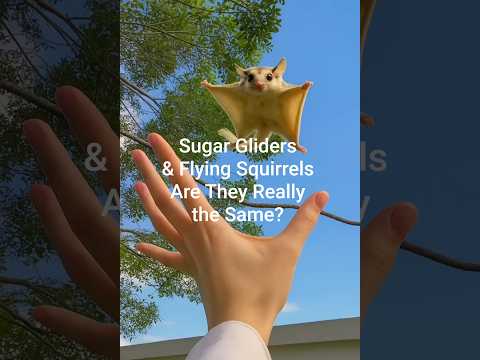
Let’s look at how a skin membrane lets animals glide, why different species end up looking so similar, and how family ties shape their behavior and life.
Gliding Membranes and Patagium Explained
The patagium is that stretchy skin flap that lets these animals glide. It runs between the front and hind limbs.
When you watch a flying squirrel like Glaucomys volans or Glaucomys oregonensis glide, you’re seeing the patagium act almost like a parachute. It creates lift and slows them down as they descend.
Different species shape the patagium in their own way. In Pteromys volans and other Pteromyinae, it runs from wrist to ankle, and sometimes there’s an extra wrist digit for tightening. Large tree squirrels like Petaurista spp. (including Petaurista philippensis, P. nobilis, and P. elegans) use long limbs and broad membranes for longer, straighter glides.
Bats have wing membranes too, but those attach to long fingers and allow powered flight, not just gliding. You’ll spot functional differences in how they glide. Smaller gliders like Hylopetes lepidus turn quickly, using their tail and limbs to adjust mid-air. Giant flying squirrels go for distance, gliding farther but giving up some agility.
When forests disappear, gliders lose their launch spots and safe landing trees. So, keeping forests intact really matters for any animal that relies on a patagium.
Convergent Evolution in Gliding Species
You’ll see that a lot of gliders evolved similar features, even though they aren’t closely related. That’s convergent evolution—different lineages faced the same problem (getting between trees) and came up with similar solutions.
Sugar gliders (Petaurus species, marsupials) and flying squirrels (Glaucomys and Pteromys, rodents) both ended up with patagia and big eyes for night foraging. They look alike because of shared ecological needs, not because they share ancestors.
You’ll see this pattern in Asia and the Americas. Petaurista and Glaucomys look similar in silhouette, and Pteromys momonga in Japan has a similar body plan.
Convergence even shapes their behavior. Nocturnal gliders usually breed in specific seasons and use tree hollows or cheek pouches to carry food. Studying these parallels might help predict how new forest changes could hit several glider types at once.
Differences in Mammalian Families
Tracking family-level differences really matters. These differences shed light on how mammals reproduce, their anatomy, and what they need for conservation.
Rodent gliders fall into groups like Sciurinae and Pteromyinae—think Glaucomys, Pteromys, and Petaurista. These rodents are placental; they give birth to well-developed young. Some even hibernate or stash food for later.
Certain squirrel relatives have cheek pouches, which they use to carry seeds. That’s a nifty adaptation you don’t see everywhere.
Marsupial gliders, like Petaurus, raise their tiny, underdeveloped young in a pouch. Their mating seasons and litter sizes aren’t quite like those of placental squirrels.
These reproductive quirks really shape their vulnerability. Pouch-bound joeys absolutely rely on safe, stable dens. In contrast, rodent glider babies depend on food caches and well-insulated nests.
Taxonomy and habitat needs go hand in hand. For example, Petaurista philippensis needs big, unbroken canopies to glide. On the other hand, smaller species like Hylopetes lepidus can manage in patchy, fragmented forests.
Habitat loss doesn’t hit every family the same way. Conservation plans have to fit the biology of each group, or they just won’t work.


