
You might notice small, pellet-like droppings in your attic or yard and wonder—did a squirrel or a rat leave these behind? Honestly, squirrel poop often looks a lot like rat poop, but you can spot some clear differences if you know what to look for. Figuring out which critter left the mess helps you decide if you need to seal up gaps, call pest control, or maybe just let the wildlife be.

Let’s break down how squirrel and rat droppings differ in shape, color, and texture. I’ll give you a few easy tips you can use right away, no fancy tools needed.
How Squirrel Poop Compares to Rat Poop
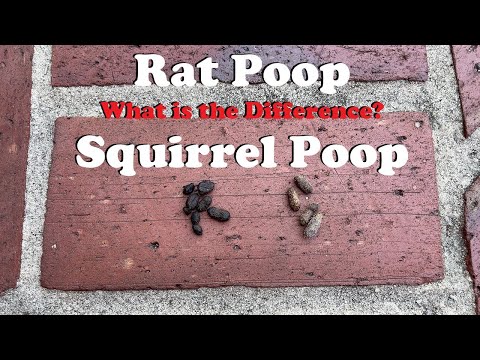
You can spot the difference between squirrel and rat droppings if you look closely at size, shape, color, texture, and where you find them. Check the edges, color, and even if there are visible bits of food in the pellets.
Visual Differences: Size, Shape, and Color
Squirrel poop usually comes out a bit larger than rat poop. You’ll see squirrel pellets around 1/2 to 3/4 inch long and a bit thicker.
Rat droppings are shorter—often 1/4 to 1/2 inch—and tend to be thinner.
Shape helps too. Squirrel scat often has rounded or barrel-shaped ends. Rat scat is more uniform and just a bit tapered.
Color can help you out. Squirrel droppings usually show up as light brown, tan, or reddish-brown, depending on what they’ve been eating. Rat droppings are darker—think deep brown or nearly black when fresh.
Texture gives you another clue. Rat scat looks smoother and shinier. Squirrel poop can look rougher and sometimes shows tiny bits of seeds or nut shells.
Common Similarities Between Squirrel and Rat Droppings
Both squirrel and rat droppings look like little pellets, so it’s easy to mix them up at first glance. Fresh pellets from either rodent are firm and dark, but after a while, they dry out and turn lighter and brittle.
Both types can change in size and color, depending on what the animal ate. You might find seed fragments in both, though it’s more obvious in squirrel scat.
You’ll usually find droppings in clusters, not long lines. It’s best to check size, shape, and color together for a better guess.
If you handle any droppings, be careful. Rat droppings carry a higher risk of disease, but squirrel poop can also have parasites or bacteria.
Distribution and Where Droppings Are Found
Squirrels tend to leave droppings near their feeding spots—like under bird feeders, nut trees, in attics, or along rooflines. You might notice their scat on flat surfaces such as rafters or shed roofs where they sit and eat.
Rats drop their pellets along runways, in dark corners, inside walls, basements, and near food in pantries. You’ll often spot their droppings along baseboards, in cupboards, or beside trash bins.
Squirrel poop usually shows up outdoors or higher up. Rat poop is more common inside homes and closer to the floor.
Check the pattern. If you see random piles under a feeder, it’s probably squirrels. Repeated piles along a path? That often means rats.
If you’re still not sure, compare the pellet size and shape, and think about where you found them.
Practical Clues for Pest Identification

Watch for physical damage, the shape of droppings, and their location. Notice chewing patterns, pellet size, and whether droppings are in piles or scattered around.
Associated Signs: Chewed Wires and Squirrel Damage
If you see big, clean gnaw marks on wood, soffits, or roof edges, that’s usually a sign of squirrels. They chew to make entry points bigger, and their marks are larger with neat, curved grooves.
You might also find shredded insulation or nesting material in attics or wall spaces where squirrels hang out.
Squirrels are notorious for chewing electrical wires. If you spot stripped wiring with bite marks, that’s a real fire hazard. You should cover exposed wires and call an electrician or wildlife expert if you notice new damage.
Rats leave smaller, chisel-like gnaw marks and often chew through food packaging. They make nests with shredded paper or fabric and leave droppings along their runways, usually near baseboards or behind appliances.
Related Rodent Droppings: Mouse and More
Mouse droppings are a lot smaller—just 1/8 to 1/4 inch—and have sharp points at the ends. If you find tiny, pepper-like pellets in cabinets or drawers, you’re probably dealing with mice.
Rat feces are bigger (about 1/2 to 3/4 inch) and tapered at the ends. They scatter these pellets along their paths.
Squirrel feces look similar to rat droppings but are usually shorter (around 5–8 mm) and rounded at both ends. Squirrels tend to leave small piles in one spot, while rats drop more pellets in a line as they move.
Chipmunk droppings look like tiny squirrel pellets. Bats leave crumbly guano that flakes apart easily.
Here’s a quick cheat sheet:
- Pellet size: mouse < squirrel < rat
- End shape: pointed (mouse/rat) vs rounded (squirrel)
- Pattern: piles (squirrel) vs trails (rat) vs scattered specks (mouse)
Health Risks Linked to Rodent Feces
Rodent droppings can bring bacteria and parasites into your home that might make you sick. Rats, in particular, carry a higher risk for things like hantavirus and leptospirosis.
You might also pick up rat-bite fever if you get scratched or bitten. Squirrel droppings? They can spread salmonella and some other bacteria, though you’re less likely to get hantavirus from them than from rats.
Don’t ever sweep up dry droppings. Instead, open a window, put on gloves and a mask, and spray the droppings with disinfectant.
Use paper towels to pick them up. Toss the waste in a plastic bag, seal it, and then wash your hands really well.
If you start feeling feverish, come down with a rash, or get flu-like symptoms after cleaning up, let your doctor know about your rodent exposure.
Want to see the difference between squirrel and rat droppings? Check out the visual guides at Angi and PestKill—they break down the size and how the droppings are spread out.


