
So, you’re suddenly face-to-face with a chimpanzee. First thing—don’t freak out. You’ll want to protect your face and hands, stay as still as possible, and slowly back away without turning around. If you panic or move too fast, you’re just asking for trouble. Slow, steady actions are your best bet.
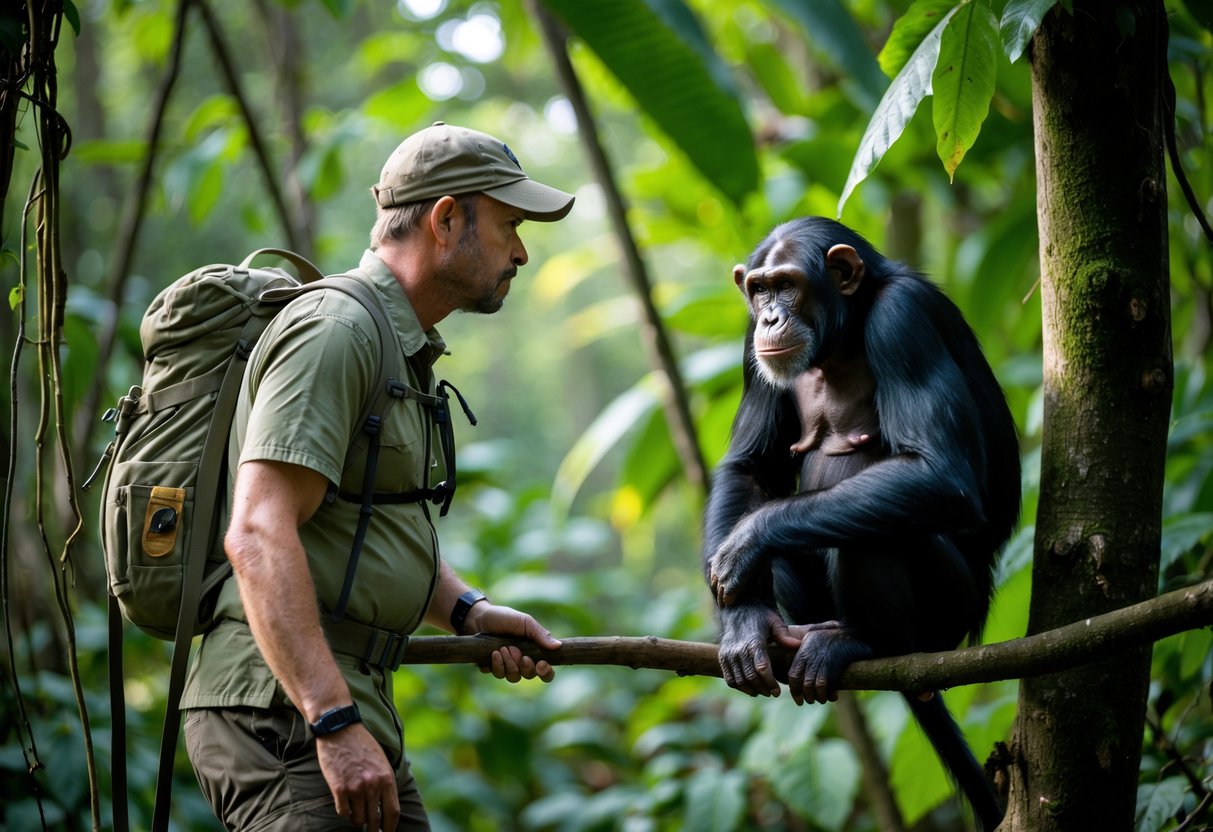
Chimps pack a lot of strength and can act unpredictably. Use your legs to keep some distance, and always look for a barrier or an escape route—anything that buys you time. If you can spot warning signs in their behavior, you might avoid a mess before it even starts.
Immediate Steps to Survive a Chimpanzee Attack

When a chimpanzee attacks, your main focus should be staying safe. Try to control your fear, protect your body, and look for a way out. If you can, use anything nearby to defend yourself—it might help more than you think.
Stay Calm and Avoid Eye Contact
Keeping calm is your first move. If you panic, you’ll probably make sudden moves, and that’ll just spook the chimp.
Take slow, deep breaths to keep your nerves in check.
Don’t stare the chimpanzee in the eyes. They might see that as a challenge, which is the last thing you want.
Keep your gaze low or off to the side, and try to stay still.
Chimps are fast and incredibly strong. If you stay calm, you’ll think more clearly.
Losing control just ramps up the danger.
Protect Vital Areas of Your Body
Chimps usually go for your face, hands, and, unfortunately, your genitals. Those are the spots you need to shield.
Use your arms to cover your face and neck.
Keep your hands close to your body so you don’t make any sudden moves.
Don’t reach for the chimp or swing your arms around—it’ll only make things worse.
If you’re carrying a bag, jacket, or even a stick, use it to block bites or hits. Even a little barrier can help.
Use Barriers and Escape Routes
Scan your surroundings for anything that could protect you—trees, fences, cars, whatever’s handy.
If there’s water nearby, consider jumping in. Chimps aren’t great swimmers and probably won’t follow.
Back away slowly, always scanning for a safe escape route.
If you spot a tree or a vehicle you can get to, go for it. Just don’t turn your back on the chimp.
How to Defend Yourself Against a Chimpanzee
Your legs are your best tools if you have to fight back. Try controlled kicks or pushes at the chimp’s chest or face.
Avoid high kicks—you don’t want to lose your balance.
Don’t yell or act aggressive. That’ll just rile the chimp up.
Back away slowly, using anything you’ve got to block or distract the animal.
Remember, you’re just trying to put space and time between you and the chimp.
People like Andrew Oberle, who survived a chimp attack, say that staying calm and moving carefully really does make a difference.
Understanding Chimpanzee Behavior and Prevention

Chimps are strong and pretty clever. They usually show signs when they feel threatened.
If you know what to look for, you can avoid a lot of trouble. Taking things slow around chimps, whether in the wild or at a zoo, lowers your risk.
Warning Signs of Aggression in Chimps
Chimps give off clear signals before they get aggressive. Watch for open mouths with teeth showing, loud hoots or barks, and chest beating.
Sometimes they’ll stare right at you without blinking or slap the ground.
If their hair stands up or they start charging, they’re definitely upset.
Don’t make direct eye contact—chimps can see that as a challenge.
If you move slowly and stay calm, you might just keep things from getting worse.
Spotting these signs early gives you a chance to back away safely.
Always watch the chimp’s body language. It can save you from a nasty surprise.
How Human Actions Can Trigger Attacks
A lot of chimp attacks happen because people accidentally provoke them.
Loud noises, sudden movements, or teasing can set them off.
In the wild, barging into their space without thinking can trigger a defensive reaction.
Chimps in captivity sometimes act unpredictably because of stress or boredom. They might lose their natural fear of people.
Feeding or trying to touch chimps is risky, too. Always respect barriers and follow the rules at sanctuaries or zoos like Save the Chimps.
That’s just the smart thing to do.
Safety Precautions in Chimpanzee Habitats
If you’re visiting chimp habitats, make sure you keep a safe distance. Always stay behind barriers and try not to make sudden moves or loud noises.
Honestly, binoculars or a camera come in handy—you can watch the chimps without getting too close. It’s just more comfortable that way.
Should a chimp wander up to you, do your best to stay calm. Grab something like your bag and use it to put a bit of space between you and the animal.
Keep your arms close to your body to shield your face, hands, and neck. It’s not always easy to remember in the moment, but it really matters.
Scan the area for escape routes—trees, fences, anything you can use as a barrier. If you need to move, take slow steps backward and try not to turn your back.
If you want more detailed advice, check out tips on how to survive a chimp at knowanimals.com.


