
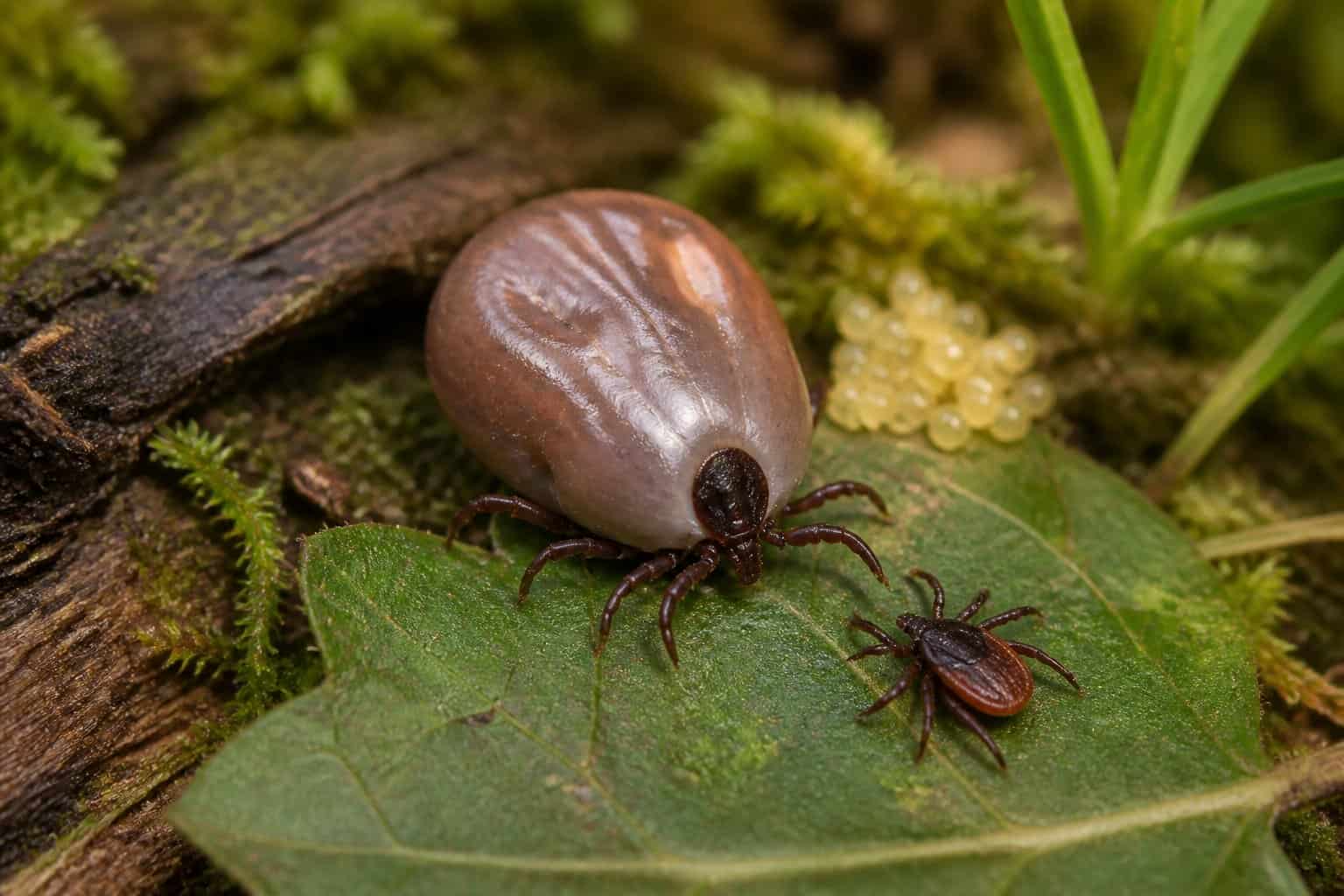
Ticks go through a four-stage life cycle: egg, larva, nymph, and adult. After an adult female tick mates and takes a substantial blood meal, she lays an egg cluster in a sheltered place, often beneath leaf litter.
The eggs hatch into larvae. These larvae feed, molt into nymphs, feed again, and eventually become reproductive adults.
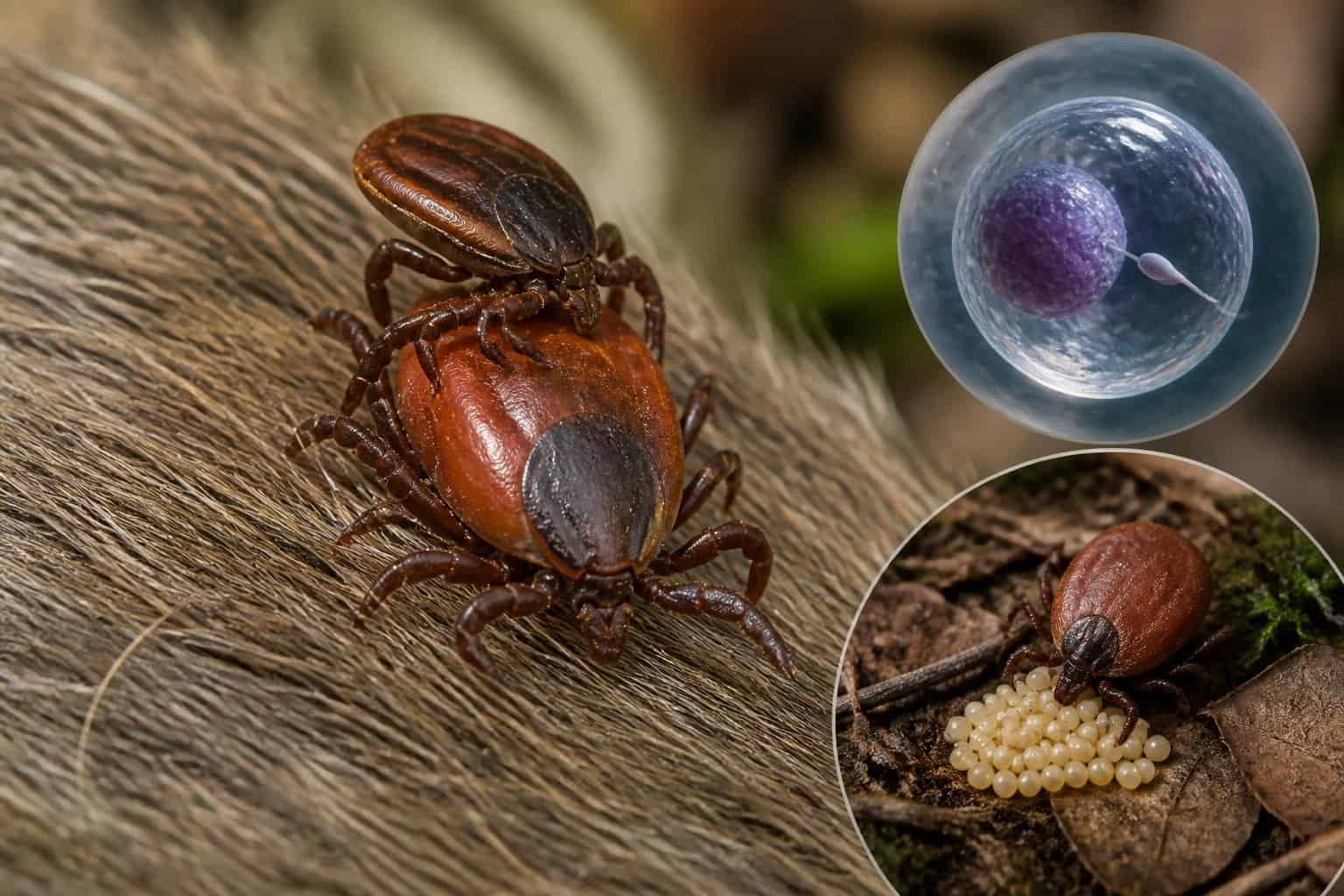
A female tick usually needs a blood meal before she can produce eggs. A single female may lay thousands of eggs.
The timing, number of eggs, and survival of each stage depend on tick species, temperature, humidity, and access to suitable hosts.
Mating, Blood Feeding, And Egg Laying
Adult ticks mate during the reproductive stage, often on a host where they can locate one another and feed. The female tick uses nutrients from her blood meal to develop and deposit eggs in protected leaf litter or vegetation.
How Female And Male Ticks Mate
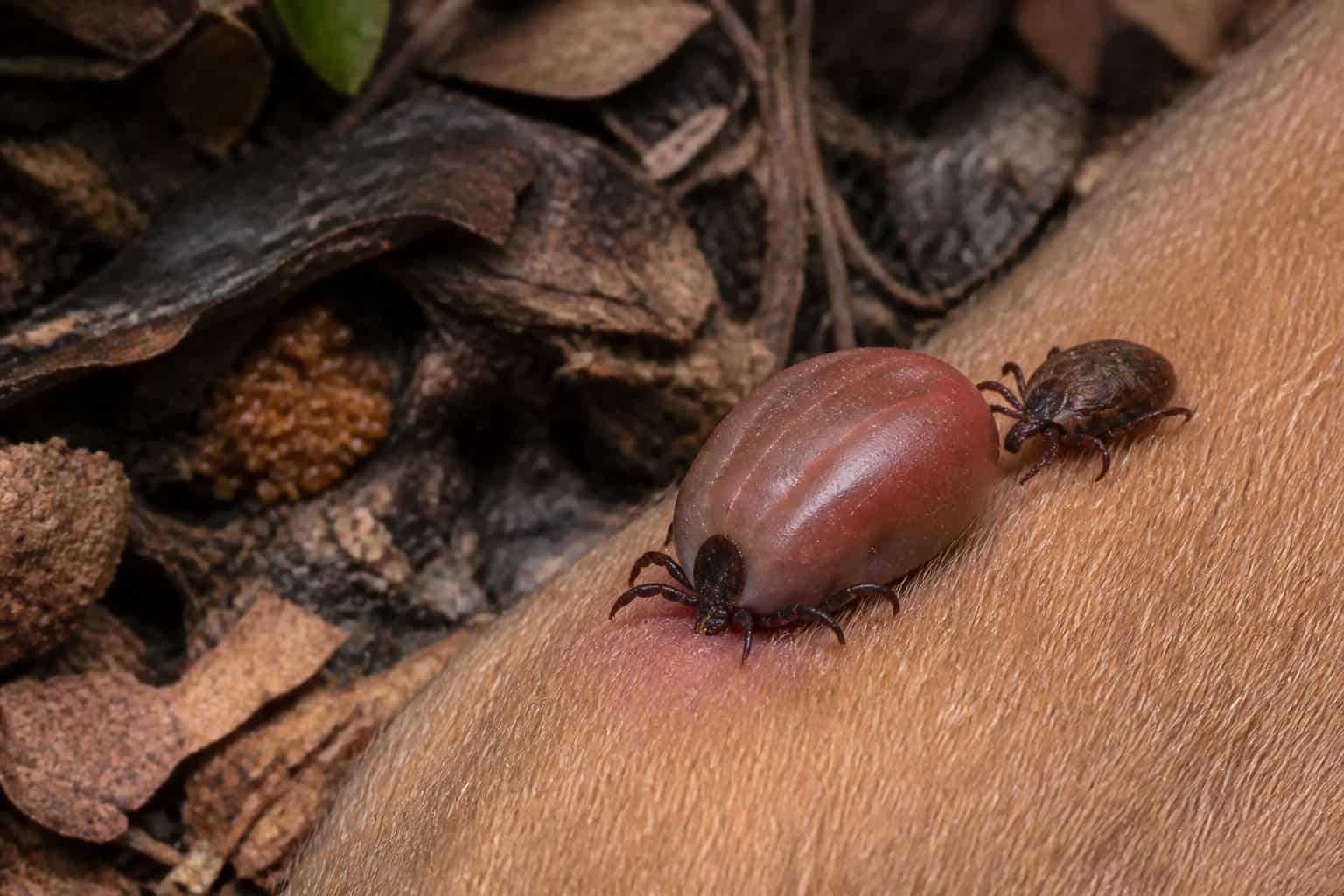
A male tick locates a female through chemical signals called pheromones. Mating commonly occurs on a host, although the behavior differs among tick species.
Male ticks may feed lightly or repeatedly. The female generally needs a much larger meal to support egg production.
Some species mate before, during, or after feeding. Once mating and feeding end, the female drops from the host and searches for a sheltered place to lay her eggs.
Why A Female Needs A Blood Meal
A female tick requires a blood meal to gain the proteins and energy needed to develop eggs. She may remain attached for several days, expanding significantly as she takes in blood.
The size and quality of the meal affect the number of eggs she produces. A female that fails to find a host may survive for a time, but she usually cannot complete reproduction without feeding.
Where Females Deposit Egg Clusters
After engorging, female ticks leave the host and settle in moist, protected areas. Leaf litter, soil crevices, low vegetation, and sheltered spaces near animal resting sites provide suitable conditions.
The female attaches her eggs to one another and deposits them as a cluster. Warmth and humidity improve hatching success, while drought, flooding, and sharp temperature changes reduce survival.
How Many Tick Eggs A Female Can Produce
The number depends on the species, the female’s size, and the blood meal. Some female ticks lay hundreds of eggs, while larger females may produce 1,000 to 18,000 eggs in one reproductive cycle.
After laying her eggs, the female often dies. The next generation must hatch, find hosts, and survive multiple molts before it can reproduce.
From Egg To Reproductive Adult
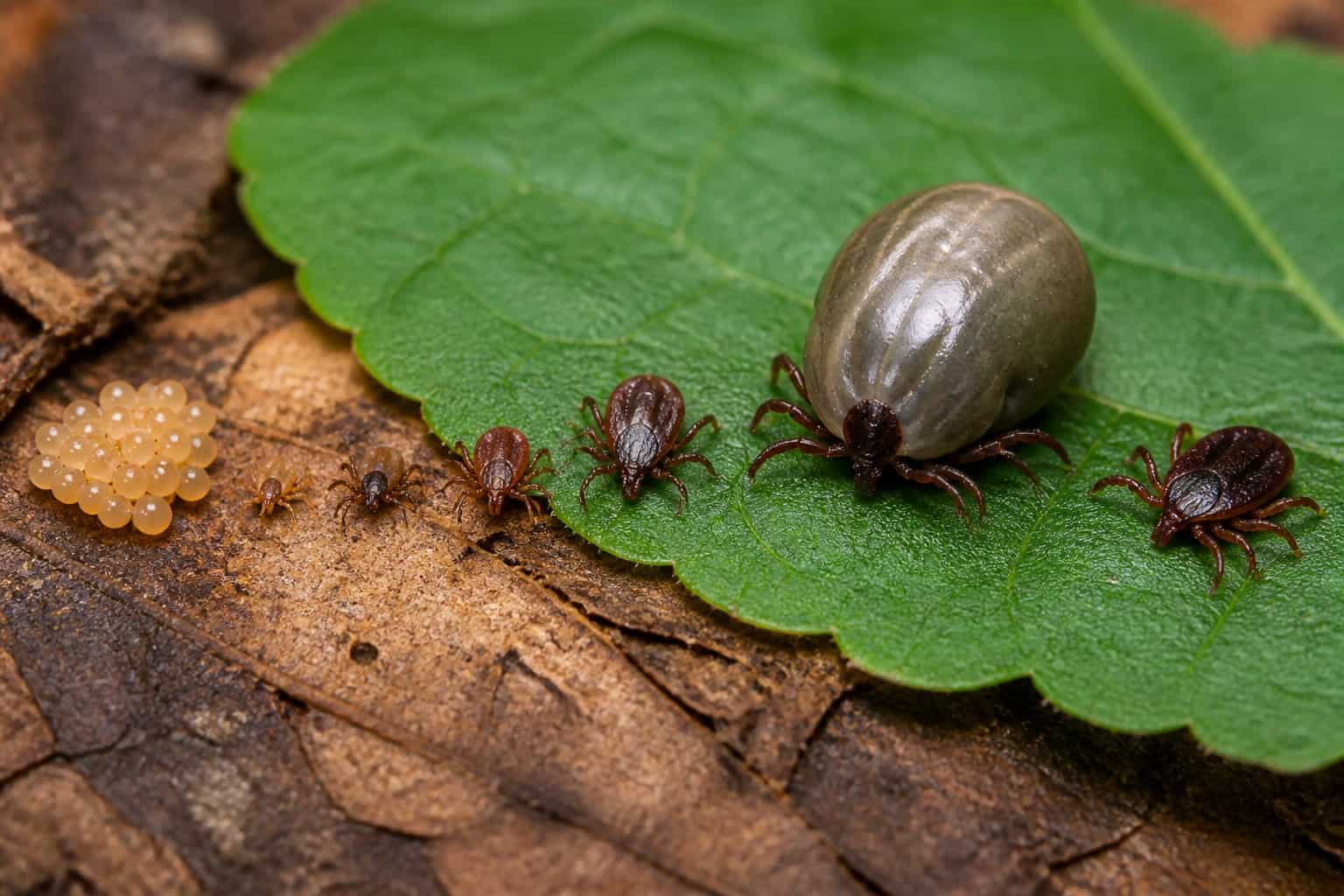
The tick life cycle advances through egg, larva, nymph, and adult stages. Ticks need blood at each active stage, and each successful meal supplies energy for the next molt or, in adult females, egg production.
Hatching Into A Six-Legged Larva
A tick egg hatches into a tiny, six-legged larva. This stage is sometimes called a seed tick because of its small size.
Tick larvae search for a suitable host and take their first blood meal. They cannot reproduce at this stage.
After feeding, a larva leaves the host or remains there, depending on the species, and molts into an eight-legged nymph.
Molting From Larva To Nymph
During molting, the tick sheds its outer covering and develops into a nymph. The nymph is larger than the larva and has eight legs, like an adult tick.
Nymphs must obtain another blood meal before molting again. Because nymphs are small and can be difficult to spot, they may pose substantial exposure risk when they feed on people.
Becoming An Adult Tick
After a nymph feeds, it molts into an adult tick. Adult ticks have distinct male and female forms and can mate once they locate one another.
Adult ticks feed to maintain energy. Adult females need a large blood meal to produce eggs.
Adult males may spend much of their time searching for females on a host.
How Long The Tick Life Cycle Takes
The life cycle may take several months to several years. Species, temperature, humidity, host availability, and feeding success all affect its pace.
Ticks that need a different host for each stage may take up to three years to complete their cycle. Many die before finding a host.
Hosts, Habitats, And Species Differences
Ticks depend on hosts and suitable environmental conditions at every active stage. Their life strategies vary widely, from species that use several animals to species that remain with one host throughout development.
Questing And Finding Hosts
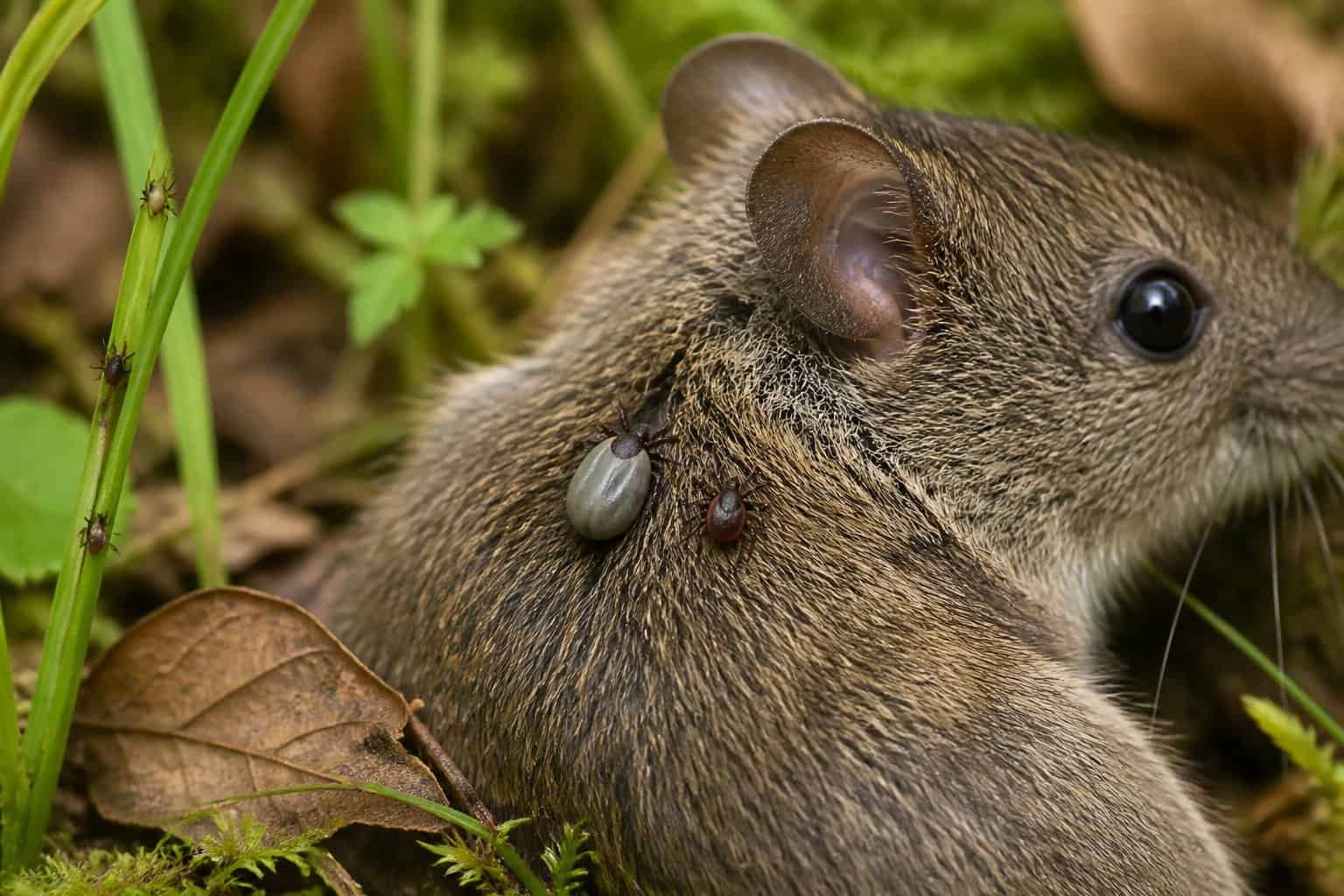
Ticks often find hosts through questing. They climb grass or low vegetation, extend their front legs, and attach when a suitable animal brushes past.
Potential hosts include birds, reptiles, amphibians, deer, pets, and humans. Leaf litter provides shelter between feedings, while wildlife can transport ticks into yards, parks, and woodland edges.
One-Host And Multi-Host Life Cycles
In a one-host life cycle, larvae, nymphs, and adults feed on the same animal, leaving only after the adult female has completed her meal. In multi-host cycles, the tick drops to the ground after one stage, molts, and searches for a different host.
Some species complete every stage on one host, while others must find new hosts between molts.
The Brown Dog Tick Exception
The brown dog tick can live around kennels, homes, and other sheltered structures. It may complete its life cycle indoors, where dogs provide repeated access to blood meals.
Regular pet checks, washing bedding, vacuuming, and targeted pest control help prevent infestations. Your home can support multiple generations if ticks find hosts and protected hiding places.
Environmental Conditions That Affect Survival
Warm, humid conditions generally support egg hatching and survival between meals. Dry air, intense heat, cold snaps, flooding, and habitat disruption reduce survival.
Changes in vegetation, leaf litter, wildlife movement, and seasonal weather can shift local tick activity. Birds, reptiles, amphibians, ants, and spiders may also prey on ticks, though their effect varies by habitat.
Why Reproduction Matters For Disease Risk
Reproduction increases the number of ticks seeking blood meals, and blood feeding connects ticks with wildlife, pets, and humans. A growing population raises the chance that you encounter an infected nymph or adult tick.
How Ticks Acquire Pathogens
Ticks acquire pathogens when they feed on an infected host. A tick may retain certain pathogens through later life stages and transmit them during another blood meal.
This pattern helps explain how infections such as Lyme disease and other tick-borne illnesses circulate among wildlife, ticks, pets, and humans. Not every tick carries disease, and risk depends on the species and location.
When Nymphs And Adults Can Infect People
Nymphs and adult ticks can transmit pathogens while feeding on humans. Nymphs may be especially difficult to notice because they are small, while adult ticks are easier to see but can still attach unnoticed.
Prompt removal lowers the time available for transmission for some infections. Use fine-tipped tweezers to grasp the tick close to your skin, pull upward steadily, and clean the bite area and your hands.
Protecting People And Pets During Tick Season
Use a tick preventive your veterinarian recommends for your pets. Check dogs and cats after outdoor activity.
Pay close attention to ears, collars, toes, armpits, and other sheltered areas. For yourself, wear long pants and use an EPA-registered repellent as directed.
Stay on cleared paths. Inspect your clothing and skin after being outdoors.
Keep grass trimmed. Reduce excess leaf litter near frequently used areas to make your yard less inviting to ticks.


