
Honestly, the numbers are pretty specific: about 1,900 giant pandas live in the wild, and there are roughly 600 to 800 in captivity worldwide. So, if you’re counting, that’s about 1,900 wild pandas plus another 600–800 in zoos and breeding centers. That’s the global population right now.

Let’s get into where those wild pandas actually live. Zoos and breeding centers play a bigger role than you might think, and even the way people count pandas can change the totals a bit.
Coming up, you’ll see the breakdown between wild and captive pandas and a look at how conservation work is shaping those numbers.
Current Panda Population Around the World
Most giant pandas live in China’s protected mountain ranges. A few hundred more live in zoos and research centers around the world.
Red pandas, which are a totally different species, have a smaller and more scattered wild population in Asia.
Wild Giant Panda Numbers by Region
Wild giant pandas mostly stick to southwest China, especially in Sichuan, Shaanxi, and Gansu provinces. The latest counts show about 1,900 wild pandas, mainly in the Sichuan Giant Panda Sanctuaries and nearby reserves.
These protected areas have the densest panda populations and most breeding pairs.
China set up the Giant Panda National Park and 67 national reserves to protect huge areas of bamboo forest. Conservation teams patrol for poachers and build habitat corridors, which helps keep panda numbers steady or even slowly rising.
Numbers shift a bit when new surveys come out, but the trend is pretty stable.
Captive Panda Population in Zoos
Worldwide, you’ll find around 700 to 800 giant pandas living in captivity. Most of them stay in China’s breeding centers, but others live in zoos across 16 countries and territories through loan deals.
You might spot pandas in the United States, Japan, or at several European and Asian zoos.
Captive pandas are important for breeding programs and public education. You could visit pandas at places like the Chengdu Research Base or at international zoos taking part in conservation partnerships.
The number of captive pandas changes as cubs are born, animals are sent back to China, or loans end.
Red Panda Population Estimates
Red pandas aren’t the same as giant pandas, and they live across the eastern Himalaya and parts of southwestern China. Estimates say there are about 10,000 to 20,000 wild red pandas, but that number really depends on who’s counting and where.
Red pandas face threats like habitat loss, forest fragmentation, and poaching. They live in small, broken-up forest patches, not the big sanctuaries set up for giant pandas.
Conservation groups focus on protecting their habitats and working with local communities to help red panda populations hang on.
Where Pandas Live and the Role of Zoos
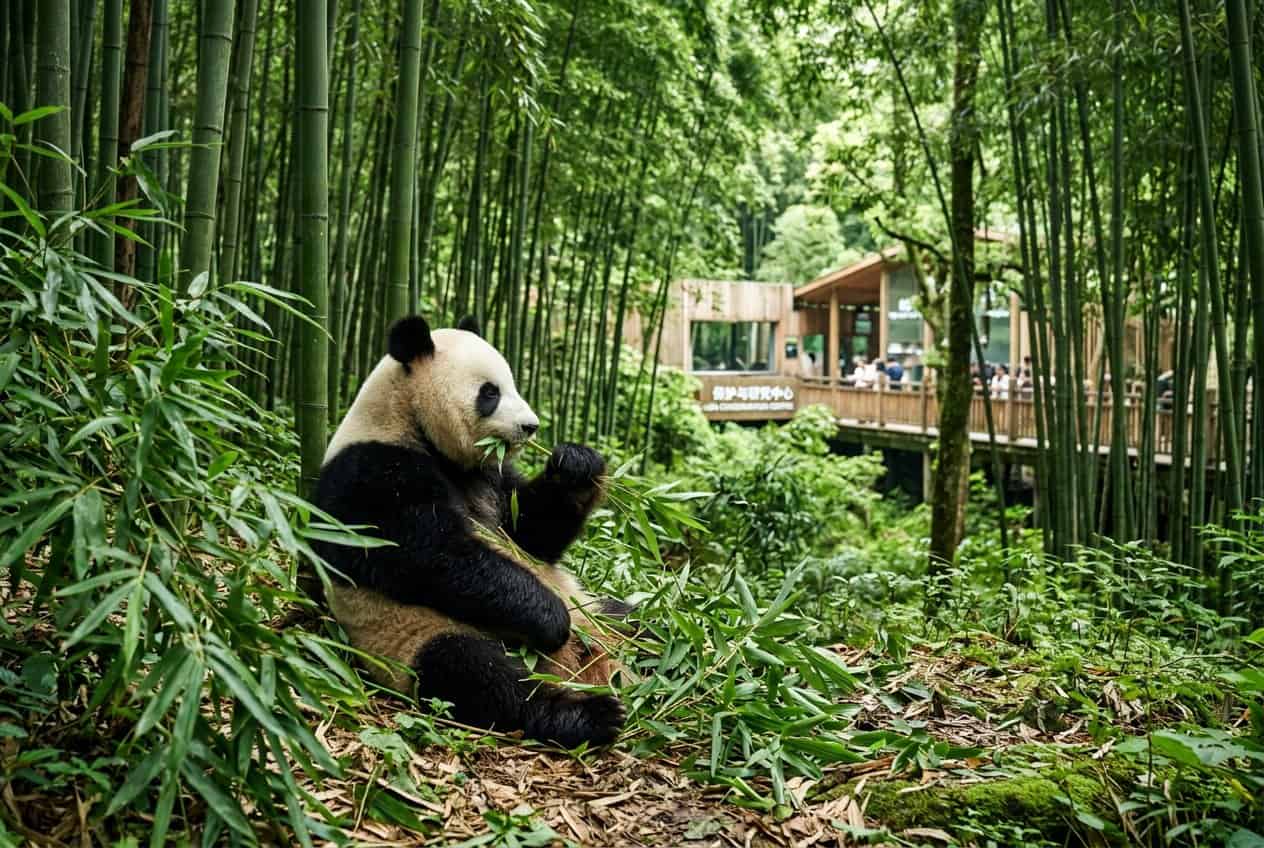
Most pandas live in high mountain bamboo forests in central China. Some live in protected reserves and research centers, while others spend their days in zoos abroad that team up with China on conservation.
Natural Panda Habitats in China
Wild giant pandas live in mountain ranges in Sichuan, Shaanxi, and Gansu provinces. You’ll find them in cool, damp bamboo forests between about 1,200 and 3,400 meters up.
Bamboo is pretty much all they eat, so they need big, healthy bamboo forests that go through cycles of flowering and regrowth.
Wolong National Nature Reserve and other panda reserves protect important stretches of this habitat. These places try to keep forests connected so pandas can move around and find food or mates.
Farming and logging cut down panda numbers in the past, so now, people build corridors to link up forest patches.
If bamboo dies off in one spot, pandas might travel pretty far to find more. That’s why it’s so important to keep their habitats connected and protected.
International Zoos With Pandas
A handful of zoos outside China have pandas through loan agreements. In the U.S., pandas have lived at the Smithsonian National Zoo, San Diego Zoo, and Zoo Atlanta.
Other places with pandas include Ueno Zoo in Tokyo, Edinburgh Zoo in Scotland, Berlin Zoo in Germany, and Zooparc de Beauval in France.
These zoos give pandas special diets, roomy enclosures, and plenty of veterinary care. They share breeding info and follow China’s rules—cubs and most adult pandas stay owned by China and usually go back after a few years.
You’ll often see big public education efforts at these zoos, teaching visitors about panda needs and conservation.
Key Panda Conservation Centers
You’ve probably heard of the Chengdu Research Base of Giant Panda Breeding. It stands out, but there are other Chinese centers that focus on breeding and reintroduction too.
Chengdu handles captive breeding and veterinary care. They also run public education programs and work closely with field sites.
Conservation centers team up with wild reserves. They study panda reproduction and genetics, and they keep a close eye on how cubs develop.
Some staff members train captive-born pandas for life in the wild. They teach them to forage naturally and to avoid people.
These centers keep detailed studbooks and genetic plans. Their goal is to cut down on inbreeding and keep panda populations diverse, both in captivity and out in the wild.


