
Toilet training a Cocker Spaniel can be an exciting yet challenging journey. Many new pet owners wonder how long it will take to successfully train their furry friend.
On average, it can take about four to six months to fully toilet train a Cocker Spaniel puppy, but you need to be consistent and patient during this process.

Starting early and creating a routine can significantly speed up the training. Cocker Spaniels are intelligent and eager to please, which often makes them quick learners.
Using methods like crate training or constant potty breaks after eating can help establish good habits.
Understanding your puppy’s signals is also important. If you respond quickly to their needs, you can reduce the time it takes for them to learn where and when it is appropriate to go. With the right approach, your Cocker Spaniel will be toileting outside in no time!
Understanding Your Cocker Spaniel’s Needs

To successfully toilet train your Cocker Spaniel, it is crucial to meet their specific needs. This includes providing the right physical and mental stimulation, as well as establishing a consistent routine.
Physical and Mental Stimulation Requirements
Cocker Spaniels are active dogs that need plenty of exercise. Aim for at least 30 to 60 minutes of physical activity each day. This could include walks, fetch, or playtime in your yard.
Mental stimulation is just as important. Try using puzzle toys or training games. This keeps your pup engaged and can prevent boredom-related behaviors like chewing or digging.
Socialization is key too. Expose your Cocker Spaniel to different environments, people, and pets. This helps them stay calm and focused, which is vital during potty training.
The Importance of Routine and Consistency
A consistent routine helps your Cocker Spaniel learn faster. Feed your dog at the same times every day. This helps regulate their bladder control and makes it easier to predict when they need to go outside.
When potty training, take your pup out regularly— ideally after meals, playtime, and naps. Always reward them when they go outside.
Use the same spot each time for potty breaks. This reinforces the habit in their mind. Remember, patience is key. If accidents happen, stay calm and redirect them outside.
Developing a Training Plan
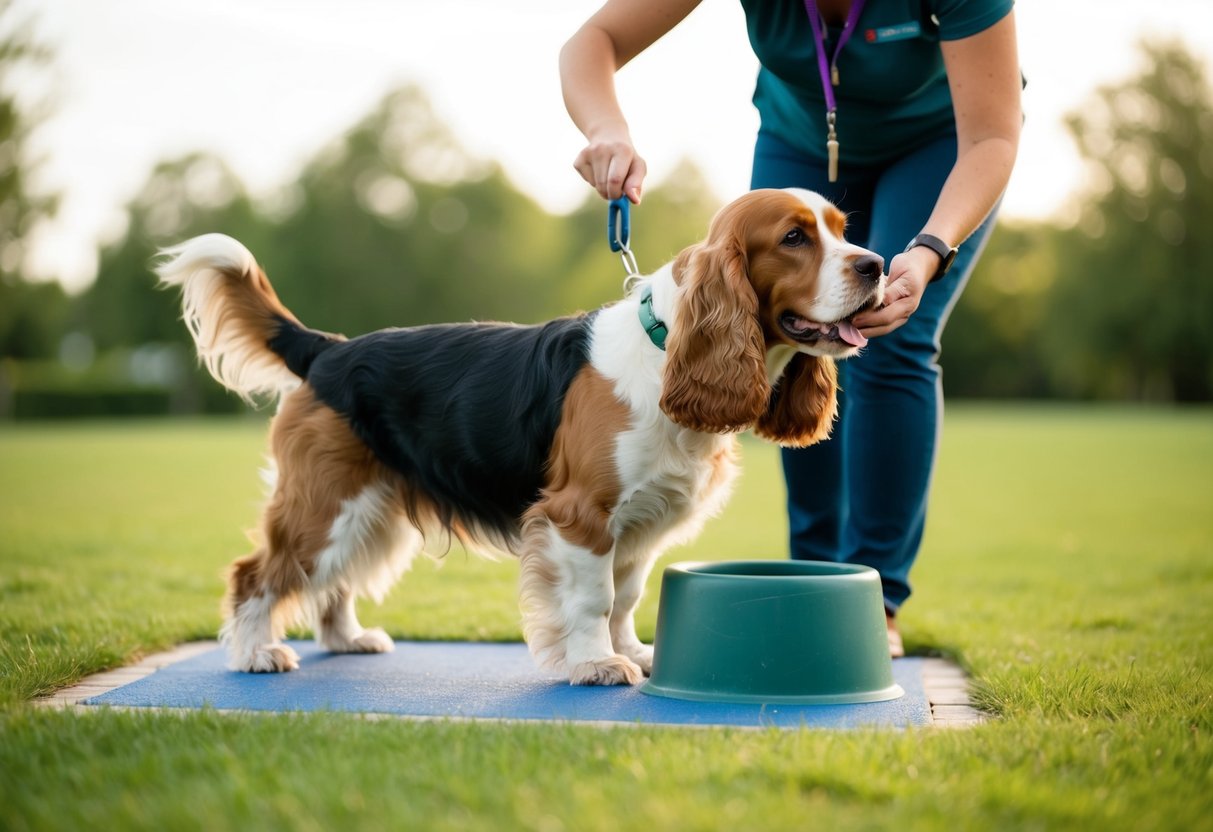
Creating a successful potty training plan is essential for your Cocker Spaniel. By focusing on a positive environment and a consistent routine, you can help your puppy learn quickly. Utilizing techniques like crate training can also make the process smoother.
Creating a Positive Training Environment
A positive training environment is key to effective potty training. Ensure the space is calm and free from distractions. Use a friendly tone when guiding your puppy. This helps build trust and encourages them to learn.
Implement positive reinforcement to reward your Cocker Spaniel for successful bathroom breaks. Treats, praise, and affection are great ways to motivate your puppy. Establish a designated potty area outside to encourage them to associate that spot with going to the bathroom.
Establishing a Potty Routine
A routine helps your puppy learn when and where to go. Take your Cocker Spaniel out first thing in the morning, after meals, and before bed. Consistent bathroom breaks make it easier for them to understand when to eliminate.
Use a command like “go potty” to signal bathroom time. This will create a verbal cue they can learn to recognize. Keeping the potty spot consistent allows your puppy to become familiar with it.
Introducing Crate Training
Crate training is a valuable method for house training your Cocker Spaniel. A crate can create a safe space where your puppy won’t want to go to the bathroom.
Make the crate comfortable with a bed or blanket. Gradually introduce your puppy to the crate, ensuring they have positive experiences inside. A well-trained puppy will learn to hold their bladder until you let them out for a bathroom break.
Using a crate, alongside a consistent routine, fosters a quick and effective potty training experience.
Handling Challenges and Setbacks
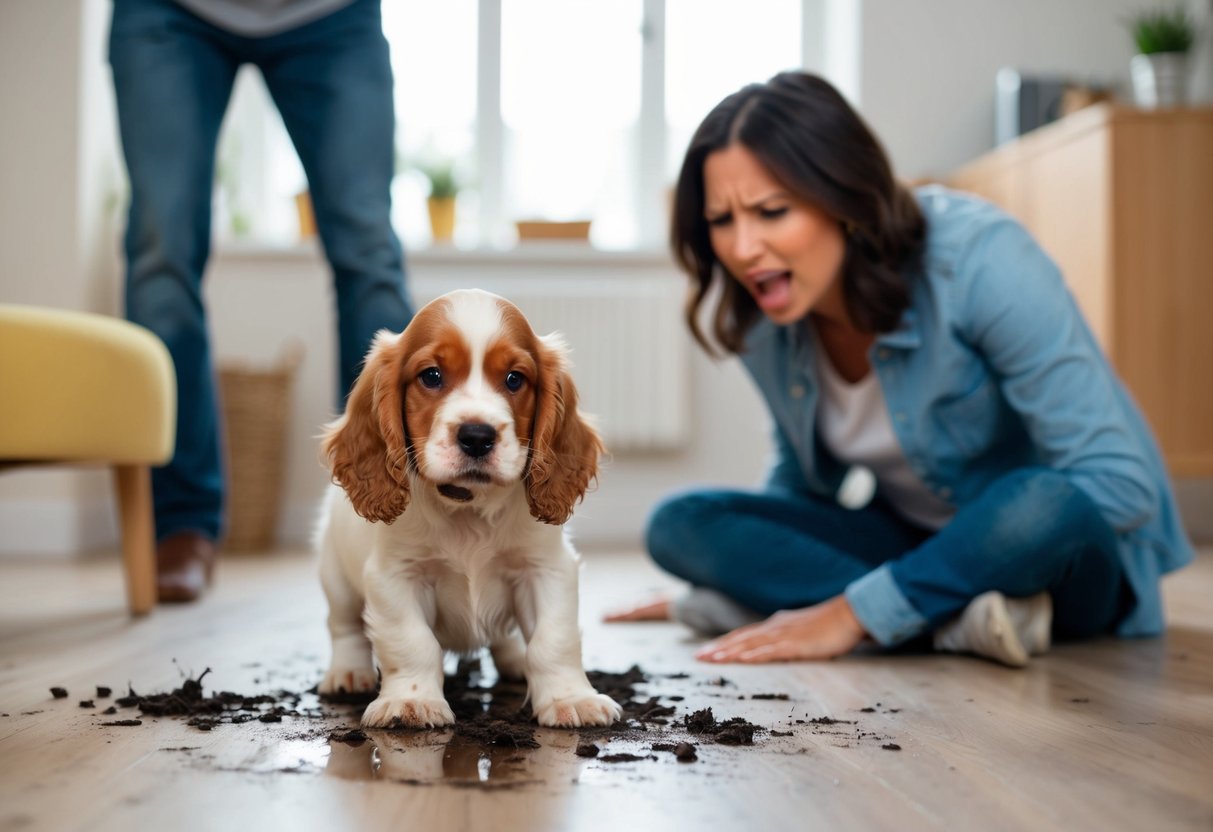
Toilet training a Cocker Spaniel can come with its share of challenges. You may face accidents in the house or issues related to separation anxiety. Knowing how to handle these situations can make the process smoother and help your puppy become fully house-trained.
Dealing with Accidents
Accidents will likely happen during the training. When they do, it’s crucial to stay calm and patient. Yelling or punishing your puppy won’t help and can confuse them.
Instead, clean up the mess thoroughly so that no scent remains to encourage repeat behavior.
If your puppy has frequent accidents, consider using puppy training pads or pee pads. These can provide a temporary solution and offer a spot for your puppy to relieve themselves when they can’t get outside. Always reward them with praise when they use the pads correctly to reinforce good habits.
Addressing Separation Anxiety
Separation anxiety can be a significant issue while training your Cocker Spaniel. If your puppy feels stressed when left alone, it may lead to accidents.
To help with this, start by leaving them alone for short periods. Gradually extend the time as they become more comfortable.
Creating a safe space with their bed and toys can also ease their anxiety. Consider using potty pads near their resting area to give them a reliable spot to go. Keep in mind that patience is key. Your puppy is learning, and your support is vital for their success.
Additional Training Resources
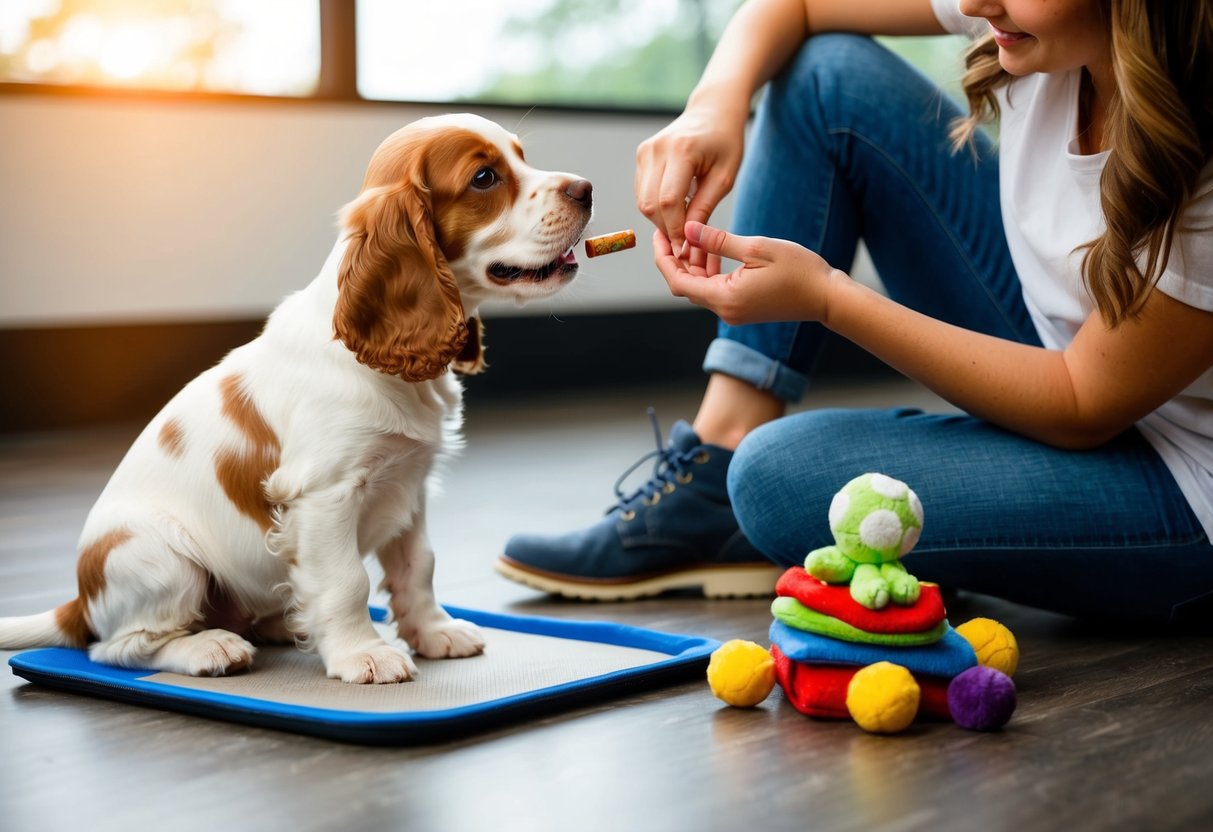
Toilet training your Cocker Spaniel can sometimes be challenging. There are resources and strategies that can help you navigate this process effectively. Knowing when to seek professional help and how to use training aids can make a big difference.
When to Seek Professional Help
If you find toilet training your Cocker Spaniel to be difficult, consider working with a professional dog trainer. They can provide personalized strategies for you and your puppy.
You may want to consult a trainer if your puppy shows signs of anxiety or if they consistently have accidents despite your efforts. A professional can help identify any underlying issues.
Look for trainers who specialize in puppy training. Be sure to check reviews or ask for recommendations. Sometimes, joining a local dog training class can help you learn with others facing similar challenges.
Use of Training Aids
Training aids can greatly assist in the potty training process.
Consider using puppy pads, which can create a designated potty spot in your home. This helps your Cocker Spaniel understand where it is acceptable to go.
Crate training is another effective method.
When you correctly use a crate, it gives your dog a safe space. It also encourages them to hold it until they’re taken outside.
You can also use scent markers to help guide your puppy to the right area outside.
These tools can lead to a more successful training experience and reinforce positive habits.


