
You might think giraffes have a short pregnancy like some animals, but actually, they take much longer. A giraffe pregnancy usually lasts about 14 to 15 months (roughly 400–460 days), which gives the calf plenty of time to grow big and strong before birth.

That long gestation really matters. It lets the calf develop enough to stand and walk so quickly after birth—pretty amazing, right?
Giraffe Gestation Period and Pregnancy Timeline

Most of the time, a pregnant giraffe carries just one calf, and that pregnancy stretches well over a year. Let’s break down just how long that is, how it stacks up against other mammals, and what might change the timing a bit.
Average Length of Giraffe Pregnancy
A giraffe’s pregnancy typically runs about 400 to 460 days, so that’s around 13 to 15 months. Most sources say it’s usually closer to 15 months, which is a long haul compared to a lot of other hoofed animals.
Giraffe cows almost always give birth to a single calf—twins are pretty rare. When labor starts, she stays standing. The calf drops about eight feet to the ground, but then, surprisingly, gets up and walks within an hour.
If you’re keeping track, key moments are conception, about 12 months in when the calf is pretty well developed, and then birth at 13–15 months. Moms usually space out pregnancies every one to two years, mostly because they need to care for and nurse the calf.
Comparison With Other Mammals
Giraffes have one of the longest gestation periods among land mammals. Elephants top the charts with pregnancies around 22 months, while deer species usually carry for only 6–8 months.
Compared to farm animals, giraffes are in a different league. Cows gestate for about 9 months, horses about 11 or 12. Giraffe pregnancies are much longer—sort of puts their size into perspective.
That extra time lets the calf grow large enough for life outside the womb. A newborn giraffe stands about 6 feet tall and needs strong bones and organs to survive the fall at birth and get moving right away.
Factors Influencing Gestation Duration
A giraffe’s health really shapes how long the pregnancy lasts. Well-nourished mothers in safe places usually follow the 400–460 day range. If the mother is stressed, sick, or doesn’t get enough to eat, gestation can stretch out a bit or, less often, get cut short.
Age plays a role too. First-time mothers sometimes have slightly different timelines than experienced ones, but it’s usually not a huge difference. Drought or harsh conditions can affect mom’s body and shift the timing a little.
Day counts can vary depending on the subspecies and how researchers track conception. People often use observed mating and birth dates, so you’ll see some natural variation in the reported numbers.
Calf Development and Birth Process
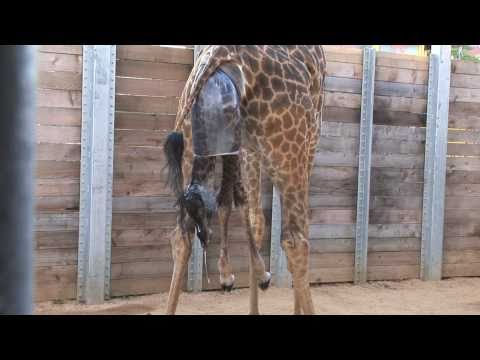
Inside the mother, giraffe calves grow big and strong. They develop the bones, muscles, and features they’ll need to stand, nurse, and move just minutes after being born.
Fetal Growth and Maturity at Birth
By the time a giraffe gives birth, her calf is pretty well developed. After 13–15 months, the fetus is about 1.8 meters (6 feet) tall and weighs 45–68 kg (100–150 lbs). Organs, limbs, and the nervous system finish most of their development before delivery.
Most of the rapid growth happens in the last trimester. Bones get denser and muscles bulk up, so the calf can actually stand after dropping to the ground. Lungs finish developing late in pregnancy, which is important for those first breaths.
Fetal position and the mother’s diet can affect when the calf is born and how strong it is. If the mother doesn’t get enough nutrition, the calf might weigh less and have a harder time moving early on.
Development and Role of Ossicones
Ossicones—the little horn-like bumps—start forming while the calf is still inside. They begin as cartilage and later turn to bone. At birth, they’re still soft and flexible, but they harden and fuse to the skull over the first few months.
Ossicones do a lot. For adults, they help protect the skull during fights and show dominance. For a newborn, they’re more a sign of normal development than anything else. If you notice the ossicones look uneven or swollen, that could mean birth trauma or infection, and a vet should check it out.
Standing Birth and the First Moments
The mother gives birth standing up, so the calf drops about 1.5 to 2 meters (5–6 feet) to the ground. That fall actually helps break the amniotic sac and gets the calf breathing. You’ll see the calf cough, stretch its legs, and try to lift its head within just a few minutes.
Usually, the calf tries to stand within half an hour and often gets up by the one-hour mark. Those first steps are wobbly, but strength and balance come fast. Standing quickly is crucial—the calf needs to keep up with mom and avoid predators.
The mother will lick the calf clean and help it find a good spot to nurse. If the calf isn’t standing or breathing after an hour, that’s a real emergency.
Maternal Care and Early Calf Life
Right after birth, the mother focuses on nursing and protecting her calf. The colostrum in her first milk gives the calf important antibodies and a quick energy boost.
Nursing happens often; calves mostly depend on milk for nearly a year. Still, after just a few weeks, they start nibbling on some plants.
Mothers usually hide their calves in tall grass for hours or even days. Instead of keeping them close all the time, she comes back to nurse.
This behavior helps avoid drawing predators to the vulnerable calf. You’ll often spot the mother grazing nearby, always keeping an eye out from a short distance.
Weaning typically starts when the calf is about 6 to 9 months old. Some calves, though, keep nursing now and then for up to a year or even longer.
During all this, social learning kicks in. The calf tries out feeding, walks alongside the herd, and uses its little ossicones in gentle play.


