
When a swarm of bees leaves its hive to look for a new home, you might wonder—how far do they really go? The answer depends on things like nesting sites and food, but most swarms won’t travel more than a few miles. Usually, they cluster within about 100 yards before deciding where to settle.
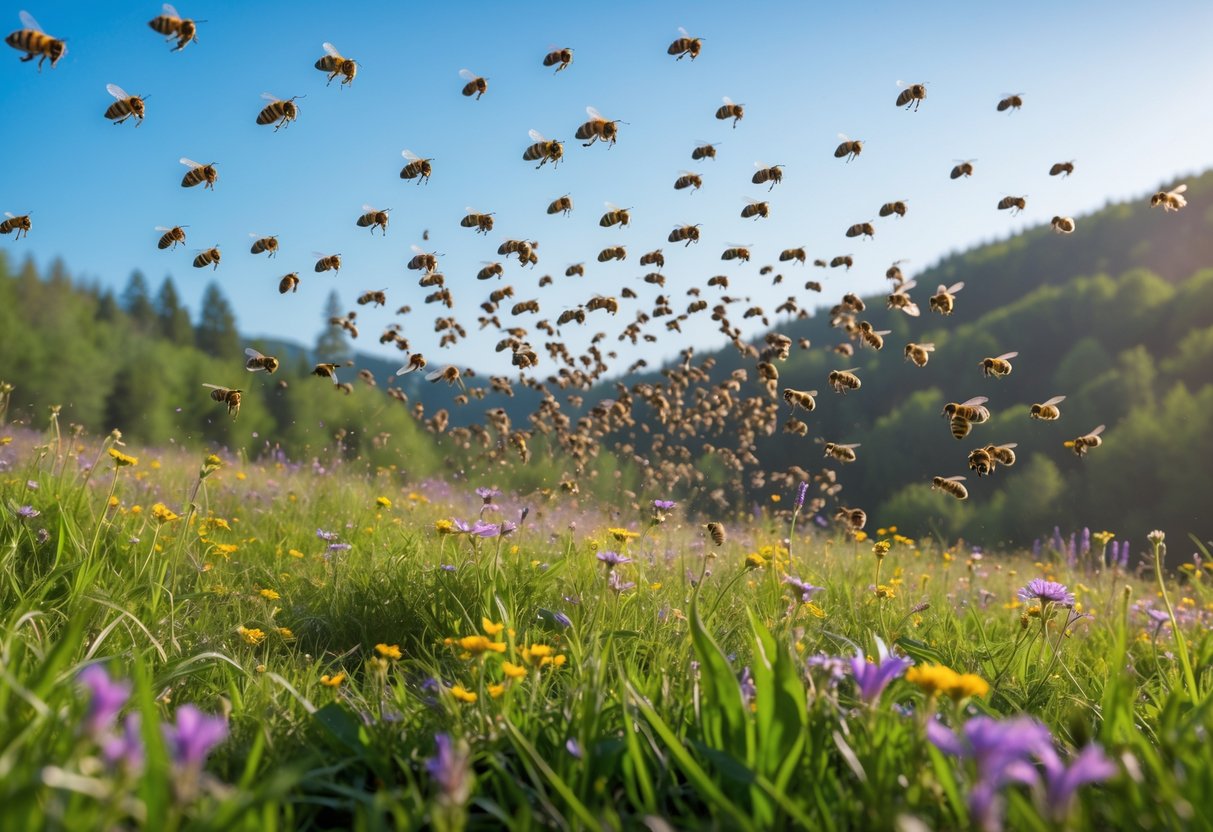
It’s kinda surprising, but even though bees can fly 10 miles or more, they stick close if they find a good spot nearby.
If you see a swarm buzzing around your yard, understanding their travel habits helps you know what to expect.
This info might even help you figure out whether to handle the swarm yourself or just call a beekeeper. Curious what guides their journey? Let’s dig in.
How Far Will a Swarm of Bees Travel?

Bees don’t just wander endlessly when they swarm.
They look for a good place to live, and you’ll notice them stop and cluster before moving again.
Sometimes they only travel a few yards, but other times, they might go several kilometers.
Average Distances Covered by Swarms
Most bee swarms go between 1 and 6 kilometers (about 0.6 to 3.7 miles) from their old hive.
That’s typical, but sometimes they’ll push it and go as far as 13.5 kilometers (8.4 miles), or even 20 kilometers (12.4 miles) if they have to.
If there are good nesting spots nearby, they barely fly far at all.
But when the area’s crowded or safe places are scarce, bees just keep going until they find something better.
Initial Clustering and Temporary Stops
After leaving their hive, bees almost always make a pit stop—a cluster—close by.
This cluster might be just a few yards away, or maybe up to 100 yards.
While they’re hanging out, scout bees zip off to explore possible nesting sites.
They come back and report what they find, kind of like a little bee debate about the best spot.
This break gives everyone a chance to rest and decide before they move for good.
Final Relocation to a New Home
Once the scouts agree on a site, the whole swarm flies off together.
If the new spot is close, it’s a quick trip.
If not, they might cover several kilometers to get there.
They usually pick a dry, safe cavity—like a hollow tree or a wall.
The journey wraps up when the bees settle into their new hive.
How far they go really depends on what the scouts discover and what the local landscape offers.
If you want to read more about bee swarms and their flights, you can check out this article about how far a swarm of bees will travel.
Key Factors That Influence Swarm Travel Distance

A few things shape how far a bee swarm goes when they’re hunting for a new home.
The main ones? Nesting site options, the weather, and the queen bee’s behavior.
Availability of Suitable Nesting Sites
If there are empty tree holes, wall cavities, or other safe places nearby, swarms usually won’t bother flying far.
They want a spot that’s dry, sheltered, and safe from predators and bad weather.
When those are hard to find, the swarm just keeps moving until they hit the jackpot.
Your local landscape and what’s around the old hive matter a lot here.
Scout bees go out first and check possible homes, so the quality of what they find really sets the travel distance.
Basically, if there are good sites close by, bees don’t waste energy flying farther than they have to.
Weather and Environmental Conditions
Weather makes a huge difference in how far and when a swarm travels.
Bees skip flying during heavy rain, strong wind, or cold spells.
Calm, warm weather? That’s when they’ll go the farthest.
Nearby food and water sources also play a part.
If flowers or water are scarce near the old hive, bees might travel farther to settle near better resources.
But if the weather’s good and there’s plenty blooming, the swarm usually stays closer to home.
Role of the Queen Bee During Swarming
The queen bee leads the swarm, and her behavior really shapes how far the group will travel. Right before leaving, she stops laying eggs and gets ready for the move.
The swarm sticks close by, following her scent and the vibrations she makes. Usually, she waits around while scouts zip off to hunt for a new nesting spot.
When the scouts finally find a good place, they rush back and signal her. Then, the whole swarm takes off together.
Since the queen decides when and where the swarm flies, her health and energy play a big role in how far your bees will go. If you’ve got a strong, lively queen, she’ll help the swarm reach the best spot within a reasonable distance.
For more details, visit how far will a swarm of bees travel.


