
Chipmunks usually burrow only a few feet underground. Their tunnel network can spread much farther than the entrance suggests.
If you wonder how far chipmunks burrow, a single chipmunk burrow may run several feet deep and extend for many feet under your yard. This is especially true when the soil is loose and the site offers good cover.
A small, tidy hole at the surface can hide a much larger system below. These burrows include nesting spots, food storage, and escape routes.

You will notice chipmunk burrows near shrubs, stone edges, garden beds, and foundations more often than in open turf. The openings often look minor.
The underground layout can be surprisingly organized. Spotting the signs early matters.
How Deep And Wide Underground Tunnels Usually Get

A chipmunk creates a compact burrow entrance at the surface. Underground, the space can include several connected passages.
The depth, length, and layout depend on soil type, cover, and how safe the area feels.
Typical Burrow Depth And Total Tunnel Length
A typical chipmunk burrow entrance may be only a few inches wide. The main tunnel can reach several feet deep.
In favorable conditions, chipmunk burrows can stretch many feet long. The tunnel may include a deeper nesting area.
Why Burrow Systems Have Multiple Chambers And Entrances
Chipmunks use underground space for shelter, nesting, food storage, and quick escape. The burrow may include a nest chamber lined with leaves, storage pockets for seeds and nuts, and more than one opening for fast movement if danger appears.
How Daily Movement Around The Yard Relates To The Main Nest
You may see chipmunks above ground while they forage or move between food spots. Inside the tunnel, they rely on memory, scent, touch, and the shape of the passages to move efficiently.
How To Identify Openings In Your Yard
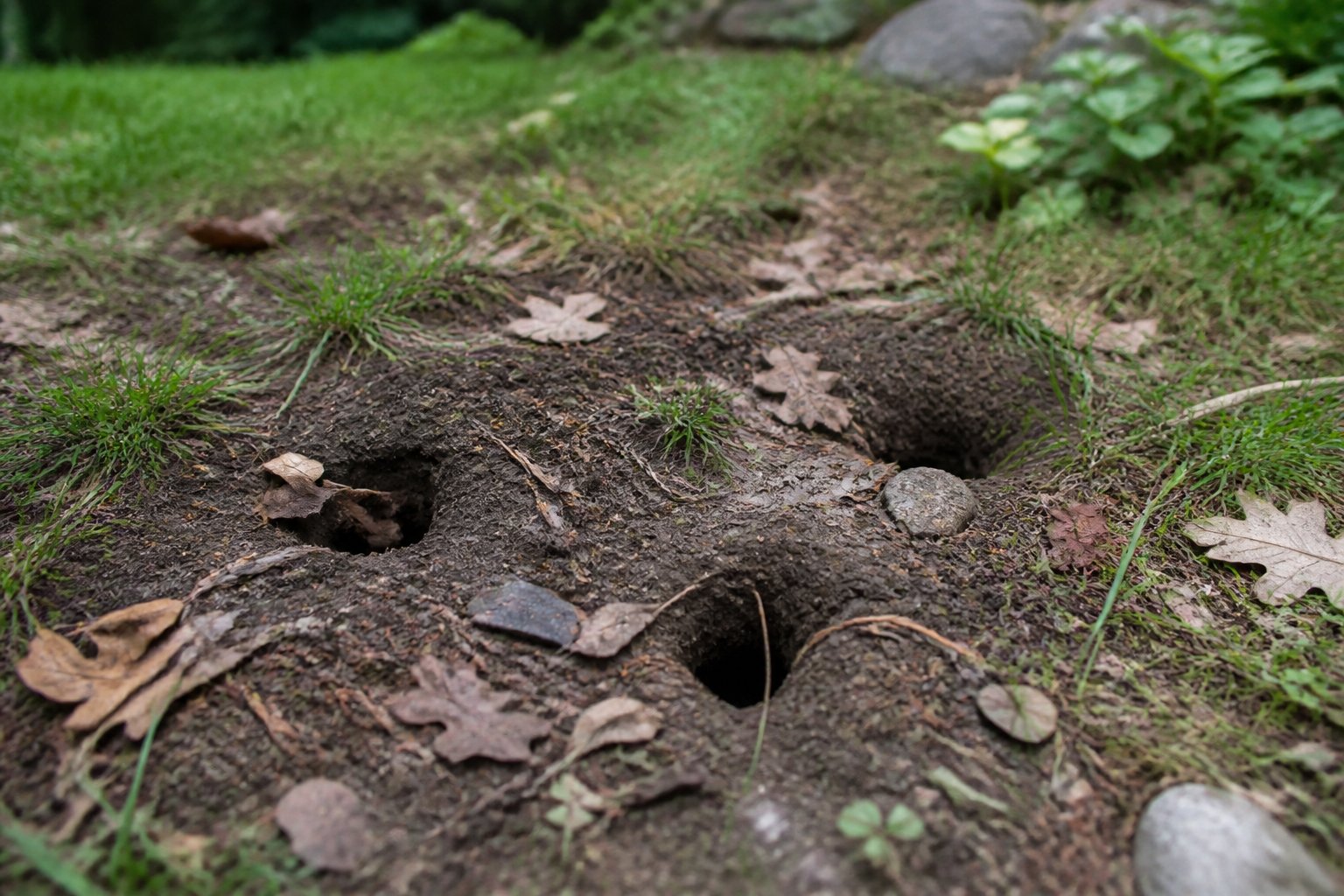
Chipmunk holes are usually small, neat, and easy to miss until you notice several together. Chipmunks often favor borders, beds, brushy edges, and other spots with cover.
What Chipmunk Holes Look Like At Ground Level
At ground level, chipmunk holes look round, tidy, and only a few inches across. You may see small openings tucked into leaf litter, grass, mulch, or near rockwork, with little disturbance around the entrance.
How To Tell Them Apart From Mole Or Ant Activity
Chipmunk holes appear as clean, round entrances rather than raised ridges or broad soil mounds. Mole activity leaves shallow raised tunnels, while ant activity shows smaller openings with loose granular soil.
Why You May Not See Freshly Excavated Soil Nearby
Chipmunks move soil away from the opening as they dig. This habit keeps the entrance neat and makes chipmunk holes harder to spot until activity increases.
What To Do If You Find Active Tunnels

If the burrow is far from your home and not harming plants or structures, you can leave it alone. If the activity is causing damage, focus on keeping chipmunks away without creating new hazards or sealing active tunnels too soon.
When To Leave The Burrow Alone Versus Take Action
Leave the burrow alone when the area is stable, away from foundations, and not causing garden losses. Take action when you see repeated digging near patios, foundations, or beds you want to protect, especially if the openings keep multiplying.
Humane Ways To Keep Animals Out Of Problem Areas
Reduce food attractants, clean up brush and debris, and block access to sheltered spots to keep chipmunks away. If you need to remove chipmunks, use live traps where legal and ask a wildlife professional for help if the activity continues.
How To Fill Openings After Activity Stops
Wait until you are sure the tunnel is no longer active before you fill chipmunk holes.
After activity stops, pack the opening with soil.
Monitor the area for fresh digging, since sealing an active burrow can cause the animal to reopen it elsewhere.


