
Ever watched a squirrel dig up a nut and wondered, “How on earth did it remember that exact spot?” Turns out, squirrels can actually smell buried nuts from several feet away—sometimes as far as a meter.
They rely on close-up sniffing and a surprisingly sharp memory to zero in on their stashes. Let’s dig into how far their noses really work and what can mess with that range.

You might be surprised at just how sharp a squirrel’s nose is. Certain conditions help or totally mess with their scent skills.
We’ll keep the science simple—just the basics on how their sniffing power and memory work together. Next time you spot a squirrel in your yard, maybe you’ll see them in a new light.
How Far Can Squirrels Smell Nuts?
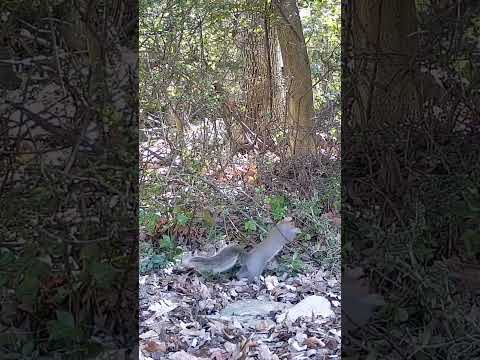
Squirrels use a mix of smell, memory, and a bit of cleverness to track down hidden nuts. Let’s break down how far they can sniff, how species differ, and what they actually do when searching.
Nut Detection Range and Environmental Factors
Squirrels can pick up nut odors from just a few inches away, and sometimes from a few feet if the conditions are right.
Loose, dry soil doesn’t let scents travel very far, so a squirrel might only sniff out a buried acorn from about 10–30 cm (4–12 inches). In sandy or fluffy soil, the smell can drift a bit farther since the air pockets help.
Wind, temperature, and ground cover really shake things up. A strong wind can carry the scent, but it also scatters it, so pinpointing gets trickier.
When it’s cold, scent molecules move slowly. Squirrels start relying more on their memory during winter.
Leaf litter and snow block the smell, so squirrels switch to using their eyes or just go back to places they remember.
Species Differences in Smelling Distance
Not all squirrels sniff the same. Eastern gray squirrels, the ones you probably see most, have a great sense of smell and a sharp memory.
They usually recover most of their stashes within a few meters. Fox squirrels and other tree squirrels seem just as skilled, but red squirrels might rely more on memory and guard fewer, more important caches.
Body size and nose structure play a role too. Bigger tree squirrels have larger nasal cavities, which might help them catch faint smells across short distances.
Urban squirrels, surrounded by noise and people, often depend more on memory and landmarks than just their noses.
Squirrel Behavior in Locating Nuts
If you watch a squirrel search, you’ll notice a mix of sniffing and remembering. They’ll pause, twitch their noses, and dig a bit to test the spot.
Sometimes, you’ll see them check the same area over and over, probably tracking scent gradients and comparing with what they remember.
Squirrels also watch each other and steal. If one sees another burying food, it’ll use smell and memory to swipe that nut later.
You might catch a squirrel faking a bury—pretending to hide a nut just to throw off any sneaky observers. These little tricks help them find food even when the scent isn’t strong.
Inside the Squirrel’s Super Sniffer: Anatomy and Adaptations

Let’s peek inside a squirrel’s nose and see how it turns faint chemical traces into a treasure map. Some parts of their brain help make sense of all those smells, and behavior plus special glands help them keep track of where food is hidden.
Role of Olfactory Receptors and the Olfactory Bulb
Olfactory receptors line the inside of a squirrel’s nose. These receptors grab onto specific volatile compounds from nuts and dirt.
Each type of receptor responds to a narrow set of smells, so the combination creates a unique scent pattern for each kind of nut. That pattern travels as an electrical signal to the olfactory bulb.
The olfactory bulb sorts and sharpens those signals. It maps out combinations of inputs into recognizable scent signatures.
Tree squirrels and ground squirrels with larger olfactory bulbs (relative to their body size) can pick out weak or mixed smells more easily. That’s probably why a squirrel can find buried nuts under leaves or snow by picking up on tiny differences in scent.
Nasal Cavity Structure and Scent Detection
Inside the nose, thin, scroll-like bones called turbinates add surface area and slow down airflow. This gives scent molecules more time to hit those olfactory receptors.
The olfactory epithelium sits on top of these turbinates and holds millions of receptor cells, making squirrels extra sensitive to faint nut odors.
Airflow patterns matter here too. When a squirrel pauses and breathes quickly, it samples more air and catches more scent molecules.
Humidity and wind play a part—damp air can carry nut odors farther than dry air. So if you see a squirrel stop, sniff, and then dig, it’s probably following the strongest scent concentration it can find.
Caching Behavior and Scent Glands
Caching really changes how squirrels use scent. If you watch a squirrel bury a nut, you’ll probably notice it rubbing the nut and the soil with its paws or even its jaw.
That little ritual transfers some oils and leaves behind a faint scent signature at the cache spot. Later, that scent helps the squirrel find its stash more easily.
Squirrels don’t just bury and forget, either. They often come back, dig up, and re-cache items, which adds more scent cues each time.
Some species—especially certain tree squirrels—have scent glands. These glands leave behind personal or territorial odors near their caches.
That kind of scent marking helps a squirrel tell its own stores apart from others’. Maybe it even discourages theft, at least a little.
With memory, visual markers, and all this scent business, squirrels really use a multi-sensory approach to keep track of their buried food. It’s honestly pretty clever.


