
Rats reproduce through ordinary mammalian reproduction, not by any special process. Two adult rats mate, the female becomes pregnant, and the embryos develop into live young.
Their fast breeding, short gestation, and early maturity help rats succeed as a group of rodents.

This process varies across rat species, from the brown rat (Norway rat) to the black rat or roof rat. Diet, season, health, and living conditions affect how often rats breed and how many pups survive.
How Rat Reproduction Works

Rats reproduce quickly because their bodies are built for speed, from early sexual maturity to short pregnancies and large litters. In species such as Rattus norvegicus and Rattus rattus, that fast cycle helps populations rebound when food and shelter are available.
Mating
Male rats court receptive females by scent, touch, and close contact. Rats mate repeatedly when conditions are good, especially in groups with a steady supply of food.
Fertility, And Sexual Maturity
Rats can become sexually mature within weeks, though social maturity comes later. Wild and laboratory rats may differ in timing, and poor nutrition or stress can slow fertility.
A healthy female can cycle often, which helps populations build quickly.
Pregnancy, Birth, And Litter Size
After mating, pregnancy lasts about three weeks. The female gives birth to a litter of blind, hairless pups that depend on warmth and nursing.
During birth and early care, mothers may show chromodacryorrhea, the reddish eye and nose discharge often mistaken for blood.
How Baby Rats Grow Into Adults
Pups develop rapidly. Their eyes open, fur grows in, and they begin eating solid food soon after nursing tapers off.
By about six weeks, many young rats can reproduce, though they still need time to reach full body size and social behavior.
Which Animals Are Called Rats

Not every animal called a rat is a true rat. The word covers a mix of species in different branches of the rodent world, and common names can be more confusing than scientific classification.
True Rats In The Genus Rattus
True rats belong to the genus Rattus, which includes familiar species such as the brown rat, black rat, house rat, ship rat, and roof rat. These species sit within the family Muridae, subfamily Murinae, and are part of the larger rodentia order in the superfamily muroidea.
Other Animals With Rat In The Name
Some animals have rat in their common name without being true Rattus species. Examples include the pack rat, bandicoot rat, polynesian rat, giant pouched rat, and african giant pouched rat.
Those names reflect appearance or behavior more than exact kinship.
Where Rats Fit In Animal Classification
Rats are rodents, and rodents are one of the largest mammal groups. The name rat is used loosely in everyday speech, while scientific names show which animals are closely related and which only share a similar look.
Why Rats Spread So Successfully
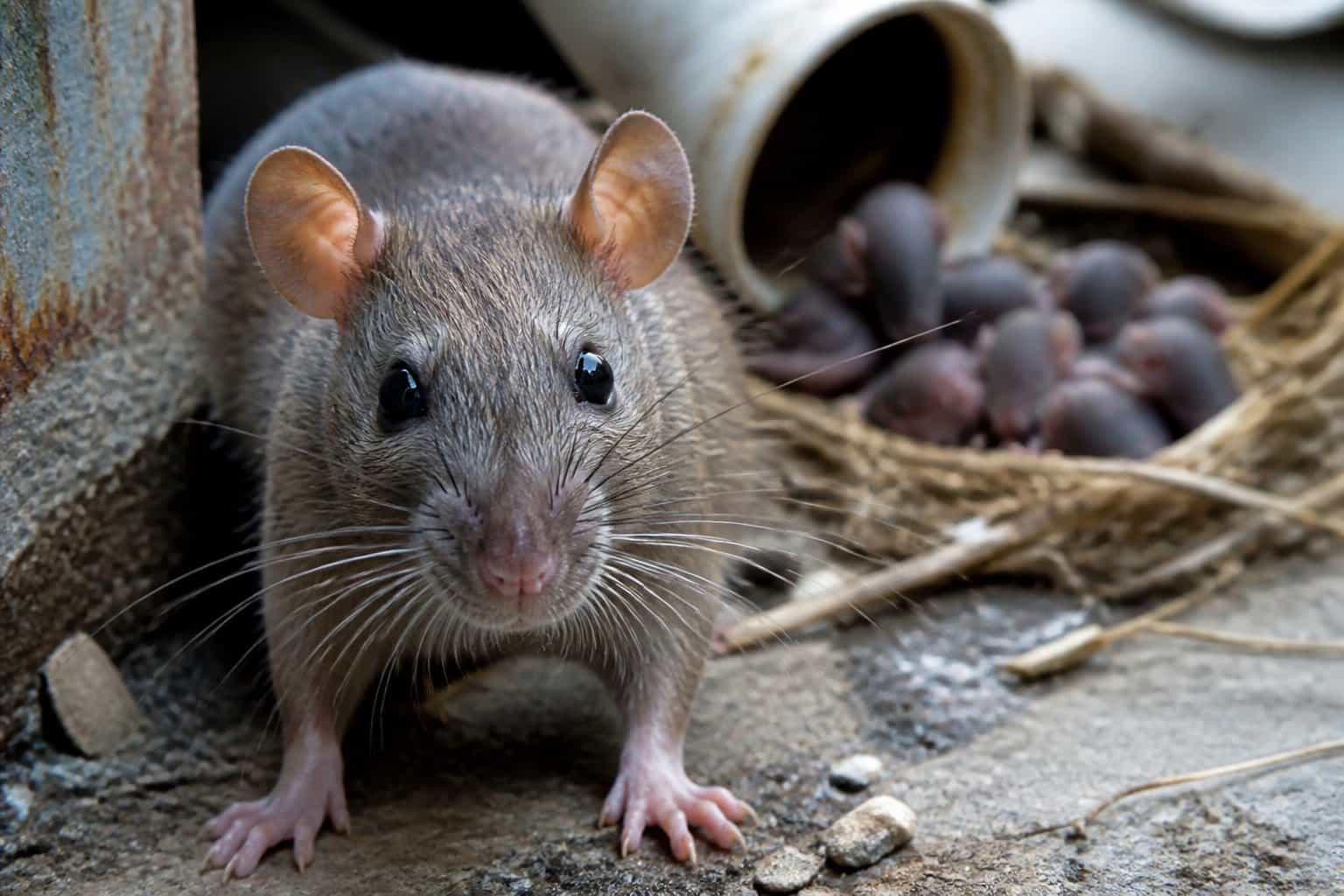
Rats spread well because they eat widely, breed fast, and live close to human activity. Their success is tied to commensalism, where animals benefit from life around people without being fully domesticated.
Commensalism And Life Alongside Humans
Rats thrive near people because our buildings, trash, grain stores, and transport systems create steady food and shelter. That close association has helped some rat populations expand far beyond their original ranges.
History Of Rats Across Cities And Ships
Humans carried rats from port to port on ships. Cities offered warm hiding places, easy nesting sites, and reliable food scraps.
Rats In New York And Other Urban Environments
In dense cities, rats do well in sewers, alleyways, subway systems, and food corridors. Rats in New York show how an urban population can adapt to constant pressure, changing food sources, and heavy human control efforts.
How Humans Manage And Study Rats

People study rats because they reveal a lot about biology, behavior, and disease. People manage them because they can damage property and contaminate food.
The same animal can be a research model in one setting and a pest in another.
Laboratory Rats And What They Teach Us
Laboratory rats are bred for health, uniformity, and useful traits in research. Scientists have used them to study medicine, genetics, behavior, and how bodies respond to drugs and disease.
Pest Control And Rat Control Basics
Good pest control starts with removing food, water, and entry points. Sealing holes, storing food securely, cleaning spills, and reducing clutter all support effective rat control.
Professional help may be needed when infestations are established.
Disease Risks And Popular Myths
Rats can carry pathogens linked to human illness, including Yersinia pestis, the bacterium tied to bubonic plague. They can also carry viruses such as hantavirus.
Old legends like the rat king are dramatic. These are rare curiosities, not normal rat behavior.


