
Ever wondered if lions actually eat humans? It’s a fair question, and honestly, the answer is yes — lions have eaten people before. Still, that’s not something you see every day. Usually, it only happens when something’s gone wrong, like the lion is injured, starving, or has learned to hunt humans for some reason.

Let’s dig into how lions usually hunt and why people aren’t really on their menu. There are a few famous stories out there about lions attacking humans, and some of them are pretty wild.
We’ll look at what led to those incidents and what signs might mean you’re at higher risk around these big cats.
Do Lions Eat Humans?

Sometimes lions do eat humans, but that’s not their go-to move. It’s rare, honestly. Let’s talk about how often attacks happen, what lions actually prefer to eat, and why a few end up as so-called man-eaters.
How Often Do Lion Attacks on Humans Occur?
Lion attacks on people? They’re not common, especially compared to other dangers you might face in places where lions live. Most parks and reserves might see just a few fatal attacks each year, and that’s spread across whole countries.
If you stick to park rules and don’t wander off after dark, you stay pretty safe. Most attacks happen near villages, livestock enclosures, or roads at night.
When livestock isn’t well protected, or people walk around after sunset, the risk goes up. The Tsavo incidents are famous, but they’re outliers — giant spikes in attacks usually happen only when something changes in the environment.
Natural Lion Diet Versus Human Predation
Lions usually hunt big wild animals — buffalo, zebra, wildebeest, giraffe, and antelope. That’s what gives them enough fuel to keep their prides going.
Humans? We’re not really on the menu unless food is super scarce or someone is extra vulnerable.
Lions pick their prey based on what’s easiest and offers the biggest payoff. If a lion is desperate, sick, or injured, maybe a human starts to look like an option.
It’s rare, though. If you’re curious about what lions normally eat and why they sometimes go after people, this overview of lion behavior and diet is pretty useful: (https://iere.org/do-lions-eat-humans-or-just-kill-them/).
Why Do Some Lions Become Man-Eaters?
So, what makes a lion start eating people? Usually, it’s a mix of injury, dental problems, a lack of normal prey, or just learning that humans are easy targets.
A lion with a busted jaw or rotten teeth can’t really take down big animals, so it might go after something softer — sadly, that can mean people.
Human actions matter too. Drought, disease, or overhunting can wipe out the usual prey, pushing lions closer to villages.
Once a lion figures out that humans or livestock are easy to catch, it might keep doing it. Sometimes, scavengers like hyenas mess things up by eating remains, so people get confused about who really did the killing.
If you want a deep dive, check out this research about the Tsavo man-eaters and their teeth problems: (https://www.science.org/content/article/why-did-these-lions-eat-35-men-bad-teeth).
Famous Cases of Man-Eating Lions
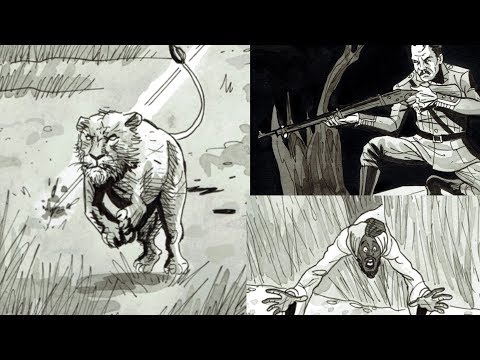
Let’s get into some real stories about lions that attacked people. These cases grabbed headlines for a reason.
We’ll go over the infamous pair in Kenya, other reported attacks, and where the evidence ended up.
The Tsavo Man-Eaters and John Henry Patterson
Back in 1898, two male lions started attacking workers building the Uganda Railway near Kenya’s Tsavo River. They killed and ate dozens of people, sneaking into the rail camp at night and dodging traps for weeks.
John Henry Patterson, the engineer in charge, led the hunt to stop them. He finally shot the lions after a bunch of failed tries and later wrote a book about the chaos and fear those lions caused.
Modern researchers dug into the story and found out the lions ate both people and wild animals. They also had some pretty bad dental problems, which probably made hunting their usual prey tough.
If you want all the details and some cool science, check out the Tsavo Man-Eaters Wikipedia page.
Other Documented Lion Attacks and Man-Eaters
Lions usually leave people alone, but there are cases when injury, illness, or a lack of prey push them to attack.
One well-known example is the Mfuwe man-eater in Zambia. In 1991, this lion killed several people before hunters finally stopped it.
Researchers point out that older or hurt lions sometimes go for easier targets near villages or railway camps.
Field reports show a pattern: most attacks happen at night, close to where people live, or when wild prey runs low. When a lion starts hunting humans, people usually organize hunts, try to relocate the animal, or, if needed, kill it to protect the community.
For more on why some lions turn to man-eating and what scientists think, check out this article: man-eating lions and their causes.
Role of the Field Museum of Natural History
After Patterson killed the Tsavo lions, he kept their skins and skulls. Later, he donated them to the Field Museum of Natural History in Chicago.
The museum has displayed the mounted lions for decades. People still visit to see them, and scientists use them to study the animals’ diet and health.
Researchers dig into the museum specimens for clues—hair caught in teeth, DNA from old meals, even patterns of tooth wear. They’re trying to figure out what the lions ate and why they started hunting humans.
The Field Museum’s collection connects this wild historical event to modern wildlife research. It’s a spot for public education and scientific discovery. If you’re curious, check out more about the specimens and studies at the Field Museum’s Tsavo displays and research.


