
You might think seahorses are the oddballs of the ocean, and honestly, you’re not wrong. Their mating system is surprisingly unique—they really do need a partner to reproduce.
Male seahorses in the Syngnathidae family carry and give birth to the babies, but they can’t make eggs on their own. The female has to provide the eggs, so it’s a real team effort. This partnership makes their breeding stand out among animals.

Curious how this works? Let’s dig into why pairing matters, how the magic of egg transfer and “male pregnancy” happens, and what this means for seahorse babies and conservation.
You’ll see how bonds form, how the brood pouch supports embryos, and why protecting their habitats is so important for these delicate fish.
Why Seahorses Need a Mate to Reproduce

Seahorses lean on close partnerships and their unusual body structure to make reproduction possible. Pair bonds shape their mating, and the male’s brood pouch is absolutely vital.
Courtship might look like a quirky dance, but it’s all about lining things up for egg transfer.
Pair Bonding and Social Behavior
A lot of seahorse species form pretty stable pair bonds. These bonds help them coordinate when to mate.
You’ll often spot pairs doing daily greeting dances—kind of adorable, actually. These routines help the female know when the male’s ready to receive eggs.
Pairing impacts how many babies they produce, too. Long-term pairs tend to mate again quickly after giving birth, which means more offspring over time.
Partners usually match in size. Larger females carry more eggs and pick males with bigger pouches. Sometimes, the bond lasts through several pregnancies, making the whole process more reliable than just bumping into a random mate.
Role of the Male’s Brood Pouch
The male’s brood pouch is a wild adaptation. It’s basically a nursery that receives, protects, and nourishes eggs after the female transfers them.
When the female uses her ovipositor to deposit eggs, she places them straight into the male’s pouch. He fertilizes them right there.
The pouch regulates oxygen, salt, and nutrients for the developing embryos. Inside, embryos attach to the pouch tissue and get oxygen through tiny blood vessels.
The pouch can even make a special fluid, kind of like a placenta. What the male eats and how healthy he is will affect how well the embryos grow.
Since the male carries the young until they hatch, he needs a mate whose eggs fit the size and needs of his pouch.
Mating Process: Courtship and Egg Transfer
Courtship in seahorses is a step-by-step ritual. The pair lines up the ovipositor and the pouch opening for egg transfer.
You’ll see them rise together, change color, and link tails as they get in sync. These moves help make sure the transfer goes off without a hitch.
The female uses her ovipositor to push eggs into the male’s pouch. Fertilization happens right away inside the pouch.
The male then seals or adjusts the pouch to protect the eggs. Pregnancy can last from just days up to weeks, depending on the species and water temperature.
When it’s time, the male gives birth to fully formed, independent young. Both the female’s eggs and the male’s pouch are essential—there’s no skipping the teamwork.
Seahorse Reproduction and Offspring
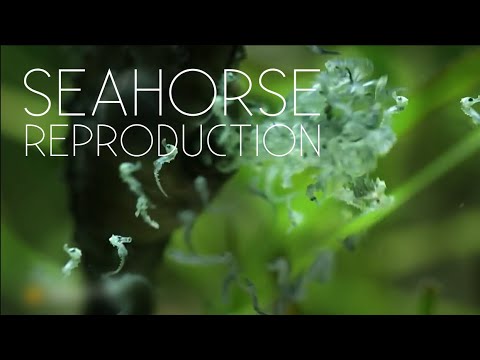
Let’s look at how the eggs move, how the male handles pregnancy and birth, and how different species change things up with timing or brood size.
Gestation and Male Pregnancy
Male seahorses carry fertilized eggs in a brood pouch on their belly. After the female drops off her eggs, the male fertilizes them inside.
The pouch supplies oxygen through tiny blood vessels and manages nutrients and salt for the growing embryos. It’s a pretty impressive system.
Gestation time varies by species and water temperature. It might last as little as 10 days or stretch up to six weeks.
Warmer water usually speeds things up. During pregnancy, the male might even change color and stick close to his partner if they’re bonded.
Males can adjust pouch conditions to help the embryos survive. His diet and health play a big role in survival rates.
After one round of mating, many seahorse pairs waste no time and mate again quickly—sometimes even daily—to fill the pouch for more babies.
Birth and Baby Seahorses
When labor kicks in, the male contracts his pouch and pushes out the young in bursts. Birth can take a few minutes or stretch to hours, depending on how many babies he’s carrying.
A male might release just a few dozen or up to several thousand tiny seahorses at once. That’s a lot of babies for one dad.
Newborns are tiny—usually around 8–15 mm—and totally independent from the start. They drift in the plankton and feed on tiny zooplankton and nauplii.
Survival rates in the wild are low because predators gobble up a lot of the young. The parents don’t stick around after birth.
If you’re raising seahorses, you’ll need to provide small live foods like copepods and baby brine shrimp for the fry. Good water quality and gentle flow help captive juveniles survive better.
Variations Among Seahorse Species
Seahorse species really do their own thing when it comes to brood sizes, mating habits, and conservation status. Some will only produce a few dozen young at a time, but others? They can release thousands.
Pair bonds can look pretty different too. Certain species stick with one partner for the long haul, even doing those quirky daily greeting dances. Others don’t bother and just mate with whoever’s around.
Gestation length? That depends on both the species and the water temperature. If you look at cold-water species, you’ll notice they tend to have longer pregnancies.
Size plays a role as well. Larger females usually have more eggs, and bigger males can carry larger broods.
Conservation status makes a difference here. Habitat loss and trade have put several seahorse species under real pressure, which can shrink local populations and make it harder for them to find mates.
If you want to dig deeper into seahorse reproduction and their pair bonds, check out the mating behaviors documented by Project Seahorse (https://projectseahorse.org/saving-seahorses/about-seahorses/reproduction/).


