
Cheetahs are fascinating creatures known for their speed and agility. When it comes to communication, they don’t roar like other big cats. Instead, they express themselves through various sounds. Cheetahs hiss and growl as part of their vocalizations to express warning or annoyance. These sounds are important for their social interactions, especially when facing threats or during territorial disputes.
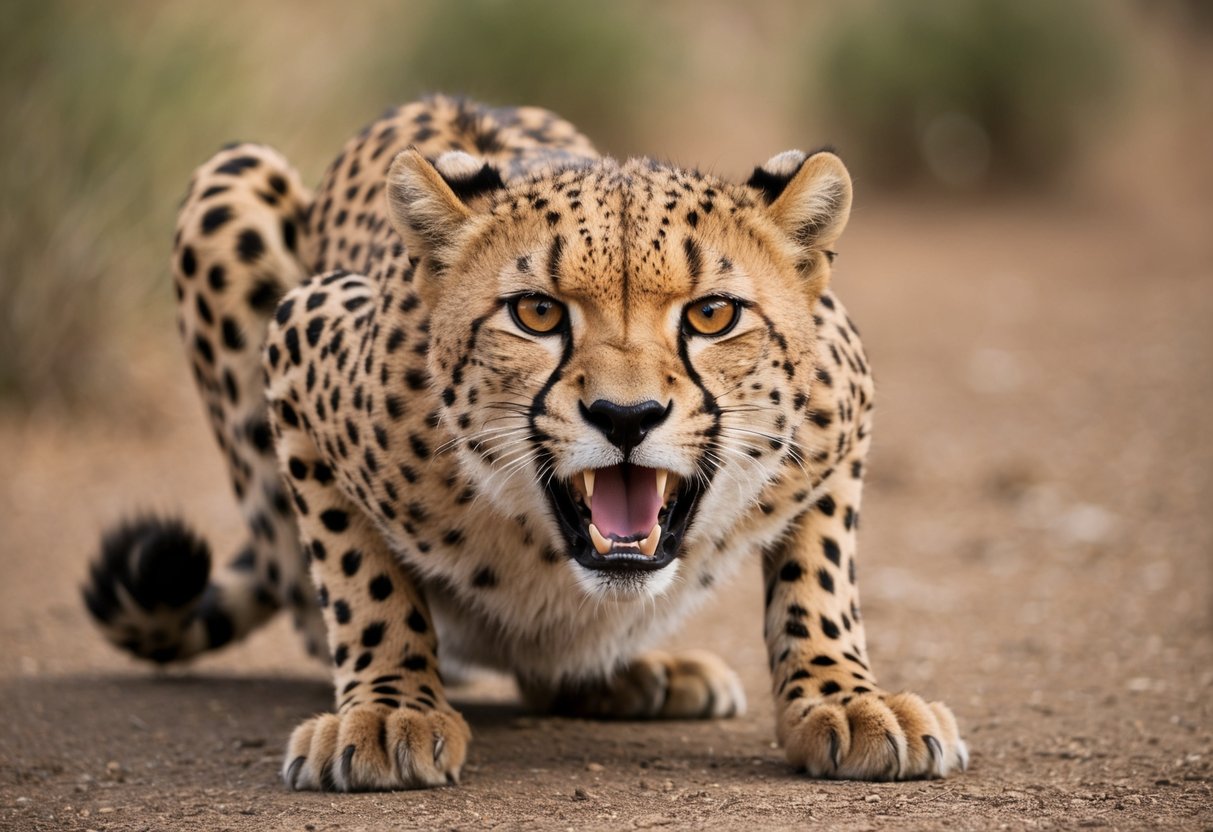
In addition to hissing and growling, cheetahs communicate in other ways. They can chirp, meow, and even purr, which adds variety to their communication style. You may be surprised to learn that these sounds serve different purposes, like attracting mates or reassuring their cubs. Understanding these unique vocalizations can help you appreciate the complexity of cheetah communication in the wild.
So, if you’ve ever wondered about the sounds cheetahs make and what they mean, you’ve come to the right place. Exploring these aspects of cheetah communication will give you a deeper insight into their behavior and social interactions.
Understanding Cheetah Vocalization

Cheetahs have a fascinating way of communicating through various sounds. Their unique voice box and the range of sounds they produce play a key role in their social interactions. Let’s take a closer look.
Cheetahs’ Unique Voice Box
Cheetahs have a specialized voice box that allows them to produce a variety of sounds. Their vocal cords are quite flexible, enabling them to create different tones and pitches. This adaptation is important for their survival and communication in the wild.
Unlike other big cats, cheetahs do not roar. Instead, they can make softer sounds like purrs and chirps. The cheetah chirp is especially unique and can be compared to a bird call. This vocalization helps them communicate with each other over long distances.
Range of Sounds Produced by Cheetahs
Cheetahs have a rich vocal repertoire that includes about 16 different sounds. These include:
- Chirps: Short, high-pitched calls often used for communication.
- Purrs: Gentle sounds made when they are relaxed or content.
- Growls and Hisses: More aggressive sounds, often used to show dominance or during confrontations.
You might also notice the stuttering sound made by male cheetahs, which is a less common vocalization. This sound usually occurs during specific situations and carries a particular meaning.
In addition to these sounds, cheetahs produce a combination of growls, hissing, and moaning during social interactions. Understanding these vocalizations can give you insight into their behavior and social structure.
Comparing Big Cat Sounds
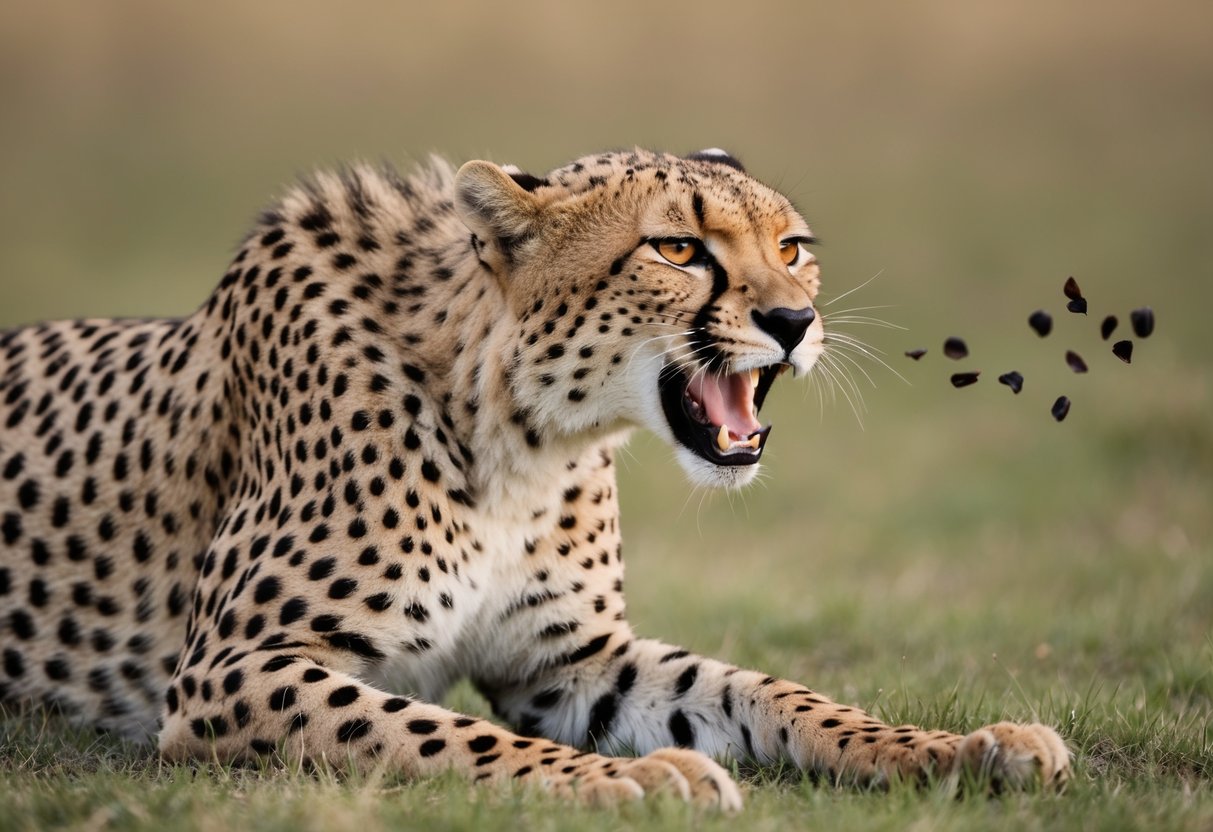
Big cats communicate using various sounds, and their vocalizations can vary greatly. You might find it interesting to learn how cheetahs differ from other big cats like lions, tigers, and leopards. Let’s explore these differences in more detail.
Differences Between Cheetahs and Other Big Cats
Cheetahs have a unique way of communicating compared to larger big cats like lions and tigers. While lions roar to establish territory and instill fear, cheetahs do not have the ability to roar due to their anatomy. Instead, they produce sounds such as chirps, purrs, and hisses.
Here’s a brief comparison:
- Lions: Roar to claim territory and communicate distress.
- Tigers: Have a deep roar and do a variety of growls and chuffs.
- Leopards and Jaguars: Can also roar, but use growls and meows more often.
- Cheetahs: Primarily chirp, purr, and hiss instead of roaring.
These vocal patterns highlight the differences in the categories of big cats like the Pantherinae (lions, tigers) and Felinae (cheetahs, leopards).
The Role of the Epihyal Bone in Vocalizations
The epihyal bone plays a key role in the ability of big cats to produce their distinct sounds. This small bone is part of the structure that supports the larynx. In lions and tigers, this bone aids in creating deeper vocalizations like roaring.
On the other hand, cheetahs lack the same structure that allows for such powerful sounds. Their epihyal bone helps them make softer sounds, allowing for more nuanced communication.
To summarize the effects:
- Epihyal Bone in Lions/Tigers: Allows for deep roars.
- Epihyal Bone in Cheetahs: Facilitates softer sounds like chirps and purrs.
These differences in vocalization reflect not only their anatomy but also their social structures and hunting strategies within the Felidae family.
Behavioral Context of Cheetah Sounds
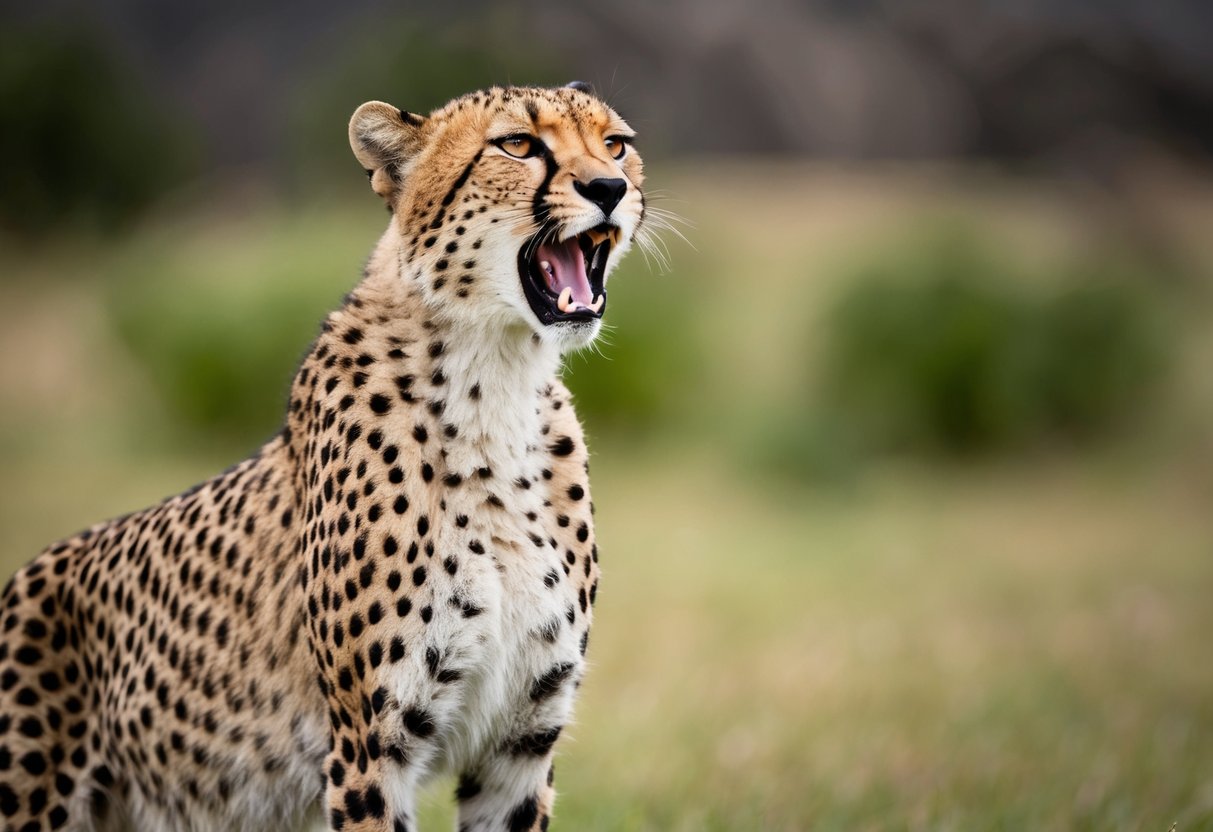
Cheetahs use a variety of sounds to communicate, especially during important interactions such as territorial disputes and nurturing relationships between adults and cubs. Each sound provides insight into their social behavior and hunting techniques.
Vocalizations in Territorial Disputes
When cheetahs face territorial disputes, they often use sounds to assert dominance and deter rivals. The hiss is one of the primary vocalizations in these situations. This sound can serve as a warning to other cheetahs, signaling that they should back off.
Another important sound is the growl, which indicates aggression and readiness to defend territory. Male cheetahs, in particular, are known to use growls during confrontations. They may also employ a stuttering sound, which can indicate distress or frustration. Understanding these vocalizations helps you appreciate how cheetahs manage their relationships in the wild.
Sounds and Communication Between Cheetah Cubs and Adults
Cheetah cubs rely on vocalizations to communicate with their mothers. A high-pitched chirp is common between mothers and their cubs. This sound allows cubs to signal hunger or the need for attention.
Mothers respond with purrs or gentle growls, showing their cubs that everything is okay. These sounds are essential for building trust and ensuring the safety of the young ones. As the cubs grow, they learn to use different sounds, like playful growls, to engage with their mother during playtime. This vibrant communication is key to cubs’ development and strengthens their bond.
Hunting: How Cheetahs Use Sound to Stalk Prey
When it comes to hunting, sound plays a crucial role for cheetahs. They often remain quiet and stealthy to avoid alerting their prey, such as gazelles. Once they get close, they might use a soft chirp to communicate silently with one another during a group hunt.
If a chase begins, cheetahs rely on their sprinting speed more than vocalizations. However, the sounds they make can still affect the prey’s behavior. The sudden rustle of grass or unexpected noises can startle prey, giving cheetahs a better chance to catch them.
Conservation and the Significance of Cheetah Vocalizations

Cheetahs are the fastest land animals, and their vocalizations play a crucial role in their survival. They use sounds like hisses and growls for communication. This is important for hunting and social interactions.
In Africa, conservation efforts focus on protecting cheetahs and their habitat. The loss of habitat affects their ability to communicate effectively. Understanding cheetah vocalizations helps researchers monitor their behavior.
When you go on a safari, listening to these sounds can enhance your experience. Each vocalization has meaning. For example, hissing often shows defensiveness, while growling can indicate aggression. By learning these sounds, you gain insight into their lives.
Cheetah communication is essential for maintaining social bonds. Young cheetahs spend time with their mothers, learning to hunt and communicate. This knowledge supports their growth and survival.
As you appreciate these magnificent wild cats, remember the role conservation plays. Organizations work tirelessly to ensure cheetah populations thrive. By understanding their vocalizations, you contribute to their conservation journey. Every effort counts in allowing these animals to continue accelerating across the plains of Africa.


