
When you think about bats, you might picture them hanging upside down in a cave or flitting through the night sky. But have you ever wondered about their romantic lives?
Many bat species have fascinating mating habits that reflect their unique social structures. Some bats do form lifelong pair bonds, with the white-winged vampire bat being a prime example.
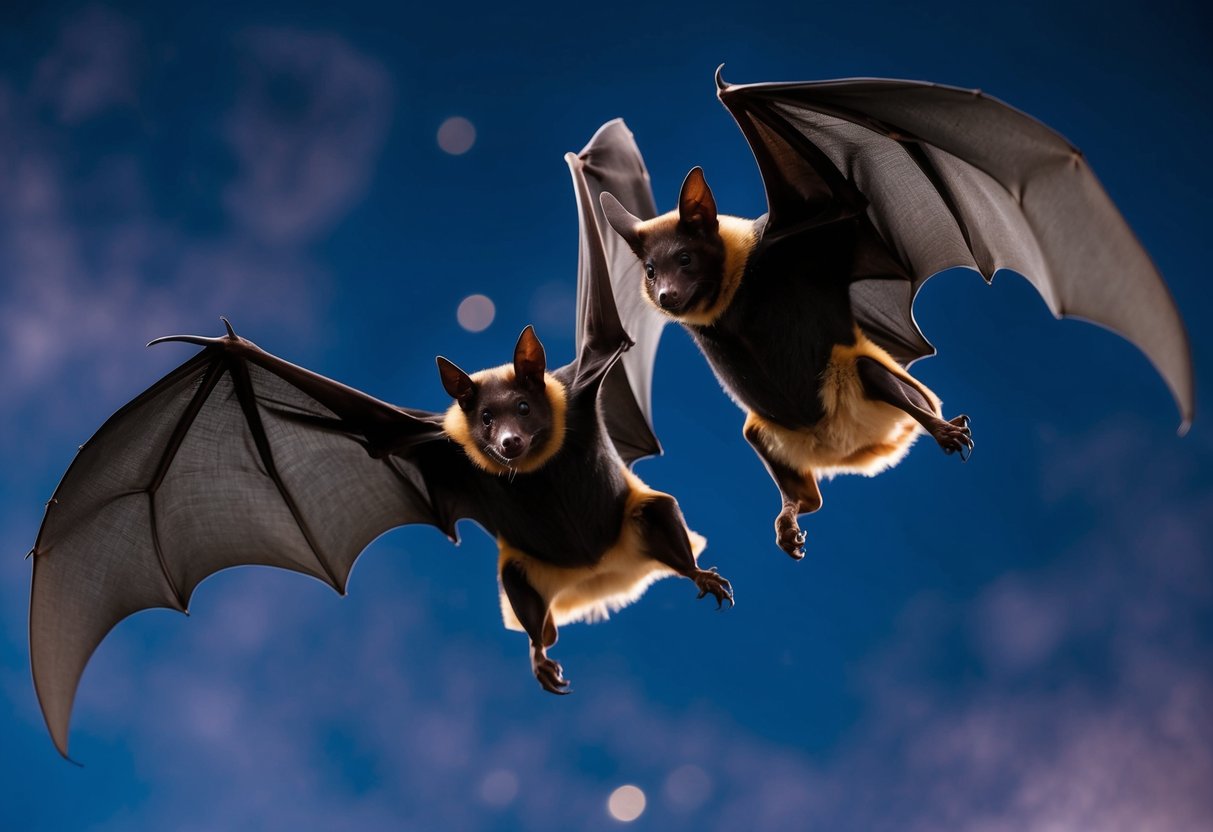
While most bats mate seasonally, a few species exhibit more committed relationships. These bats often roost in small colonies, creating bonds that can last for years.
You might find it interesting that even in species where mating is generally casual, some couples develop strong connections during the breeding season.
Understanding bat reproduction can reveal much about their social dynamics. You’ll learn that bats rely on various strategies to ensure successful mating and raising of their young.
Delving into their world will highlight both the diversity and complexity of these remarkable creatures that share our planet.
Bat Mating and Relationship Types

Bats have diverse mating systems and relationship types, which can vary widely among different species. Understanding these systems can help you appreciate how bats reproduce and raise their young.
Understanding Bat Mating Systems
Bats primarily exhibit three mating systems: monogamy, polygyny, and polyandry.
-
Monogamy: In this system, a male and female bat form a long-term bond, often mating for a breeding season. They may raise their offspring together.
-
Polygyny: Here, one male mates with multiple females. This is the most common system among bats, allowing males to maximize their mating opportunities.
-
Polyandry: In this rare system, one female has multiple male partners. This can help ensure genetic diversity among her offspring.
The mating season often aligns with specific times of the year, driven by environmental factors.
Species-Specific Mating Behaviors
Different species of bats show unique mating behaviors during their breeding seasons. For example, fruit bats often gather in large groups to mate. This behavior is called lekking, where males display their attractiveness to females.
Courtship rituals can include vocalizations and physical displays. Some males use sonar calls to attract females, while others may engage in elaborate flight patterns.
In certain species, like the little brown bat, females can be very picky, choosing mates based on sexual selection criteria.
Fidelity Among Bat Partners
Fidelity in bat relationships varies by species. While some bats form lasting bonds, most are more opportunistic.
Monogamous bats show a higher degree of pair-bonding, often reuniting each breeding season. Polygynous species tend to have less commitment, with males seeking multiple partners.
In some cases, females may store sperm from different males to enhance reproductive success. This strategy allows them to choose the most viable sperm when conditions are right.
Bats demonstrate a range of mating strategies to adapt to their environments, highlighting the complexity of their reproductive behaviors.
Bat Reproduction Processes

Bats have unique and fascinating reproduction processes that vary among species. They engage in courtship behaviors, experience specific gestation periods, and provide parental care to their young. Understanding these processes helps reveal how bats ensure the survival of their offspring.
From Courtship to Fertilization
Courtship in bats often involves complex behaviors, including vocalizations and aerial displays. Males may compete for females’ attention through elaborate flights or calls.
After attracting a mate, male bats engage in internal fertilization. Female bats can store sperm for long periods, allowing them to delay fertilization until conditions are optimal.
This ability to delay fertilization is beneficial. It ensures that the young are born when resources like food are plentiful, increasing their chances of survival. Once fertilization occurs, a zygote forms, leading to the development of an embryo.
Gestation and Birth in Bats
The gestation period for bats varies by species, typically lasting from 40 days to several months. For example, some larger species can have longer periods.
During the gestation phase, a female bat will nourish her developing young through the placenta.
When the time comes for bat births, mostly in late spring or early summer, a female often seeks a protected area, such as a maternity colony. These colonies provide safety for the mothers and their pups.
After birth, the bat pups are altricial, meaning they are born hairless, blind, and completely dependent on their mothers for care.
The Role of Parental Care
Once born, bat pups rely heavily on their mothers for survival. The mother bat nurses her young, providing essential nutrients through milk.
This care is crucial during their early weeks, as the pups grow rapidly.
In maternity colonies, mothers often roost together, creating a supportive environment that increases the chances of survival for the young bats. The communal care offers protection from predators and allows for sharing of resources. This strong parental care is vital, as it helps bat pups thrive and eventually mature into independent adults.
Environmental Influences on Bat Mating

Environmental factors play a major role in how bats choose their mates and reproduce. This section explores how seasonal changes, habitat types, and adaptive strategies shape bat mating behaviors.
Seasonal Variation in Mating
The timing of bat mating aligns closely with environmental conditions. Specifically, in temperate regions, bats typically mate during late summer or autumn. This timing ensures that pups are born in the warm summer months when food, like insects, is plentiful.
In tropical regions, bats may breed year-round, reacting to consistent weather patterns. Some species even exhibit delayed fertilization, where females store sperm and select the best time to become pregnant. This strategy helps ensure the survival of their young during optimal resource availability.
Habitat and Ecosystem Impact
Different habitats influence bat mating tendencies. Bats living in rich ecosystems with abundant food often have more opportunities to mate.
In contrast, bats in less nutritious habitats may need to adapt their mating strategies.
Swarming behavior is common in some species, where males gather in specific areas to attract females. This increases mating chances and is often influenced by local food sources and shelter availability. Understanding these relationships helps in conservation efforts, which aim to preserve critical habitats that support bat populations.
Adaptive Reproductive Strategies
Bats have various reproductive strategies based on their environmental conditions. Some species practice monogamy, while others are polygamous, mating with multiple partners during a season. These choices depend on their ecological niche and the availability of mates.
For example, spectral bats, which thrive in specific ecosystems, often exhibit unique mating patterns. They may alter their behaviors based on local competition or resource availability. By understanding these adaptive strategies, you can appreciate how bats respond to their environment and ensure their survival and reproduction.
Unique Aspects of Bat Mating

Bats have fascinating and varied mating behaviors. Understanding these unique aspects shows how they adapt to their environments and select partners. You’ll discover the different mating rituals, the role of genetics, and specific traits that play a part in their reproduction.
Diverse Bat Mating Rituals
Bats engage in a variety of mating patterns. Some species exhibit monogamous mating, where pairs stay together for a breeding season or longer. For example, white-winged vampire bats are known for their lifelong pair bonds.
Others, such as many temperate bat species, follow a polygynous mating system. Males may mate with several females, while females often mate with multiple males.
Aerial displays are common in bat mating rituals, especially during courtship. Males may showcase their flying skills to attract females.
Some species even engage in oral sex, which may help in both bonding and reproductive success. Such behaviors underline the creativity found in the animal kingdom.
Genetic Compatibility and Selection
Genetic compatibility plays a crucial role in bat reproduction. Bats often choose mates based on their genetic fitness. This selection is important for the health of their offspring.
Sexual selection also comes into play. Males with better favorable traits, like size and strength, often attract more females.
This process helps ensure that strong genes are passed on. Males may use their skills in sustained flight and echolocation to impress potential partners, demonstrating their ability to navigate and thrive in their environment.
Special Traits in Bat Mating
Bats possess unique traits that influence their mating success. Echolocation is not just for navigation; it also helps bats assess potential partners. By interpreting calls and movements, they can determine the health and vitality of others.
In addition, certain bat species demonstrate remarkable characteristics in their mating rituals. The ability to fly gracefully during romantic displays, coupled with their vocalizations, creates an engaging courtship atmosphere. These traits ensure that bats can effectively communicate their readiness to mate and find suitable partners.
From mating partners to the intricate details of their behaviors, bats show the complexity of reproduction in the animal world.


